




What role does Cytochrome C Oxidase play in Aerobic Respiration?
Answer
 Verified
557.4k+ views
Hint: Cytochrome C Oxidase which is also called as Complex $IV$ of mitochondrial chain (respiratory) plays a crucial role in energy production in Aerobic respiration. It is the last step in the electron transport chain that is ETS. Its major role is to transfer electrons from carbon to oxygen forming water. C to ${O_2}$ form ${H_2}O$. So, Cytochrome C oxidase is a membrane bound enzyme in respiratory chain.
Complete answer-
Cytochrome C Oxidase is an important participant in life supporting the organelle in function of ATP synthesis. Cytochrome C Oxidase is basically composed of thirteen subunits. From which three are copper ions, and also, they have-zinc, magnesium and two heme groups.
Cytochrome C Oxidase as the last step in ETS, is considered as the termination in the inner mitochondrial membrane, where it reduces oxygen (molecular) to free water, which allows ATP production. Meanwhile, copper chaperons are required for assembling the Cytochrome C Oxidase complex.
Let us know about Cytochrome C Oxidase in detail- Cytochrome C Oxidase is a membrane protein large in structure and is encoded by mitochondrial genome. Cytochrome C Oxidase is blocked by the activity of cyanide which results in the blockage of ATP synthesis in the mitochondrial matrix. The leftover ${O_2}$ is consumed by cells and then mediated by cyanide-insensitive quinol also known as alternative oxidase.
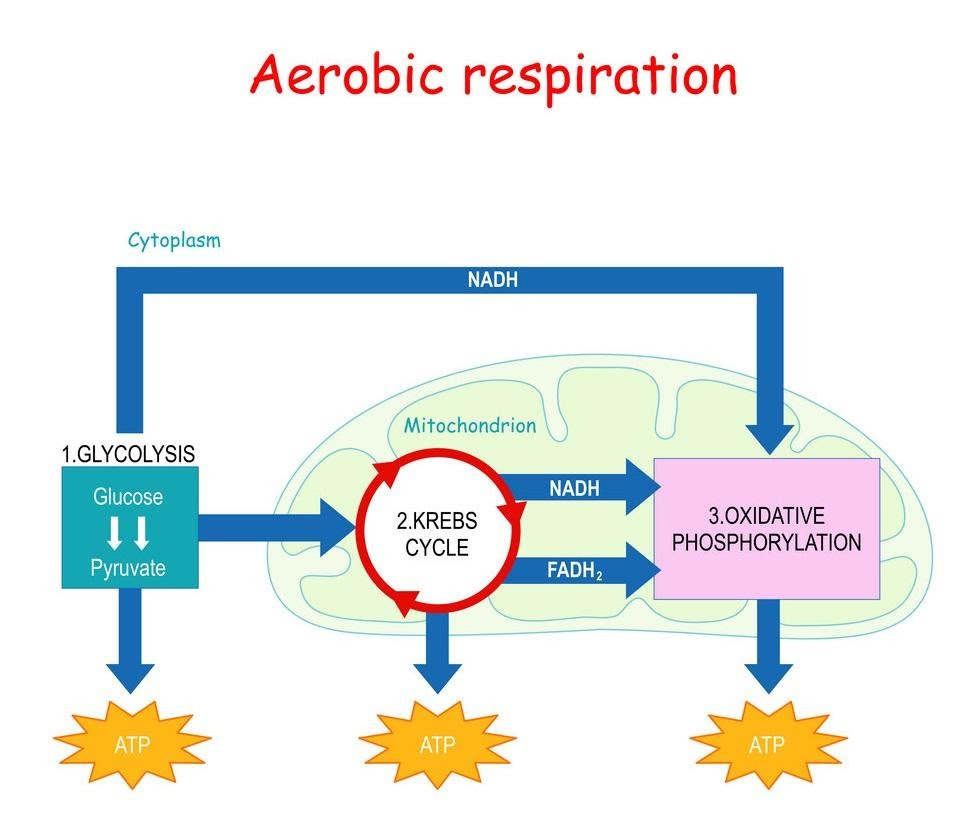
Note:
The Cytochrome c Oxidase other than being present in the mitochondrial matrix is also found in bacteria and archaea. There are defects involved in genetic mutations which alter the $COX$ complex which affect the ATP synthesis. Such disorders are detected in early childhood with high energy demands. Such as in organs- heart, muscle and brain. A dysfunctional cytochrome C oxidase is severe if altered.
Complete answer-
Cytochrome C Oxidase is an important participant in life supporting the organelle in function of ATP synthesis. Cytochrome C Oxidase is basically composed of thirteen subunits. From which three are copper ions, and also, they have-zinc, magnesium and two heme groups.
Cytochrome C Oxidase as the last step in ETS, is considered as the termination in the inner mitochondrial membrane, where it reduces oxygen (molecular) to free water, which allows ATP production. Meanwhile, copper chaperons are required for assembling the Cytochrome C Oxidase complex.
Let us know about Cytochrome C Oxidase in detail- Cytochrome C Oxidase is a membrane protein large in structure and is encoded by mitochondrial genome. Cytochrome C Oxidase is blocked by the activity of cyanide which results in the blockage of ATP synthesis in the mitochondrial matrix. The leftover ${O_2}$ is consumed by cells and then mediated by cyanide-insensitive quinol also known as alternative oxidase.
Note:
The Cytochrome c Oxidase other than being present in the mitochondrial matrix is also found in bacteria and archaea. There are defects involved in genetic mutations which alter the $COX$ complex which affect the ATP synthesis. Such disorders are detected in early childhood with high energy demands. Such as in organs- heart, muscle and brain. A dysfunctional cytochrome C oxidase is severe if altered.
Recently Updated Pages
Which will be the least stable resonating structure class 11 chemistry CBSE

How many 5 digit telephone numbers can be construc-class-11-maths-CBSE
How do you find the angle of the resultant vector class 11 physics CBSE
Draw labelled diagram of the following i Gram seed class 11 biology CBSE
1 Quintal is equal to a 110 kg b 10 kg c 100kg d 1000 class 11 physics CBSE
What is the need and importance of classification class 11 biology CBSE
Trending doubts
One Metric ton is equal to kg A 10000 B 1000 C 100 class 11 physics CBSE
Find the value of the expression given below sin 30circ class 11 maths CBSE
Draw a diagram of nephron and explain its structur class 11 biology CBSE
10 examples of friction in our daily life
Proton was discovered by A Thomson B Rutherford C Chadwick class 11 chemistry CBSE
The teeth used for biting and cutting food are called class 11 biology CBSE