




What is the respiratory system? Write its structure and function?
Answer
 Verified
543.6k+ views
Hint: In multicellular organisms many cells join and organize into tissue, tissue into organs, and organs into organ system. Respiratory system is a system of organised organs which carries the process of respiration in our body. Respiration is a process during which energy is synthesized and during the synthesis of energy oxygen is required.
Complete answer:
The movement of air or dissolved gases into and out of the lungs is known as respiration and is achieved by the respiratory system. Respiratory system structures- It includes the respiratory tract, a pair of lungs, and accessory organs to bring about breathing.
Respiratory tract- It is a passageway that carries fresh air to the respiratory surface. It consists of nostrils, nasal cavities, pharynx, larynx, trachea, bronchi, and bronchioles inside the lungs.
Lungs- Lungs occur in the thoracic cavity in pairs. It is a pink to greyish air sac that functions as a respiratory organ.
Accessory organs- This consists of thorax, rib cage, diaphragm, and their muscles. These are the organs which support respiration process any changes in them cause breathing to take place.
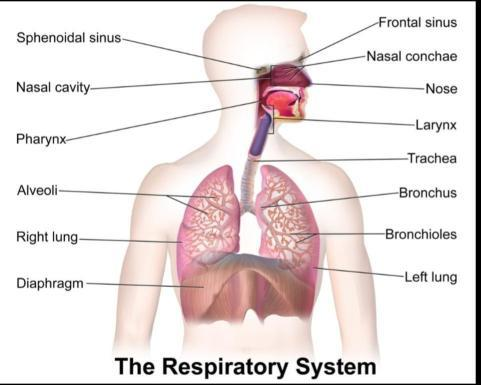
Function of respiratory system- Respiratory system helps to bring oxygen rich air inside the body which is necessary for energy production inside the cell. It also helps to remove the waste material and carbon dioxide (produced as by-products during the metabolic reaction) from the body.
Note:
Unicellular organisms are made up of single cells and their whole body is surrounded by environment so they don’t need any organ system for respiration. They can respire directly through their cell surface. Some organisms like fishes respire through gills. Oxygen from water enters in blood and carbon dioxide in blood diffuses out in water.
Complete answer:
The movement of air or dissolved gases into and out of the lungs is known as respiration and is achieved by the respiratory system. Respiratory system structures- It includes the respiratory tract, a pair of lungs, and accessory organs to bring about breathing.
Respiratory tract- It is a passageway that carries fresh air to the respiratory surface. It consists of nostrils, nasal cavities, pharynx, larynx, trachea, bronchi, and bronchioles inside the lungs.
Lungs- Lungs occur in the thoracic cavity in pairs. It is a pink to greyish air sac that functions as a respiratory organ.
Accessory organs- This consists of thorax, rib cage, diaphragm, and their muscles. These are the organs which support respiration process any changes in them cause breathing to take place.
Function of respiratory system- Respiratory system helps to bring oxygen rich air inside the body which is necessary for energy production inside the cell. It also helps to remove the waste material and carbon dioxide (produced as by-products during the metabolic reaction) from the body.
Note:
Unicellular organisms are made up of single cells and their whole body is surrounded by environment so they don’t need any organ system for respiration. They can respire directly through their cell surface. Some organisms like fishes respire through gills. Oxygen from water enters in blood and carbon dioxide in blood diffuses out in water.
Recently Updated Pages
Master Class 11 English: Engaging Questions & Answers for Success

Master Class 11 Physics: Engaging Questions & Answers for Success
Master Class 11 Computer Science: Engaging Questions & Answers for Success
Master Class 11 Chemistry: Engaging Questions & Answers for Success
Master Class 11 Social Science: Engaging Questions & Answers for Success
Master Class 11 Accountancy: Engaging Questions & Answers for Success
Trending doubts
Difference Between Prokaryotic Cells and Eukaryotic Cells
Two of the body parts which do not appear in MRI are class 11 biology CBSE
One Metric ton is equal to kg A 10000 B 1000 C 100 class 11 physics CBSE
10 examples of friction in our daily life
Draw a diagram of nephron and explain its structur class 11 biology CBSE
Draw a diagram of a plant cell and label at least eight class 11 biology CBSE