




Proteins are made up of
A) Carbon, hydrogen, chlorine, sulphur
B) Carbon, hydrogen, oxygen, nitrogen
C) Carbon, manganese, phosphorous, nitrogen
D) Carbon, iodine, oxygen and inorganic phosphates
Answer
 Verified
516.3k+ views
Hint: Proteins are the building blocks of the organism. Proteins are made up of several units of amino acids. Amino acids are synthesised by the RNA.
Complete answer:
Proteins, carbohydrates and fats are the important biomolecules that make the living cell. All the biomolecules are made up of carbon, hydrogen and oxygen along with some other elements which differentiate them from one another. Proteins are the most important biomolecule which is essential for growth, development and also for carrying out several physiological functions.
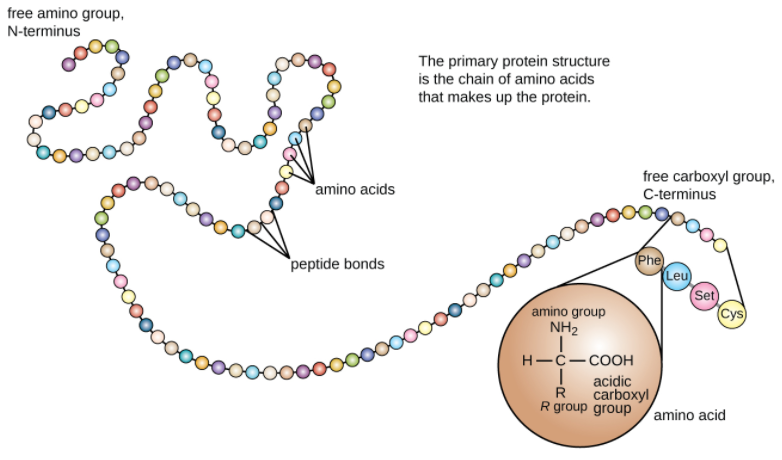
Proteins contain several units of amino acids. Amino acids are synthesised by DNA and RNA. Nitrogen is the most important and essential component of nucleic acid which is also present in proteins as the proteins are derived from the nucleic acid. The presence of nitrogen separates the proteins from carbohydrates.
- Sulphur is the component of some amino acids and proteins. It is also an essential cofactor.
- Chlorine is the chief component of the digest system. It is present in the form of salts like sodium chloride and hydrochloric acid.
- Manganese is one of the essential elements of the living being. It plays a vital role in metabolic activities.
- Phosphorous and inorganic phosphate- It is an important component of DNA. It is an important component of ATP.
- Iodine is essential for regulating the activity of the thyroid hormone.
Therefore the correct answer is option ‘B’.
Note: Proteins are the highly complex biomolecules that are present throughout the body. The enzymes present in our body are made up of proteins. They play a significant role in the structural and metabolic functions of the organism.
Complete answer:
Proteins, carbohydrates and fats are the important biomolecules that make the living cell. All the biomolecules are made up of carbon, hydrogen and oxygen along with some other elements which differentiate them from one another. Proteins are the most important biomolecule which is essential for growth, development and also for carrying out several physiological functions.
Proteins contain several units of amino acids. Amino acids are synthesised by DNA and RNA. Nitrogen is the most important and essential component of nucleic acid which is also present in proteins as the proteins are derived from the nucleic acid. The presence of nitrogen separates the proteins from carbohydrates.
- Sulphur is the component of some amino acids and proteins. It is also an essential cofactor.
- Chlorine is the chief component of the digest system. It is present in the form of salts like sodium chloride and hydrochloric acid.
- Manganese is one of the essential elements of the living being. It plays a vital role in metabolic activities.
- Phosphorous and inorganic phosphate- It is an important component of DNA. It is an important component of ATP.
- Iodine is essential for regulating the activity of the thyroid hormone.
Therefore the correct answer is option ‘B’.
Note: Proteins are the highly complex biomolecules that are present throughout the body. The enzymes present in our body are made up of proteins. They play a significant role in the structural and metabolic functions of the organism.
Recently Updated Pages
Master Class 11 English: Engaging Questions & Answers for Success

Master Class 11 Social Science: Engaging Questions & Answers for Success
Master Class 11 Maths: Engaging Questions & Answers for Success
Master Class 11 Biology: Engaging Questions & Answers for Success
Master Class 11 Physics: Engaging Questions & Answers for Success
Master Class 11 Chemistry: Engaging Questions & Answers for Success
Trending doubts
One Metric ton is equal to kg A 10000 B 1000 C 100 class 11 physics CBSE
Difference Between Prokaryotic Cells and Eukaryotic Cells
Find the value of the expression given below sin 30circ class 11 maths CBSE
Two of the body parts which do not appear in MRI are class 11 biology CBSE
Draw a diagram of a plant cell and label at least eight class 11 biology CBSE
10 examples of friction in our daily life