




Primitive man was evolved in
(a) Africa
(b) America
(c) Australia
(d) India
Answer
 Verified
638.7k+ views
Hint: It is the second-largest continent of the world. This includes the organisms of the Hominidae group. Generally, it is believed by evolutionists that man first appeared approximately 4 million years ago.
Complete step by step answer:
Human development is the long cycle of progress by which individuals started from apelike ancestors. Scientific proof shows that the physical and behavioral traits shared by all individuals began from apelike ancestors and advanced over a time of roughly 6,000,000 years. One of the earliest defining human traits, bipedalism - the capacity to walk on two legs - which can evolve more than 4 million years prior. The first modern humans, Homo sapiens, developed from their initial hominid predecessors somewhere in the range of 200,000 and 300,000 years back. They built up a limit with respect to language around 50,000 years prior. The region where the primitive man evolved in Africa.
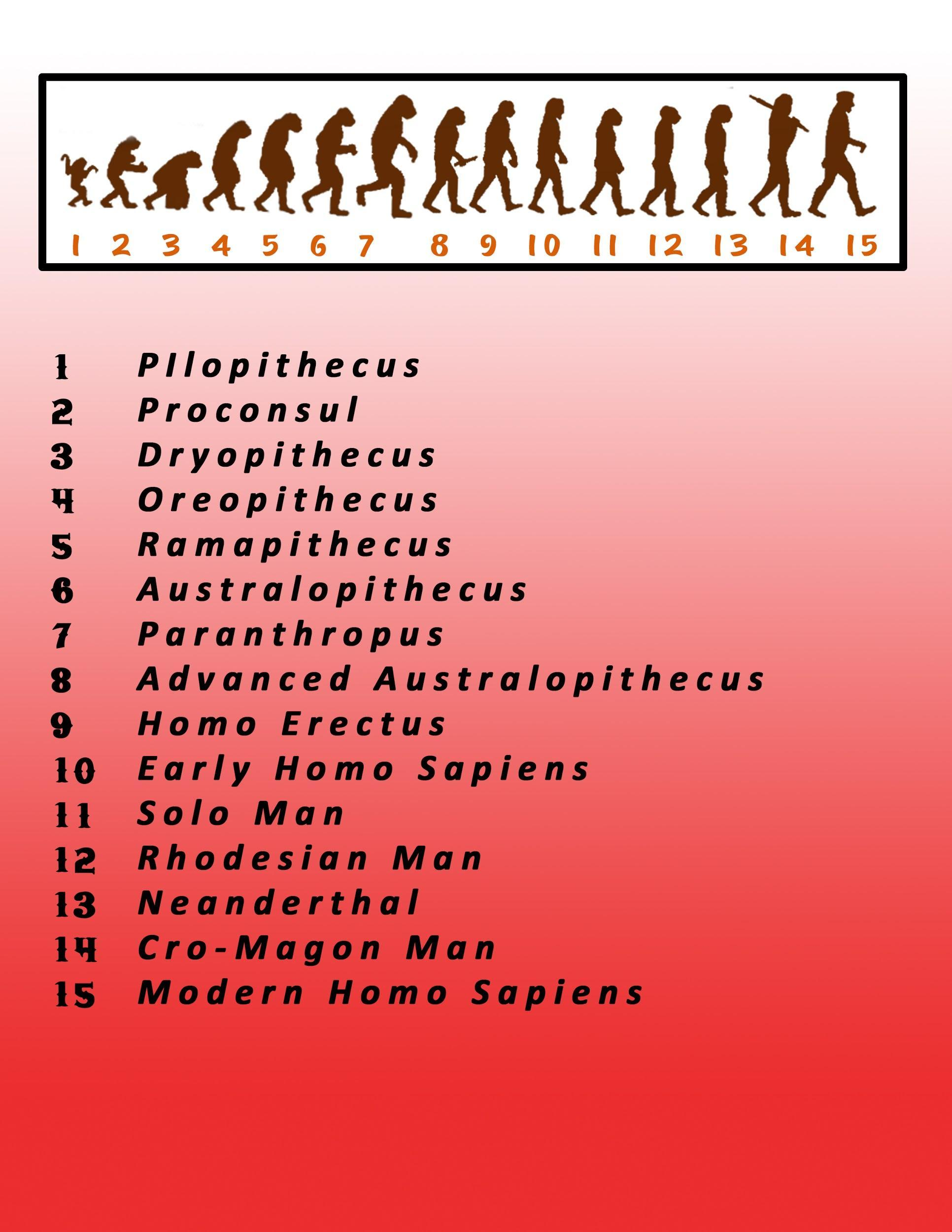
So, the correct answer is ‘Africa’.
Additional information: The genetic investigation tends to support the ‘out of Africa’ model. In Africa, the highest levels of genetic variation in humans are found. Indeed, there is more hereditary variety in Africa contrasted and the remainder of the world set up. In addition, the origin of modern DNA in the mitochondria (the ‘powerhouses’ of our cells) has been traced back to just one African woman who lived between 50,000 and 500,000 years ago – 'Mitochondrial Eve'.
Note: Between 80,000 and 50,000 years ago another wave of humans migrated out of Africa. These humans are likely to have been ‘modern’ in terms of their appearance and behavior. Due to their newly cooperative behavior, they were more successful at surviving and covered the whole world in a relatively short period of time. Genetically, the six billion individuals of the present world fluctuate next to no from these prior Homo sapiens that wandered out of Africa.
Complete step by step answer:
Human development is the long cycle of progress by which individuals started from apelike ancestors. Scientific proof shows that the physical and behavioral traits shared by all individuals began from apelike ancestors and advanced over a time of roughly 6,000,000 years. One of the earliest defining human traits, bipedalism - the capacity to walk on two legs - which can evolve more than 4 million years prior. The first modern humans, Homo sapiens, developed from their initial hominid predecessors somewhere in the range of 200,000 and 300,000 years back. They built up a limit with respect to language around 50,000 years prior. The region where the primitive man evolved in Africa.
So, the correct answer is ‘Africa’.
Additional information: The genetic investigation tends to support the ‘out of Africa’ model. In Africa, the highest levels of genetic variation in humans are found. Indeed, there is more hereditary variety in Africa contrasted and the remainder of the world set up. In addition, the origin of modern DNA in the mitochondria (the ‘powerhouses’ of our cells) has been traced back to just one African woman who lived between 50,000 and 500,000 years ago – 'Mitochondrial Eve'.
Note: Between 80,000 and 50,000 years ago another wave of humans migrated out of Africa. These humans are likely to have been ‘modern’ in terms of their appearance and behavior. Due to their newly cooperative behavior, they were more successful at surviving and covered the whole world in a relatively short period of time. Genetically, the six billion individuals of the present world fluctuate next to no from these prior Homo sapiens that wandered out of Africa.
Recently Updated Pages
Master Class 12 Economics: Engaging Questions & Answers for Success

Master Class 12 Social Science: Engaging Questions & Answers for Success
Master Class 12 English: Engaging Questions & Answers for Success
Master Class 12 Maths: Engaging Questions & Answers for Success
Master Class 12 Physics: Engaging Questions & Answers for Success
Master Class 12 Biology: Engaging Questions & Answers for Success
Trending doubts
Draw a labelled sketch of the human eye class 12 physics CBSE
Which are the Top 10 Largest Countries of the World?
Draw ray diagrams each showing i myopic eye and ii class 12 physics CBSE
Which is the correct genotypic ratio of mendel dihybrid class 12 biology CBSE
Differentiate between homogeneous and heterogeneous class 12 chemistry CBSE
Give 10 examples of unisexual and bisexual flowers