




Phloem parenchyma acts like
(a) Transfer cells
(b) Packaging material
(c) Conducting cells
(d) Both A and B
Answer
 Verified
604.2k+ views
Hint: Parenchyma cells of the phloem tissue are of mainly two types, the albuminous and companion cell. Companion cells are further divided into ordinary and transfer companion cells. The ordinary ones are only connected to the sieve cells.
Complete step by step answer:
Here, phloem parenchyma acts as both packaging material as well as transfer cells. The parenchyma cells in the phloem tissue are known as phloem parenchyma and of two types such as companion cells and albuminous cells. The parenchyma cells fill the gaps between other cells therefore known as packaging cells. On the other hand, transfer companion cells carry out the transfer of sugar therefore both A and B are correct.
Additional Information: Phloem tissue conducts the transportation of photosynthates (sugar sucrose) to the required parts of the plants from the leaves. These are living tissues and the process carried out by them is known as translocation. It is consisting of parenchyma cells - both companion and albuminous, sieve components, and supportive cells.
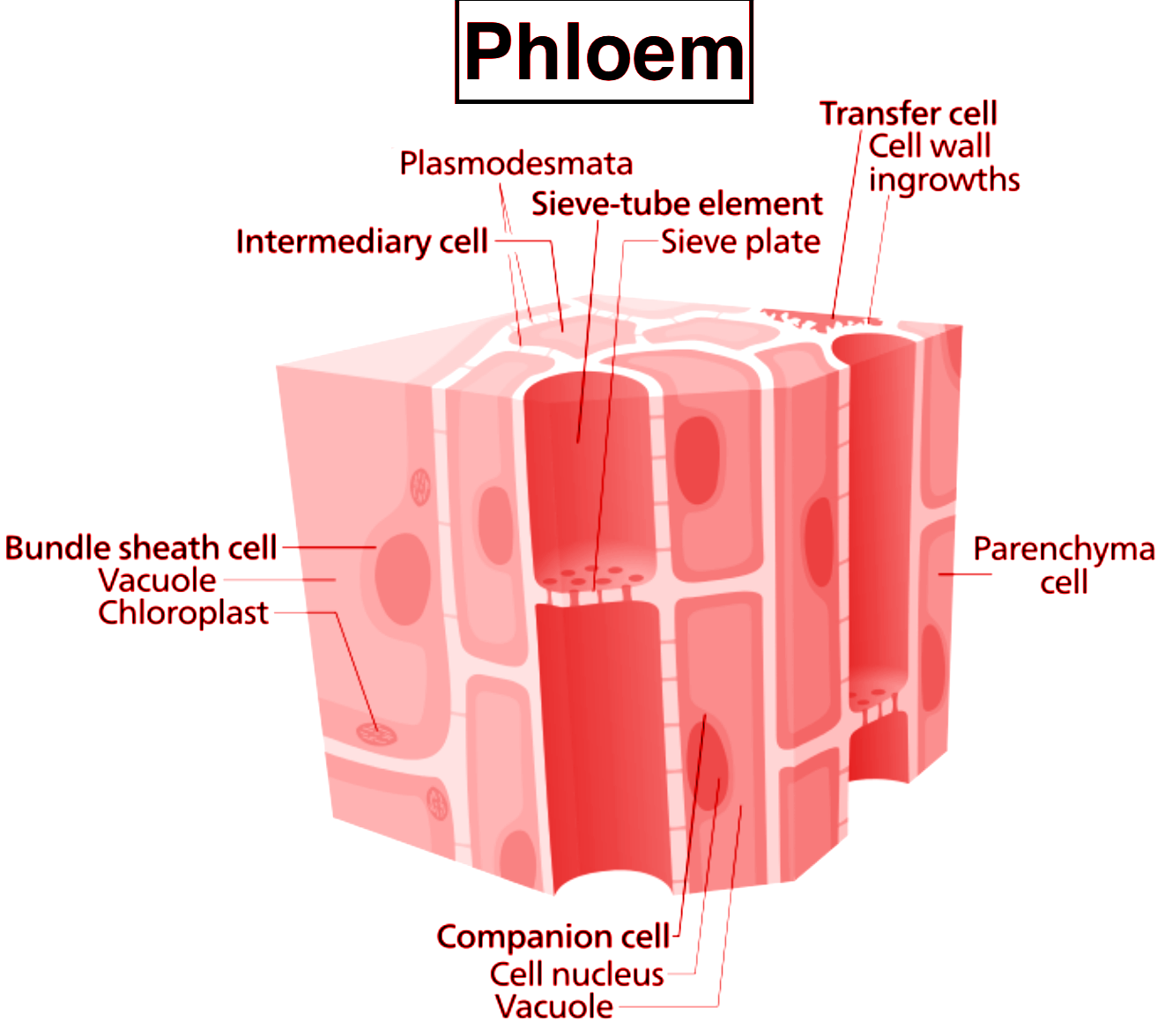
Sieve or conducting cells transports the sugar to different parts. But they are dependent on the companion cells as at maturity they lose their nucleus and ribosome. They are connected to the companion cells with the help of plasmodesmata.
Parenchyma is of two types- Companion that helps the sieve cells and albuminous which is similar to a companion but only found in seedless vascular and gymnosperms. The cellular activities of sieve cells are carried out by companion cells that have a large number of ribosomes and mitochondria with a normal nucleus. Ordinary ones have smooth walls or no plasmodesmata connection to other cells whereas the transfer companion cells use their larger area for transport.
So, the correct answer is ‘Both A and B’.
Note: Sieve cells are the conducting cells of the phloem tissue that carries out the conduction of photosynthates to different locations in the plant where it is necessary. There are other cells in the phloem called supportive cells which helps the phloem to give mechanical support to the plant as well. They are of two types- fibers and sclereids but they are mostly dead at maturity. Fibers are long narrow in shape whereas sclereids are irregular.
Complete step by step answer:
Here, phloem parenchyma acts as both packaging material as well as transfer cells. The parenchyma cells in the phloem tissue are known as phloem parenchyma and of two types such as companion cells and albuminous cells. The parenchyma cells fill the gaps between other cells therefore known as packaging cells. On the other hand, transfer companion cells carry out the transfer of sugar therefore both A and B are correct.
Additional Information: Phloem tissue conducts the transportation of photosynthates (sugar sucrose) to the required parts of the plants from the leaves. These are living tissues and the process carried out by them is known as translocation. It is consisting of parenchyma cells - both companion and albuminous, sieve components, and supportive cells.
Sieve or conducting cells transports the sugar to different parts. But they are dependent on the companion cells as at maturity they lose their nucleus and ribosome. They are connected to the companion cells with the help of plasmodesmata.
Parenchyma is of two types- Companion that helps the sieve cells and albuminous which is similar to a companion but only found in seedless vascular and gymnosperms. The cellular activities of sieve cells are carried out by companion cells that have a large number of ribosomes and mitochondria with a normal nucleus. Ordinary ones have smooth walls or no plasmodesmata connection to other cells whereas the transfer companion cells use their larger area for transport.
So, the correct answer is ‘Both A and B’.
Note: Sieve cells are the conducting cells of the phloem tissue that carries out the conduction of photosynthates to different locations in the plant where it is necessary. There are other cells in the phloem called supportive cells which helps the phloem to give mechanical support to the plant as well. They are of two types- fibers and sclereids but they are mostly dead at maturity. Fibers are long narrow in shape whereas sclereids are irregular.
Recently Updated Pages
Master Class 11 Social Science: Engaging Questions & Answers for Success

Master Class 11 English: Engaging Questions & Answers for Success
Master Class 11 Maths: Engaging Questions & Answers for Success
Master Class 11 Chemistry: Engaging Questions & Answers for Success
Master Class 11 Biology: Engaging Questions & Answers for Success
Master Class 11 Physics: Engaging Questions & Answers for Success
Trending doubts
One Metric ton is equal to kg A 10000 B 1000 C 100 class 11 physics CBSE
Difference Between Prokaryotic Cells and Eukaryotic Cells
How many of the following diseases can be studied with class 11 biology CBSE
Draw a diagram of a plant cell and label at least eight class 11 biology CBSE
Two of the body parts which do not appear in MRI are class 11 biology CBSE
10 examples of friction in our daily life