




When we peel the skin of a potato tuber, we remove
(a) periderm
(b) epidermis
(c) cuticle
(d) sapwood
Answer
 Verified
612.9k+ views
Hint: The potato peel has cells that are the corky outer layer of a plant stem developed either as a secondary thickening or as an injury or infection response. In humans, these cells may absorb nutrients from the amniotic fluid to satisfy epidermal demands before the skin capillary network was established.
Complete answer:
The potato periderm is the outer tissue of potato tubers which protects the tuber during harvest and storage from pathogen attacks, dehydration, and wounding. It is secondary in nature and replaces the epidermis early in the growth of the tuber. The perimeter's outer layers are made of cells with suberised walls. The protective cover is the layers of cork, cork cambium and secondary cortex constituting the periderm. If we peel a potato tuber's skin we lose periderm.
Tuber periderm consists of
- Phellem (suberised cells)
- phellogen (cork cambium), and
- tissues of phelloderm (parenchyma- like cells originating from phellogen) . However, the study of mature tuber periderm can not generate easily recognizable phellogen or phelloderms.
- The periderm is a cylindrical tissue that during early secondary growth covers the surfaces of stems and roots of perennial plants; therefore, it is not found in monocots and is confined to those gymnosperms and eudicots which display secondary growth. The periderm is derived from the phellogen, a meristematic area that occurs in the epidermis, cortex, phloem, or pericycle. The phellogen produces outward phellem (aka cork) and inward phelloderm (in some but not all plants) . At maturity, phellem cells become dead and form a tight seal around the plant heart. Phelloderm cells usually live at maturity, requiring storage and further differentiation. Lenticels are spongy openings in the periderm which allow the diffusion of gas into and out of the stem or root.
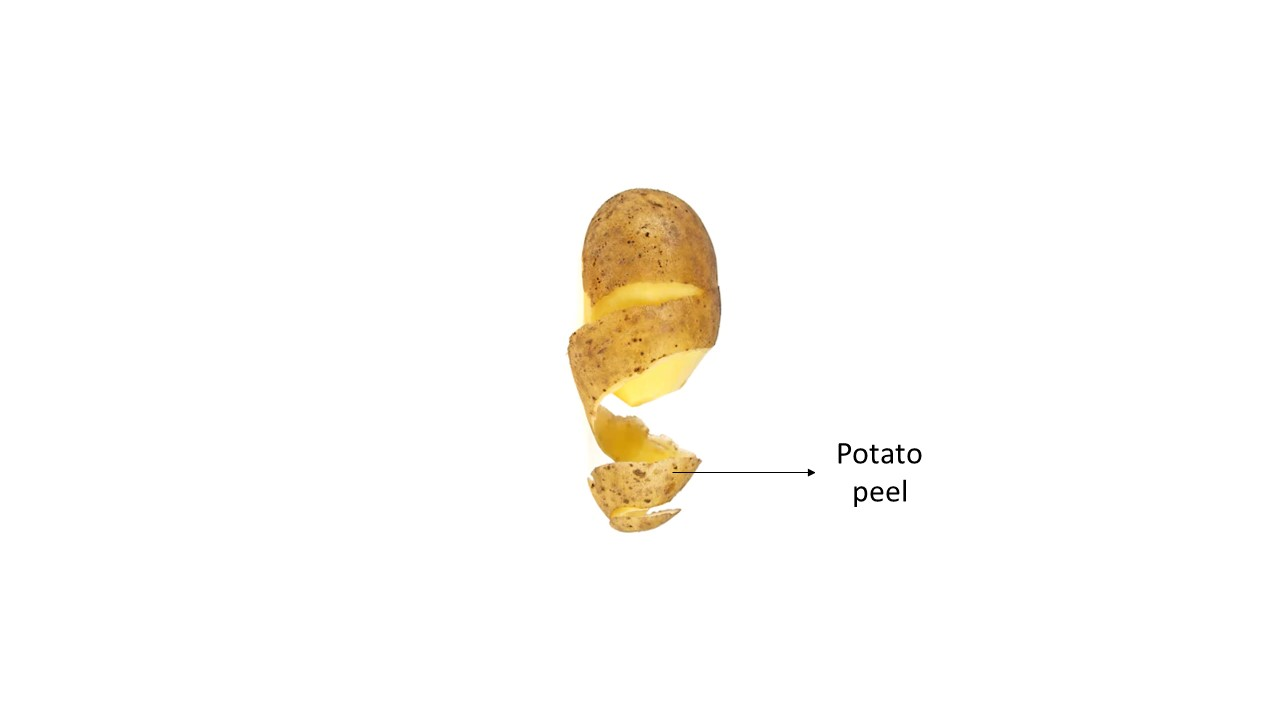
So, the correct answer is ‘periderm’.
Note: Potato peel is a great potassium source. It will improve our body’s metabolism and help cells to produce useful energy. Potato skins are also filled with iron which helps support the functioning of red blood cells. Also, they are a good source of vitamin B3, which helps cells break down nutrients and helps the cells to recover from oxidative stress. Potato peel has lots of fiber. Apart from reducing the risk of colon cancer, heart disease & type 2 diabetes, fiber is helpful in keeping metabolism under check.
Complete answer:
The potato periderm is the outer tissue of potato tubers which protects the tuber during harvest and storage from pathogen attacks, dehydration, and wounding. It is secondary in nature and replaces the epidermis early in the growth of the tuber. The perimeter's outer layers are made of cells with suberised walls. The protective cover is the layers of cork, cork cambium and secondary cortex constituting the periderm. If we peel a potato tuber's skin we lose periderm.
Tuber periderm consists of
- Phellem (suberised cells)
- phellogen (cork cambium), and
- tissues of phelloderm (parenchyma- like cells originating from phellogen) . However, the study of mature tuber periderm can not generate easily recognizable phellogen or phelloderms.
- The periderm is a cylindrical tissue that during early secondary growth covers the surfaces of stems and roots of perennial plants; therefore, it is not found in monocots and is confined to those gymnosperms and eudicots which display secondary growth. The periderm is derived from the phellogen, a meristematic area that occurs in the epidermis, cortex, phloem, or pericycle. The phellogen produces outward phellem (aka cork) and inward phelloderm (in some but not all plants) . At maturity, phellem cells become dead and form a tight seal around the plant heart. Phelloderm cells usually live at maturity, requiring storage and further differentiation. Lenticels are spongy openings in the periderm which allow the diffusion of gas into and out of the stem or root.
So, the correct answer is ‘periderm’.
Note: Potato peel is a great potassium source. It will improve our body’s metabolism and help cells to produce useful energy. Potato skins are also filled with iron which helps support the functioning of red blood cells. Also, they are a good source of vitamin B3, which helps cells break down nutrients and helps the cells to recover from oxidative stress. Potato peel has lots of fiber. Apart from reducing the risk of colon cancer, heart disease & type 2 diabetes, fiber is helpful in keeping metabolism under check.
Recently Updated Pages
Master Class 11 Social Science: Engaging Questions & Answers for Success

Master Class 11 English: Engaging Questions & Answers for Success
Master Class 11 Maths: Engaging Questions & Answers for Success
Master Class 11 Chemistry: Engaging Questions & Answers for Success
Master Class 11 Biology: Engaging Questions & Answers for Success
Master Class 11 Physics: Engaging Questions & Answers for Success
Trending doubts
Differentiate between an exothermic and an endothermic class 11 chemistry CBSE
There are 720 permutations of the digits 1 2 3 4 5 class 11 maths CBSE
Which gas is abundant in air class 11 chemistry CBSE
Draw a diagram of nephron and explain its structur class 11 biology CBSE
Explain zero factorial class 11 maths CBSE
Why is decomposition of vegetable matter into compost class 11 chemistry CBSE