




Pea seeds grow in pods on pea plants.
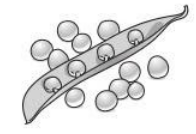
Freshly picked pea seeds contain sugar. The sugar can form a polymer.
Give the structural formula of the polymer and name the other product of this polymerisation reaction.
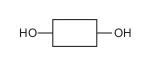
You may represent the sugar by the formula.
Structural formula of the polymer.
Answer
 Verified
515.1k+ views
Hint: Pea is probably the small spherical seed of fruit Pisum sativum. Pea is present inside pods, which are yellow or green in color. Pea pods are fruits botanically. Pea pods contain seeds inside. Peas are easier to grow when the weather is cooler. Pea pods are used in pastas and sauces. Usually, peas inside the shell or pods are eaten well.
Complete answer
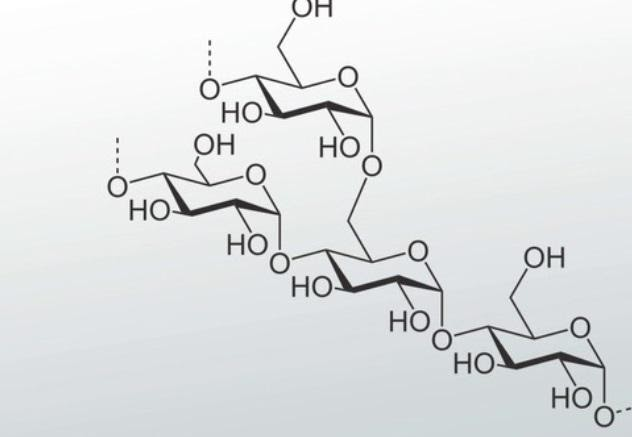
Generally, in plants, formation of sugar takes place during the photosynthesis, which is the end of the process. Conversion of carbon dioxide and water takes place and three-carbon sugar is formed through photosynthesis. Later, the three-carbon sugar is transformed into six-carbon sugar, glucose. Initially, a five-carbon chain of sugar, ribulose bisphosphate is formed. Then, it is converted into\[3\] – phosphoglycerate. Then, it is transformed into triose-phosphate, which later undergoes five transformations to give ADP-glucose. By starch, ADP-glucose is transformed into amylose starch using synthetase enzyme. All processes are a part of the Calvin cycle. The below picture depicts the structure of polymer.
Additional information:
Pea plant is an angiosperm and is an autotroph. In addition, it is a legume. Two separate layers are present in the walls of the pods. The outer layer is involved in the collection of carbon dioxide from the atmosphere. The inner layer collets carbon dioxide, which is coming off inside the pod. Peas are \[C3\] plants as the produce \[3\]-carbon first product.
Note:
Making of sugar from carbon dioxide through the Calvin process is the phenomenon behind the formation of polymers. Rubisco enzymes are involved in the process. The Calvin cycle is not completely dependent on the process of photosynthesis. But it is reliant on the products formed during the photosynthetic process. Through the sugar, the pea plant is able to establish a symbiotic relationship with bacteria, as bacteria receives some sugar from the plant and provides nitrogen for assimilation.
Complete answer
Generally, in plants, formation of sugar takes place during the photosynthesis, which is the end of the process. Conversion of carbon dioxide and water takes place and three-carbon sugar is formed through photosynthesis. Later, the three-carbon sugar is transformed into six-carbon sugar, glucose. Initially, a five-carbon chain of sugar, ribulose bisphosphate is formed. Then, it is converted into\[3\] – phosphoglycerate. Then, it is transformed into triose-phosphate, which later undergoes five transformations to give ADP-glucose. By starch, ADP-glucose is transformed into amylose starch using synthetase enzyme. All processes are a part of the Calvin cycle. The below picture depicts the structure of polymer.
Additional information:
Pea plant is an angiosperm and is an autotroph. In addition, it is a legume. Two separate layers are present in the walls of the pods. The outer layer is involved in the collection of carbon dioxide from the atmosphere. The inner layer collets carbon dioxide, which is coming off inside the pod. Peas are \[C3\] plants as the produce \[3\]-carbon first product.
Note:
Making of sugar from carbon dioxide through the Calvin process is the phenomenon behind the formation of polymers. Rubisco enzymes are involved in the process. The Calvin cycle is not completely dependent on the process of photosynthesis. But it is reliant on the products formed during the photosynthetic process. Through the sugar, the pea plant is able to establish a symbiotic relationship with bacteria, as bacteria receives some sugar from the plant and provides nitrogen for assimilation.
Recently Updated Pages
Basicity of sulphurous acid and sulphuric acid are

Master Class 11 Business Studies: Engaging Questions & Answers for Success
Master Class 11 Computer Science: Engaging Questions & Answers for Success
Master Class 11 Economics: Engaging Questions & Answers for Success
Master Class 11 Social Science: Engaging Questions & Answers for Success
Master Class 11 English: Engaging Questions & Answers for Success
Trending doubts
One Metric ton is equal to kg A 10000 B 1000 C 100 class 11 physics CBSE
State and prove Bernoullis theorem class 11 physics CBSE
Actinoid contraction is more than lanthanoid contraction class 11 chemistry CBSE
The transition element that has lowest enthalpy of class 11 chemistry CBSE
Can anyone list 10 advantages and disadvantages of friction
State the laws of reflection of light