



How many optically active isomers are possible for $ {C_5}{H_{11}}Cl $ ?
(A) 2
(B) 3
(4) 4
(D) 5
Answer
 Verified
543.6k+ views
Hint: We are asked to find the number of optically active isomers. Optical isomers are the two compounds that have the same number and types of atoms, also have the same no. of bonds but the two compounds are non-superimposable mirror images of each other.
Complete answer:
Now we are given the molecular formula $ {C_5}{H_{11}}Cl $ . Let us replace the Cl with H. We will get:
$ {C_5}{H_{11}}Cl\xrightarrow[{ - Cl}]{{ + {H^ + }}}{C_5}{H_{12}} $
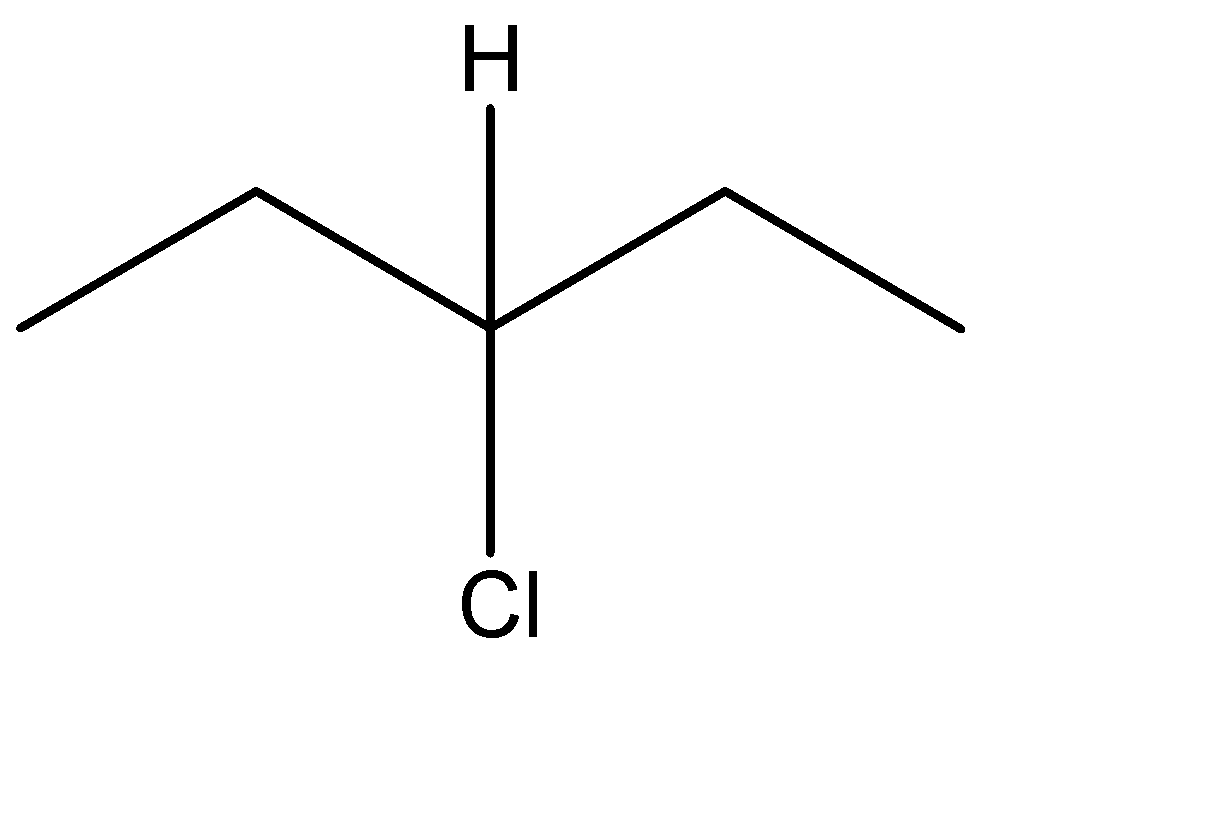
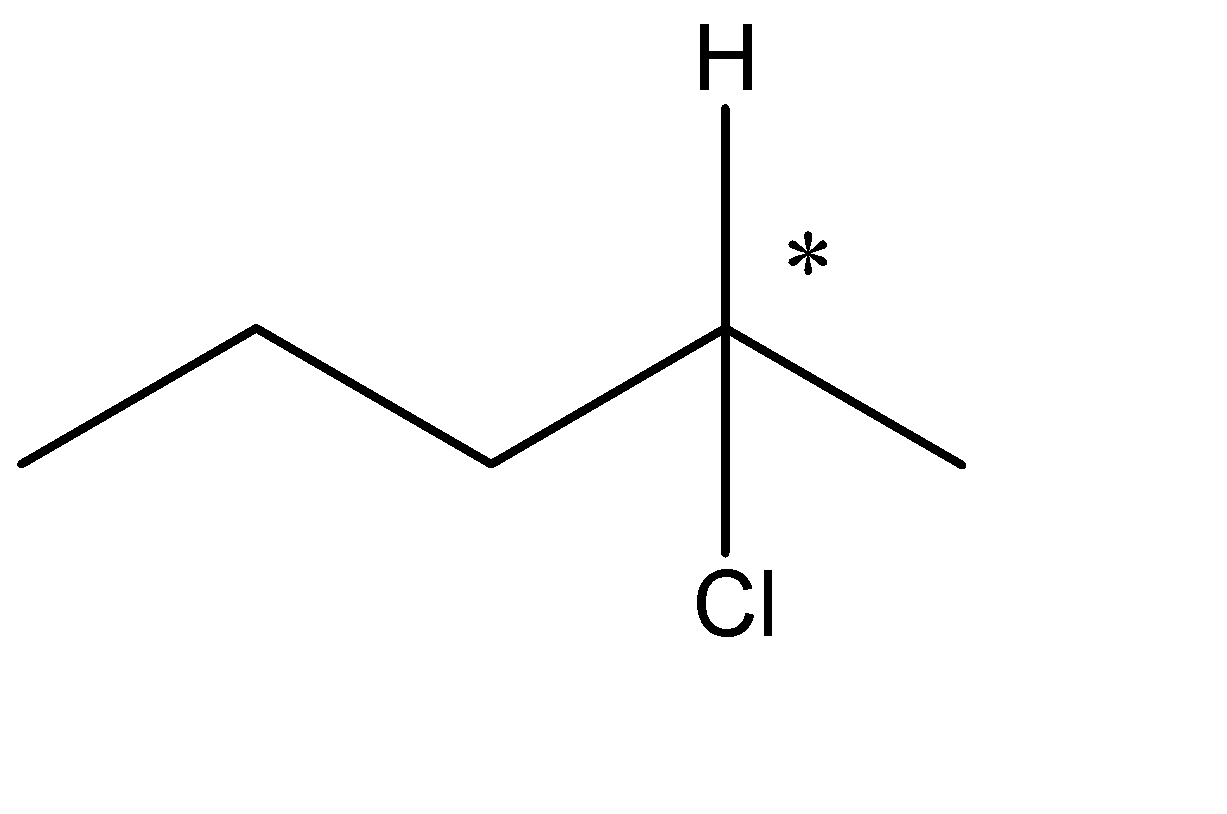
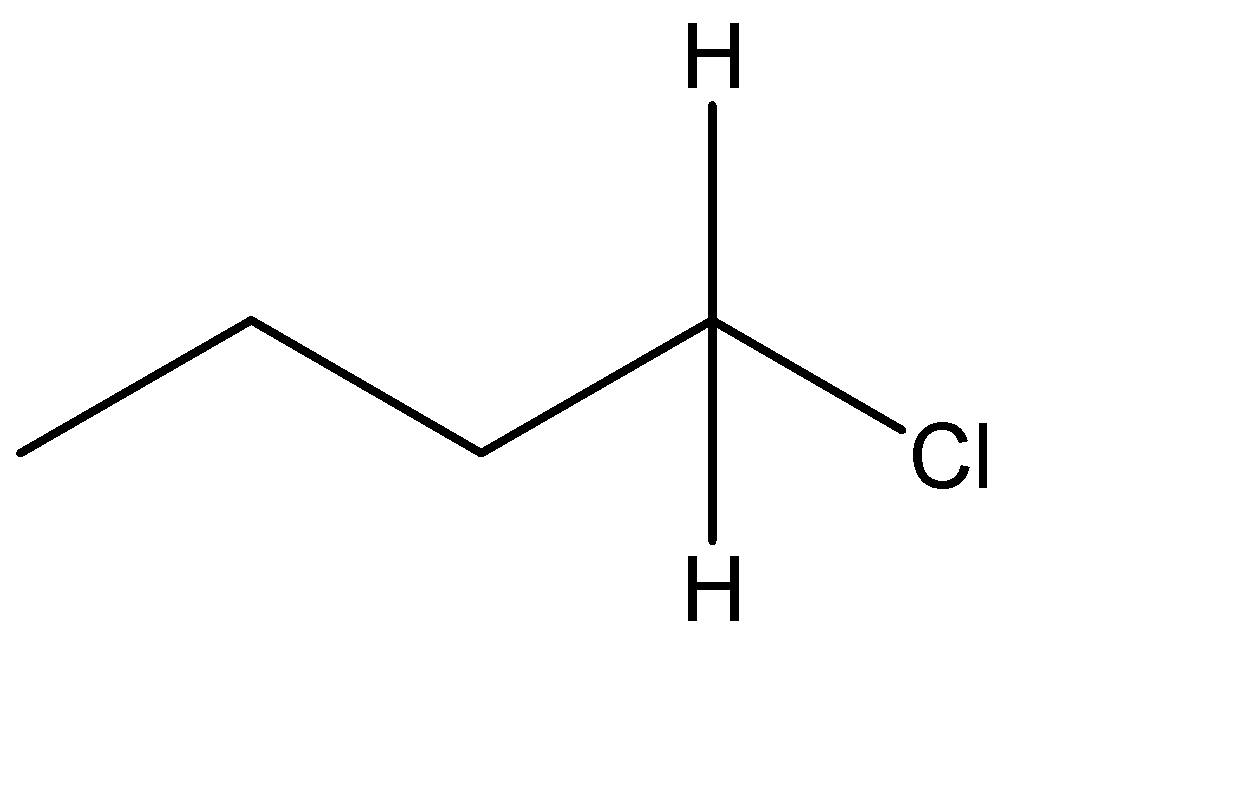
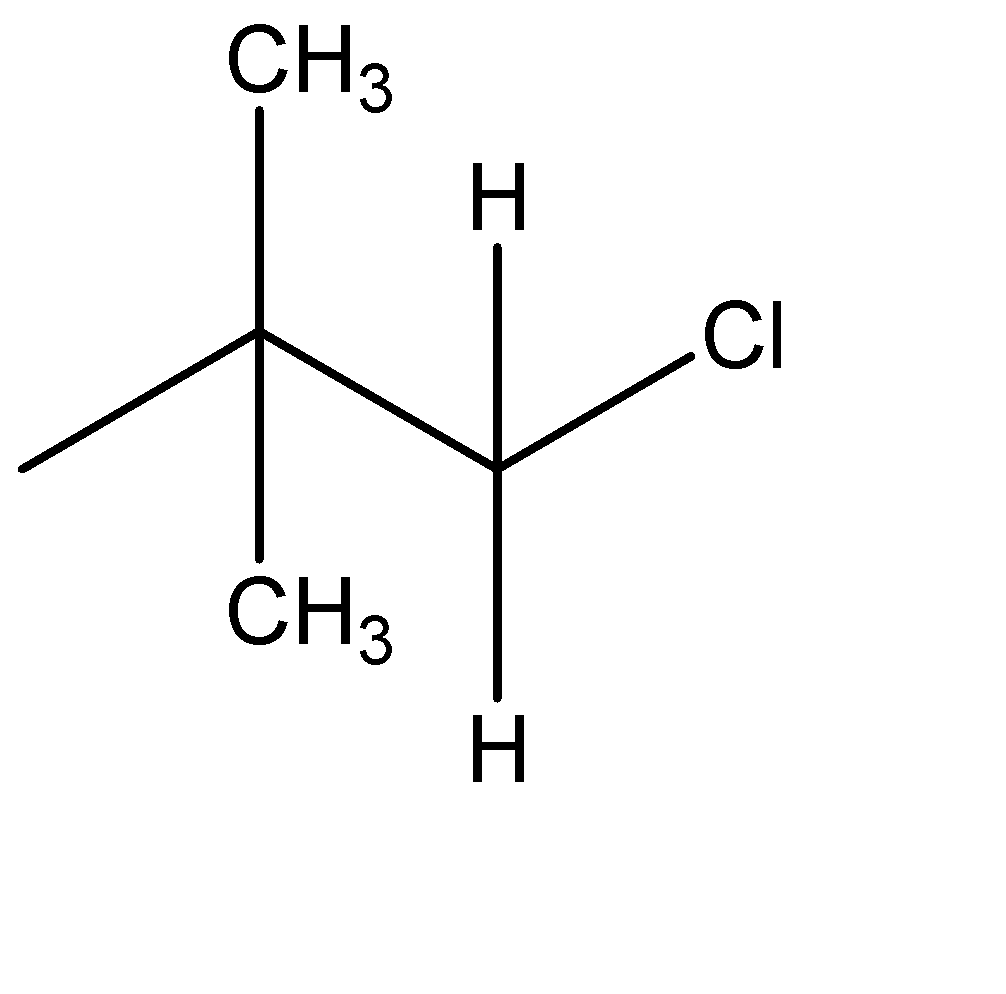
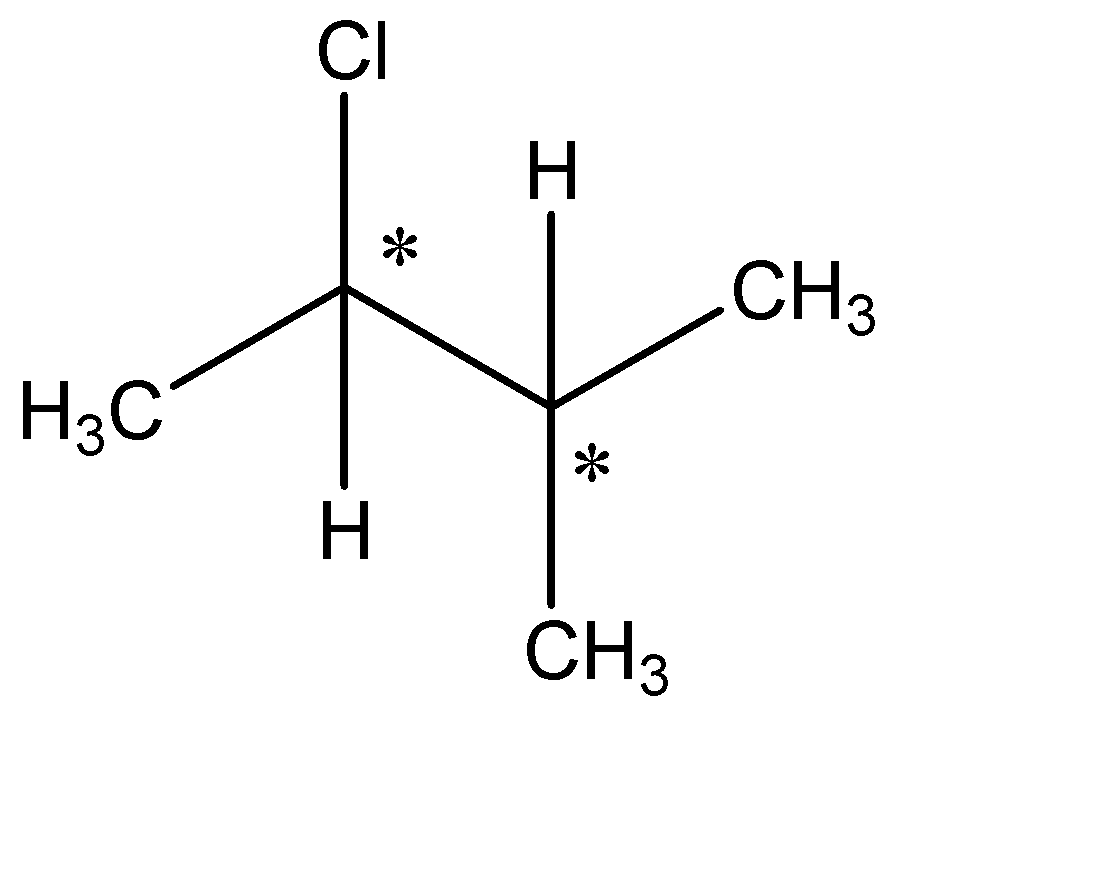
The formula is in the form $ {C_n}{H_{2n + 2}} $ which resembles an alkane. Hence, we know that the given compound is an alkyl halide. The optical isomers can be given from the structural isomers. There are total 6 structural isomers which are shown below: The (*) signs determine the chiral centre of that compound.
(a)
(b)
(c)
(d)
(e)
(f)
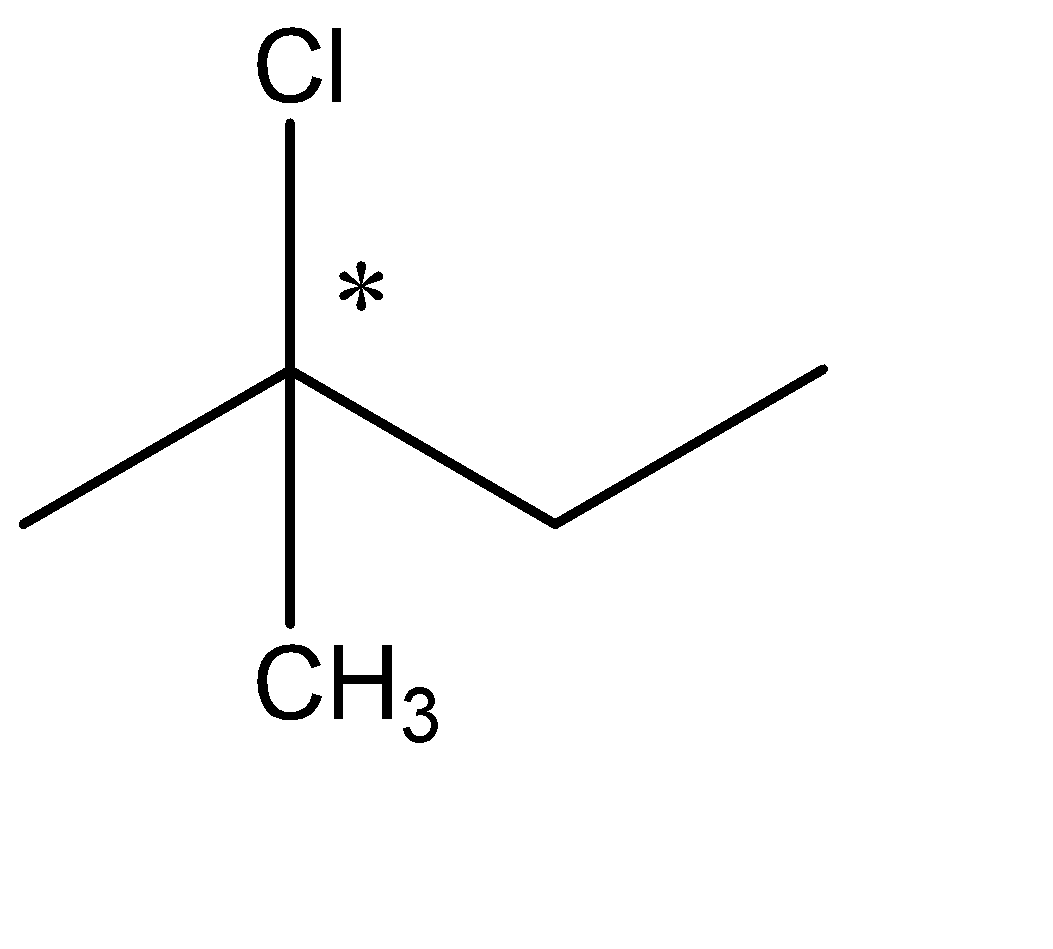
The chiral carbons are optically active ones. The compound with one chiral centre has two optical isomers ( i.e. R and S) and if the compound has 2 chiral centres then it will have 4 optical isomers. Therefore, (c) has 2 optical isomers, (e) has 4 and (f) has 2 optical isomers. The total no. of optical isomers hence will be: $ 2 + 4 + 2 = 8 $
Therefore, Option (D) is correct.
Note:
If we are given the structure of the compound and not the molecular formula the no. of optical isomers will be equal to $ {2^{n - 1}} $ where n is the no. of chiral centres. Chiral centres are the ones on which carbon is attached to 4 different groups. If the compound has 3 chiral centres, then the no. of optical isomers will be $ = {2^{3 - 1}} = {2^2} = 4 $ . Therefore, it will have 4 optical isomers.
Complete answer:
Now we are given the molecular formula $ {C_5}{H_{11}}Cl $ . Let us replace the Cl with H. We will get:
$ {C_5}{H_{11}}Cl\xrightarrow[{ - Cl}]{{ + {H^ + }}}{C_5}{H_{12}} $
The formula is in the form $ {C_n}{H_{2n + 2}} $ which resembles an alkane. Hence, we know that the given compound is an alkyl halide. The optical isomers can be given from the structural isomers. There are total 6 structural isomers which are shown below: The (*) signs determine the chiral centre of that compound.
(a)
(b)
(c)
(d)
(e)
(f)
The chiral carbons are optically active ones. The compound with one chiral centre has two optical isomers ( i.e. R and S) and if the compound has 2 chiral centres then it will have 4 optical isomers. Therefore, (c) has 2 optical isomers, (e) has 4 and (f) has 2 optical isomers. The total no. of optical isomers hence will be: $ 2 + 4 + 2 = 8 $
Therefore, Option (D) is correct.
Note:
If we are given the structure of the compound and not the molecular formula the no. of optical isomers will be equal to $ {2^{n - 1}} $ where n is the no. of chiral centres. Chiral centres are the ones on which carbon is attached to 4 different groups. If the compound has 3 chiral centres, then the no. of optical isomers will be $ = {2^{3 - 1}} = {2^2} = 4 $ . Therefore, it will have 4 optical isomers.
Recently Updated Pages
Difference Between Prokaryotic Cells and Eukaryotic Cells

If x a + bt + ct2 where x is in meters and t is in class 11 physics CBSE
A car covers the first half distance between two places class 11 physics CBSE
The resultant of two vectors overrightarrow P and overrightarrow class 11 physics CBSE
Find the value of cos 135 class 11 maths CBSE
A mass M is held in place by an applied force F and class 11 physics CBSE
Trending doubts
One Metric ton is equal to kg A 10000 B 1000 C 100 class 11 physics CBSE
Find the value of the expression given below sin 30circ class 11 maths CBSE
Draw a diagram of nephron and explain its structur class 11 biology CBSE
10 examples of friction in our daily life
Proton was discovered by A Thomson B Rutherford C Chadwick class 11 chemistry CBSE
Bond order ofO2 O2+ O2 and O22 is in order A O2 langle class 11 chemistry CBSE