




On a number line which integers are shown on the left side of the number line?
A.Negative
B.Positive
C.Both
D.None of these
Answer
 Verified
662.4k+ views
Hint: We know the number line, draw a number line and check the number will come on the left side .
Complete step-by-step answer:
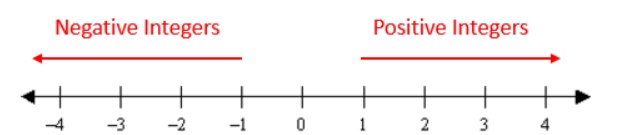
Arithmetic operations of numbers can be better explained on a number line. To begin with, one must know to locate numbers on a number line. Zero is the middle point of a number line. All (natural numbers) positive numbers occupy the right side of the zero whereas negative numbers occupy the left side of zero on the number line.
As we move on to the left side value of a number decreases. For example, $1$ is greater than $-2$. In a number line, integers, fractions, and decimals can also be represented easily. Check out the links given below to learn more.
When we add two positive numbers, the result will always be a positive number. Hence, on adding positive numbers direction of movement will always be to the right side. When we add two negative numbers, the result will always be a negative number. Hence, on adding negative numbers direction of movement will always be to the left side. A set of integers include zero, positive numbers and negative numbers excluding fractions. Even though arithmetic operations apply to integers, the rules for the addition and subtraction of integers are different.
When we subtract two positive numbers, move to the left as far as the value of the second number. When we subtract two negative numbers, move to the right as far as the value of the second number.
So here we can see that at the right side on the number line there are positive integers and that on the left is negative integers.
On the number line negative integers are shown at the left side.
Therefore, the correct answer is option (A).
Note: Zero is the middle point of a number line. All (natural numbers) positive numbers occupy the right side of the zero whereas negative numbers occupy the left side of zero on the number line.
Complete step-by-step answer:
Arithmetic operations of numbers can be better explained on a number line. To begin with, one must know to locate numbers on a number line. Zero is the middle point of a number line. All (natural numbers) positive numbers occupy the right side of the zero whereas negative numbers occupy the left side of zero on the number line.
As we move on to the left side value of a number decreases. For example, $1$ is greater than $-2$. In a number line, integers, fractions, and decimals can also be represented easily. Check out the links given below to learn more.
When we add two positive numbers, the result will always be a positive number. Hence, on adding positive numbers direction of movement will always be to the right side. When we add two negative numbers, the result will always be a negative number. Hence, on adding negative numbers direction of movement will always be to the left side. A set of integers include zero, positive numbers and negative numbers excluding fractions. Even though arithmetic operations apply to integers, the rules for the addition and subtraction of integers are different.
When we subtract two positive numbers, move to the left as far as the value of the second number. When we subtract two negative numbers, move to the right as far as the value of the second number.
So here we can see that at the right side on the number line there are positive integers and that on the left is negative integers.
On the number line negative integers are shown at the left side.
Therefore, the correct answer is option (A).
Note: Zero is the middle point of a number line. All (natural numbers) positive numbers occupy the right side of the zero whereas negative numbers occupy the left side of zero on the number line.

Recently Updated Pages
Master Class 10 Computer Science: Engaging Questions & Answers for Success

Master Class 12 Physics: Engaging Questions & Answers for Success
Master Class 12 Social Science: Engaging Questions & Answers for Success
Master Class 12 English: Engaging Questions & Answers for Success
Master Class 12 Maths: Engaging Questions & Answers for Success
Master Class 12 Business Studies: Engaging Questions & Answers for Success
Trending doubts
Give 10 examples for herbs , shrubs , climbers , creepers
The planet nearest to earth is A Mercury B Venus C class 6 social science CBSE
What is BLO What is the full form of BLO class 8 social science CBSE
Explain the Treaty of Vienna of 1815 class 10 social science CBSE
Draw a labelled sketch of the human eye class 12 physics CBSE
Which are the Top 10 Largest Countries of the World?