




Name the organ where urea is produced.
Answer
 Verified
626.1k+ views
Hint: The organ where urea is produced is the main center of detoxification in a human’s body. It is located in the right upper quadrant of the abdomen and below the diaphragm in the human body.
Complete answer:
Urea is produced in the liver. The liver is split into two lobes -the left and right lobe. These two lobes are separated by Falciform ligament. Urea is formed from ammonia, carbon dioxide and aspartate in a cyclic pathway referred to as the urea cycle. The ornithine cycle, also known as the urea cycle which converts the highly toxic ammonia to urea for the excretion. It occurs mostly in uricotelic organisms. This cycle occurs mainly in the liver of an organism. Urea synthesis occurs in five sequential enzymatic reactions.
Additional Information: -The liver performs a multitude of functions such as it carries out the metabolism of proteins, fats, and carbohydrates in order to produce bile which is further secreted in the small intestine to aid in the digestion of fats.
-It also stores vitamins, minerals, and glycogen, and is responsible to synthesize plasma proteins namely albumin and clotting factors. It also detoxifies the blood and purifies it.
-The liver is the only internal organ that can regenerate some of its parts lost due to an injury or removed via surgery.
Note: -The synthesis of urea in the liver is the major route of removal of ammonium ions. Any defect in the urea cycle can lead to an elevated level of ammonium ions in the blood. This condition is known as hyperammonemia.
-Its consequences can be serious which includes lethargy, slurred speech, tremors and may even lead to coma or death.
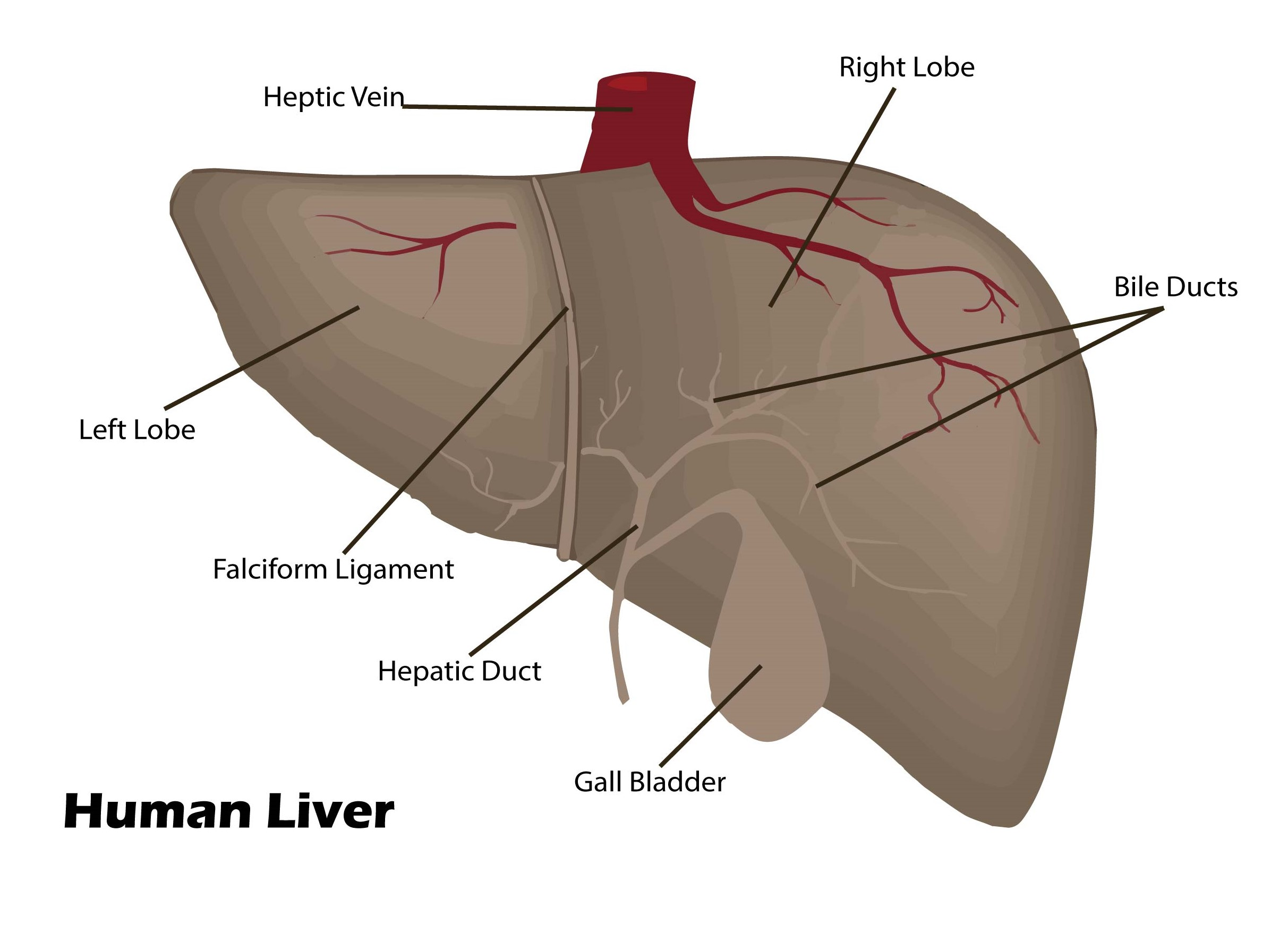
Complete answer:
Urea is produced in the liver. The liver is split into two lobes -the left and right lobe. These two lobes are separated by Falciform ligament. Urea is formed from ammonia, carbon dioxide and aspartate in a cyclic pathway referred to as the urea cycle. The ornithine cycle, also known as the urea cycle which converts the highly toxic ammonia to urea for the excretion. It occurs mostly in uricotelic organisms. This cycle occurs mainly in the liver of an organism. Urea synthesis occurs in five sequential enzymatic reactions.
Additional Information: -The liver performs a multitude of functions such as it carries out the metabolism of proteins, fats, and carbohydrates in order to produce bile which is further secreted in the small intestine to aid in the digestion of fats.
-It also stores vitamins, minerals, and glycogen, and is responsible to synthesize plasma proteins namely albumin and clotting factors. It also detoxifies the blood and purifies it.
-The liver is the only internal organ that can regenerate some of its parts lost due to an injury or removed via surgery.
Note: -The synthesis of urea in the liver is the major route of removal of ammonium ions. Any defect in the urea cycle can lead to an elevated level of ammonium ions in the blood. This condition is known as hyperammonemia.
-Its consequences can be serious which includes lethargy, slurred speech, tremors and may even lead to coma or death.
Recently Updated Pages
Master Class 11 English: Engaging Questions & Answers for Success

Master Class 11 Social Science: Engaging Questions & Answers for Success
Master Class 11 Maths: Engaging Questions & Answers for Success
Master Class 11 Biology: Engaging Questions & Answers for Success
Master Class 11 Physics: Engaging Questions & Answers for Success
Master Class 11 Chemistry: Engaging Questions & Answers for Success
Trending doubts
One Metric ton is equal to kg A 10000 B 1000 C 100 class 11 physics CBSE
Difference Between Prokaryotic Cells and Eukaryotic Cells
Find the value of the expression given below sin 30circ class 11 maths CBSE
Difference between physical and chemical change class 11 chemistry CBSE
Two of the body parts which do not appear in MRI are class 11 biology CBSE
Draw a diagram of a plant cell and label at least eight class 11 biology CBSE