




Mucilage present in ‘Bhindi’ (Okra, Lady’s finger) contains…………………
A.Mannose
B.Galactose
C.Lactose
D.Both A and B
Answer
 Verified
603.3k+ views
Hint: Okra is widely grown in subtropical, tropical and warm temperate regions of the world. They produce a thick, gluey substance known as mucilage. In plants, mucilage plays a role in storage of water and food, seed germination and in membrane thickening.
Complete answer:
The mucilage is also produced by some microorganisms. Microorganisms (for example, protists) use mucilage for locomotion. In them, mucilage secretes opposite to their direction of movement. Mucilage has a unique function in some carnivorous plants. Leaves of Drosera and Pingicuila are studded with mucilage secreting glands and are used as a flypaper trap for capturing insects.
Mucilage is edible and is used in medicine as it relieves irritation of mucous membranes. Mucilage consists of polysaccharides containing hexose and pentose sugars and it is also secreted by some root cells. Mucilage is water soluble and often has a high-water holding capacity. Mucilage is also produced in buds of many tree species. For example, mucilage cavities within the bud scales of Tilia produce polyamines that facilitate freezing tolerance in buds. Slimy mucilage is also present in dried pods. Substance in the mucilage is acidic polysaccharide and is associated with minerals and proteins. Hydrolysis of mucilage in Okra reveals that it contains polysaccharide which is composed of galactose, rhamnose, galacturonic acid etc.
Mannose is an aldohexose and is important in human metabolism, especially in glycosylation of proteins.
Lactose is composed of glucose and galactose, so it is a disaccharide. It is isomerized in alkaline solution to form lactulose, which is a commercial product used for treatment of constipation.
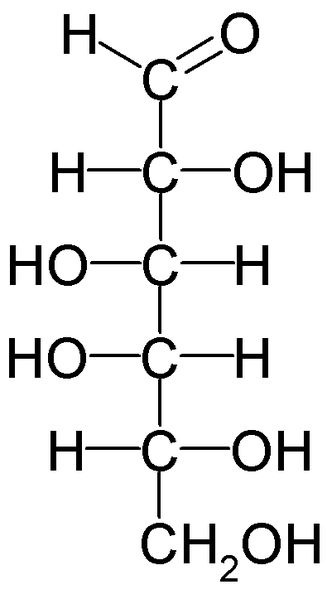 Figure: Structure of galactose
Additional information:
1.Okra is perennial, but cultivated as annual in temperate climate regions.
2.Okra is available in two varieties, green and red. Both have the same flavor, but differ in color. When cooked, the red okra pods turn green.
Hence the correct answer is option(B)
Note: Mucilage is a polar glycoprotein and an exopolysaccharide. It is mixed with water and is used as a glue especially for bonding paper items i.e., postal stamps, labels and envelope flaps. Varying types of mucilage can also be used for other adhesive applications like pasting labels to metal cans etc. Seed mucilage has a role in protecting DNA material from irradiation damages.
Complete answer:
The mucilage is also produced by some microorganisms. Microorganisms (for example, protists) use mucilage for locomotion. In them, mucilage secretes opposite to their direction of movement. Mucilage has a unique function in some carnivorous plants. Leaves of Drosera and Pingicuila are studded with mucilage secreting glands and are used as a flypaper trap for capturing insects.
Mucilage is edible and is used in medicine as it relieves irritation of mucous membranes. Mucilage consists of polysaccharides containing hexose and pentose sugars and it is also secreted by some root cells. Mucilage is water soluble and often has a high-water holding capacity. Mucilage is also produced in buds of many tree species. For example, mucilage cavities within the bud scales of Tilia produce polyamines that facilitate freezing tolerance in buds. Slimy mucilage is also present in dried pods. Substance in the mucilage is acidic polysaccharide and is associated with minerals and proteins. Hydrolysis of mucilage in Okra reveals that it contains polysaccharide which is composed of galactose, rhamnose, galacturonic acid etc.
Mannose is an aldohexose and is important in human metabolism, especially in glycosylation of proteins.
Lactose is composed of glucose and galactose, so it is a disaccharide. It is isomerized in alkaline solution to form lactulose, which is a commercial product used for treatment of constipation.
Additional information:
1.Okra is perennial, but cultivated as annual in temperate climate regions.
2.Okra is available in two varieties, green and red. Both have the same flavor, but differ in color. When cooked, the red okra pods turn green.
Hence the correct answer is option(B)
Note: Mucilage is a polar glycoprotein and an exopolysaccharide. It is mixed with water and is used as a glue especially for bonding paper items i.e., postal stamps, labels and envelope flaps. Varying types of mucilage can also be used for other adhesive applications like pasting labels to metal cans etc. Seed mucilage has a role in protecting DNA material from irradiation damages.
Recently Updated Pages
Master Class 11 Social Science: Engaging Questions & Answers for Success

Master Class 11 English: Engaging Questions & Answers for Success
Master Class 11 Maths: Engaging Questions & Answers for Success
Master Class 11 Chemistry: Engaging Questions & Answers for Success
Master Class 11 Biology: Engaging Questions & Answers for Success
Master Class 11 Physics: Engaging Questions & Answers for Success
Trending doubts
One Metric ton is equal to kg A 10000 B 1000 C 100 class 11 physics CBSE
Difference Between Prokaryotic Cells and Eukaryotic Cells
How many of the following diseases can be studied with class 11 biology CBSE
Two of the body parts which do not appear in MRI are class 11 biology CBSE
Which of the following enzymes is used for carboxylation class 11 biology CBSE
Explain zero factorial class 11 maths CBSE