




Metamorphosis of butterfly, housefly, and mosquito is ………………..
(a)Ametabolous metamorphosis
(b) Holometabolous metamorphosis
(c)Hemimetabolous metamorphosis
(d)Paurometabolous metamorphosis
Answer
 Verified
648.9k+ views
Hint: Metamorphosis involves the physical development of organisms after birth or hatching. It involves a conspicuous change in the animal's body structure through cell growth and differentiation.
Complete answer:
Butterfly, housefly, and mosquitos involve holometabolous metamorphosis. Holometabolous metamorphosis is also known as complete morphosis which is characterized by beetles, butterflies fly wasps, and moths. The life cycle includes four stages which are egg, larva, pupa, and adult. Lava IS differentiated from the adult during the inactive, non-feeding pupal stage. The insects at the maturity stage of holometabolism are different from the insects at the initial stages. 45 to 60% of the living species are holometabolous insects. They occur in different ecological niches and different resources. The first theory on the origin of holometabolous metamorphosis was in 1651 by William Harvey.
Additional Information: Ametabolous metamorphosis: Ametabolous metamorphosis is the growth of the life cycle in an insect where there is slight or no metamorphosis. It only increases in size gradually. It is found in primitive wingless insects such as Zygentoma which is commonly known as silverfish.
Hemimetabolous metamorphosis: Hemimetabolous metamorphosis is also known as incomplete metamorphosis and paurometabolous metamorphosis. It is a mode of development in certain insects which includes three distinct stages. The three distinct stages are the egg, nymph, and the adult stage or imago. They change gradually without a pupal stage. The nymph consists of a thin exoskeleton that resembles the adult stage but black wings and functional reproductive organs. In aquatic organisms, incomplete metamorphosis is categorized with another name. Paurometabolous metamorphosis is the nymph that occupies the same environment as the adult in the family of Hemiptera. These insects are called naiads, which occupy aquatic habitats and the adults are terrestrial.
So, the correct answer is 'holometabolous metamorphosis'.
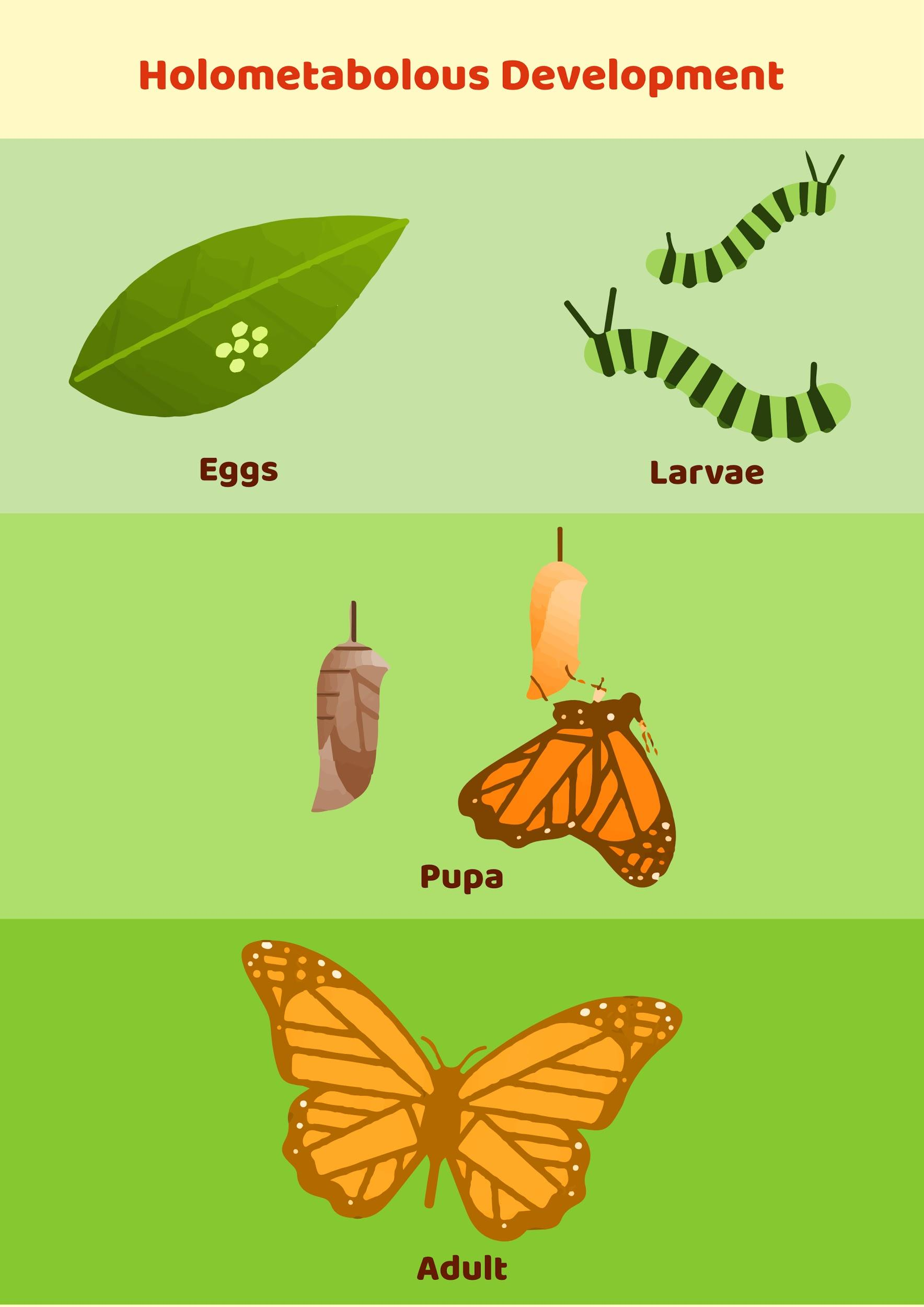
Note: Caterpillars melt in the chrysalis completely before growing into butterflies. The caterpillar completely converts into goo except for some special cells. Goo, are tiny imaginal discs which are similar to the embryonic cells.
Complete answer:
Butterfly, housefly, and mosquitos involve holometabolous metamorphosis. Holometabolous metamorphosis is also known as complete morphosis which is characterized by beetles, butterflies fly wasps, and moths. The life cycle includes four stages which are egg, larva, pupa, and adult. Lava IS differentiated from the adult during the inactive, non-feeding pupal stage. The insects at the maturity stage of holometabolism are different from the insects at the initial stages. 45 to 60% of the living species are holometabolous insects. They occur in different ecological niches and different resources. The first theory on the origin of holometabolous metamorphosis was in 1651 by William Harvey.
Additional Information: Ametabolous metamorphosis: Ametabolous metamorphosis is the growth of the life cycle in an insect where there is slight or no metamorphosis. It only increases in size gradually. It is found in primitive wingless insects such as Zygentoma which is commonly known as silverfish.
Hemimetabolous metamorphosis: Hemimetabolous metamorphosis is also known as incomplete metamorphosis and paurometabolous metamorphosis. It is a mode of development in certain insects which includes three distinct stages. The three distinct stages are the egg, nymph, and the adult stage or imago. They change gradually without a pupal stage. The nymph consists of a thin exoskeleton that resembles the adult stage but black wings and functional reproductive organs. In aquatic organisms, incomplete metamorphosis is categorized with another name. Paurometabolous metamorphosis is the nymph that occupies the same environment as the adult in the family of Hemiptera. These insects are called naiads, which occupy aquatic habitats and the adults are terrestrial.
So, the correct answer is 'holometabolous metamorphosis'.
Note: Caterpillars melt in the chrysalis completely before growing into butterflies. The caterpillar completely converts into goo except for some special cells. Goo, are tiny imaginal discs which are similar to the embryonic cells.
Recently Updated Pages
Master Class 12 Physics: Engaging Questions & Answers for Success

Master Class 12 Social Science: Engaging Questions & Answers for Success
Master Class 12 English: Engaging Questions & Answers for Success
Master Class 12 Maths: Engaging Questions & Answers for Success
Master Class 12 Business Studies: Engaging Questions & Answers for Success
Master Class 12 Chemistry: Engaging Questions & Answers for Success
Trending doubts
Draw a labelled sketch of the human eye class 12 physics CBSE
Which are the Top 10 Largest Countries of the World?
Draw ray diagrams each showing i myopic eye and ii class 12 physics CBSE
One megawatt is equal to how many units of electri class 12 physics CBSE
Which is the correct genotypic ratio of mendel dihybrid class 12 biology CBSE
Give 10 examples of unisexual and bisexual flowers