




Maximum diversity is found in which phylum?
(a)Chordata
(b)Arthropoda
(c)Protozoa
(d)Annelida
Answer
 Verified
604.2k+ views
Hint: There is maximum diversity in the phylum that consists of cockroaches, butterflies, crabs, prawns, spiders, centipedes, millipedes, etc. In Greek, the meaning of their word means a joint foot. They make up a phylum of butterflies, arachnids, myriapods, and crustaceans.
Complete answer:
With about 900000 species, Arthropoda is the largest animal kingdom. Arthropods are over two-thirds (about 60 to 70 percent) of all named organisms on Earth. This phylum is a rather heterogeneous group comprising a range of animals that vary in form, habitat, feeding habits, and other features.
An arthropod is an invertebrate animal with an exoskeleton, a segmented body, and jointed appendages that are paired.
Arthropods range from the deep sea to mountain peaks in distribution, from the king crab with its 12-foot arm span to microscopic insects and crustaceans in scale, and from chocolate-coated ants to jambalaya crawfish and Newburg lobster in taste. The basic body plan of arthropods is fairly constant in spite of this unbelievable diversity.
Therefore, the greatest diversity is found in the Arthropoda phylum.
Additional Information: Arthropods are distinguished by their jointed limbs and cuticles made of chitin, mostly mineralized with calcium carbonate.
The body plan for the arthropod consists of segments, each with a pair of appendages. The rigid cuticle inhibits growth, so it is periodically replaced by moulting by arthropods. Arthropods are bilaterally symmetrical and an external skeleton is present in their body. There are wings in some species.
So, the correct answer is, ‘Arthropoda’.
Note: In 1848, the German physiologist and zoologist Karl Theodor Ernst von Siebold (1804–1885) coined the term 'Arthropoda'. The phylum is named after its distinctive joint appendages, which can be adapted to form antennas, mouthparts, and reproductive organs in a variety of ways.
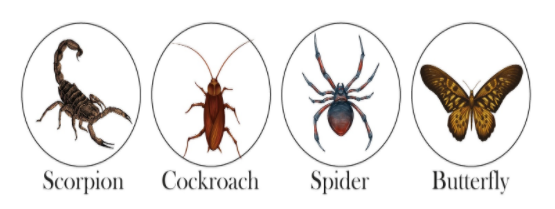
Complete answer:
With about 900000 species, Arthropoda is the largest animal kingdom. Arthropods are over two-thirds (about 60 to 70 percent) of all named organisms on Earth. This phylum is a rather heterogeneous group comprising a range of animals that vary in form, habitat, feeding habits, and other features.
An arthropod is an invertebrate animal with an exoskeleton, a segmented body, and jointed appendages that are paired.
Arthropods range from the deep sea to mountain peaks in distribution, from the king crab with its 12-foot arm span to microscopic insects and crustaceans in scale, and from chocolate-coated ants to jambalaya crawfish and Newburg lobster in taste. The basic body plan of arthropods is fairly constant in spite of this unbelievable diversity.
Therefore, the greatest diversity is found in the Arthropoda phylum.
Additional Information: Arthropods are distinguished by their jointed limbs and cuticles made of chitin, mostly mineralized with calcium carbonate.
The body plan for the arthropod consists of segments, each with a pair of appendages. The rigid cuticle inhibits growth, so it is periodically replaced by moulting by arthropods. Arthropods are bilaterally symmetrical and an external skeleton is present in their body. There are wings in some species.
So, the correct answer is, ‘Arthropoda’.
Note: In 1848, the German physiologist and zoologist Karl Theodor Ernst von Siebold (1804–1885) coined the term 'Arthropoda'. The phylum is named after its distinctive joint appendages, which can be adapted to form antennas, mouthparts, and reproductive organs in a variety of ways.
Recently Updated Pages
Master Class 11 Social Science: Engaging Questions & Answers for Success

Master Class 11 English: Engaging Questions & Answers for Success
Master Class 11 Maths: Engaging Questions & Answers for Success
Master Class 11 Chemistry: Engaging Questions & Answers for Success
Master Class 11 Biology: Engaging Questions & Answers for Success
Master Class 11 Physics: Engaging Questions & Answers for Success
Trending doubts
Differentiate between an exothermic and an endothermic class 11 chemistry CBSE
One Metric ton is equal to kg A 10000 B 1000 C 100 class 11 physics CBSE
Difference Between Prokaryotic Cells and Eukaryotic Cells
There are 720 permutations of the digits 1 2 3 4 5 class 11 maths CBSE
Two of the body parts which do not appear in MRI are class 11 biology CBSE
Which gas is abundant in air class 11 chemistry CBSE