




Mammalian liver cells will swell when kept in
A. Hypertonic solution
B. Hypotonic solution
C. Isotonic solution
D. Isothermal solution
Answer
 Verified
510.6k+ views
Hint: Mammalian liver cells are composed of lobules and hepatocytes. Hepatocytes and epithelial cells have two different units. There are four kinds of liver cells in the body such as hepatocytes, Kupffer cells and liver endothelial cells and stellate cells. As we knew that, hepatocytes are the chief functional unit of the liver which performs as endocrine and excretory functions.
Complete answer:
Option A: Hypertonic solution- in hypertonic solution cells possess water inside and swell, when the outer membrane cannot cross outside and the water remains swells, the solutes are salt and water hence it is called a hypertonic solution.
Option A is not the correct answer.
Option B: Hypotonic solution- hypotonic solution occurs due to endosmosis. Endosmosis means the water cannot move inside from the plasma membrane into the cell membrane as a result cell swells.
Option B is the correct answer.
Option C: Isotonic solution- isotonic solution is the solution which has osmolarity or solute concentration.
Option C is not the correct answer.
Option D: Isothermal solution- in isothermal solution thermal equilibrium is occurred. Isothermal solution is the solution where no outflow or inflow of heat occurs.
Option D is not the correct answer.
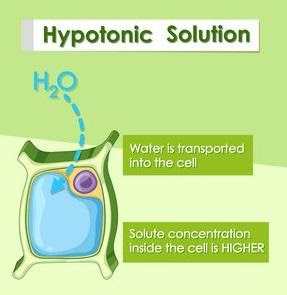
Hence, Option B is the correct answer.
Note:
Osmolarity is the process where a cell shows the flow of nutrients across the cell membrane. Hypotonic as we discussed is when a cell swells and hypertonic is when a cell shrinks. A cell contains gated channels so that it controls the outflow and inflow of nutrients across a semipermeable membrane. Semi-permeable membrane is the biological membrane which partially allows the entry of chemicals into the cell.
Complete answer:
Option A: Hypertonic solution- in hypertonic solution cells possess water inside and swell, when the outer membrane cannot cross outside and the water remains swells, the solutes are salt and water hence it is called a hypertonic solution.
Option A is not the correct answer.
Option B: Hypotonic solution- hypotonic solution occurs due to endosmosis. Endosmosis means the water cannot move inside from the plasma membrane into the cell membrane as a result cell swells.
Option B is the correct answer.
Option C: Isotonic solution- isotonic solution is the solution which has osmolarity or solute concentration.
Option C is not the correct answer.
Option D: Isothermal solution- in isothermal solution thermal equilibrium is occurred. Isothermal solution is the solution where no outflow or inflow of heat occurs.
Option D is not the correct answer.
Hence, Option B is the correct answer.
Note:
Osmolarity is the process where a cell shows the flow of nutrients across the cell membrane. Hypotonic as we discussed is when a cell swells and hypertonic is when a cell shrinks. A cell contains gated channels so that it controls the outflow and inflow of nutrients across a semipermeable membrane. Semi-permeable membrane is the biological membrane which partially allows the entry of chemicals into the cell.
Recently Updated Pages
Master Class 11 Computer Science: Engaging Questions & Answers for Success

Master Class 11 Business Studies: Engaging Questions & Answers for Success
Master Class 11 Economics: Engaging Questions & Answers for Success
Master Class 11 English: Engaging Questions & Answers for Success
Master Class 11 Maths: Engaging Questions & Answers for Success
Master Class 11 Biology: Engaging Questions & Answers for Success
Trending doubts
One Metric ton is equal to kg A 10000 B 1000 C 100 class 11 physics CBSE
There are 720 permutations of the digits 1 2 3 4 5 class 11 maths CBSE
Discuss the various forms of bacteria class 11 biology CBSE
Draw a diagram of a plant cell and label at least eight class 11 biology CBSE
State the laws of reflection of light
Explain zero factorial class 11 maths CBSE