




Make a flow chart showing different stages in a solar thermal power plant.
Answer
 Verified
552.9k+ views
Hint: Solar thermal power/electrical generation systems collect and concentrate sunlight to produce the high temperature heat needed to generate electricity.
Complete answer:
All solar thermal energy systems have solar energy collectors with two main components: reflectors (mirrors) that capture and focus sunlight on the receiver.The heat transfer fluid is heated in most types of systems and circulated in the receiver and used to produce steam. The steam is converted into the mechanical energy of the turbine, which enables the generator to produce electricity.
Solar thermal power systems have tracking systems that keep sunlight focused on the receiver all day as the sun changes its position in the sky. Solar thermal power plants usually have a large field or a range of collectors that supply heat to the turbine and generator. Several solar thermal power plants in the United States have two or more solar power plants with separate arrays and generators.
Solar thermal systems can also include a portion of the thermal energy storage system that enables the solar collector system to heat the energy storage system during the day, and the heat from the storage system can be used to generate electricity at night or in cloudy weather.
Solar thermal power plants may also be hybrid systems that use other fuels (usually natural gas) to supplement sunlight energy during periods of low solar radiation.
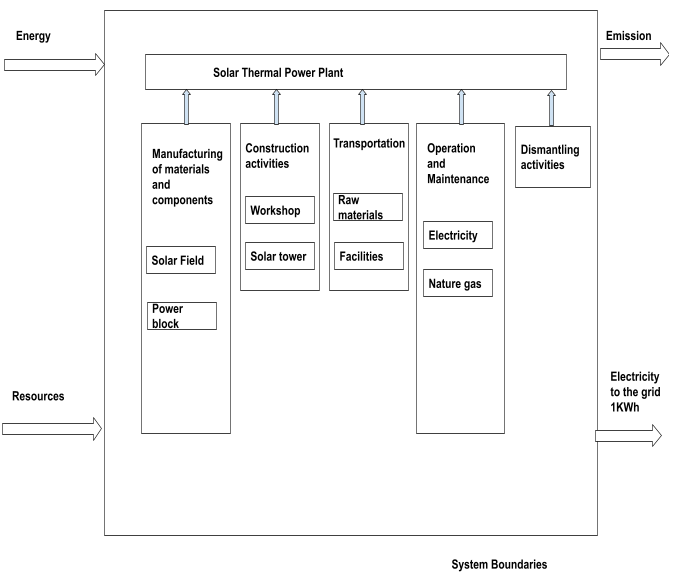
Note: There are two types of systems for collecting and storing solar radiation: passive systems and active systems. Solar thermal power plants are considered to be active systems. These plants are designed to operate using only solar energy, but most plants can use fossil fuel combustion to supplement their output when needed.
Complete answer:
All solar thermal energy systems have solar energy collectors with two main components: reflectors (mirrors) that capture and focus sunlight on the receiver.The heat transfer fluid is heated in most types of systems and circulated in the receiver and used to produce steam. The steam is converted into the mechanical energy of the turbine, which enables the generator to produce electricity.
Solar thermal power systems have tracking systems that keep sunlight focused on the receiver all day as the sun changes its position in the sky. Solar thermal power plants usually have a large field or a range of collectors that supply heat to the turbine and generator. Several solar thermal power plants in the United States have two or more solar power plants with separate arrays and generators.
Solar thermal systems can also include a portion of the thermal energy storage system that enables the solar collector system to heat the energy storage system during the day, and the heat from the storage system can be used to generate electricity at night or in cloudy weather.
Solar thermal power plants may also be hybrid systems that use other fuels (usually natural gas) to supplement sunlight energy during periods of low solar radiation.
Note: There are two types of systems for collecting and storing solar radiation: passive systems and active systems. Solar thermal power plants are considered to be active systems. These plants are designed to operate using only solar energy, but most plants can use fossil fuel combustion to supplement their output when needed.
Recently Updated Pages
Master Class 11 Social Science: Engaging Questions & Answers for Success

Master Class 11 English: Engaging Questions & Answers for Success
Master Class 11 Maths: Engaging Questions & Answers for Success
Master Class 11 Chemistry: Engaging Questions & Answers for Success
Master Class 11 Biology: Engaging Questions & Answers for Success
Master Class 11 Physics: Engaging Questions & Answers for Success
Trending doubts
One Metric ton is equal to kg A 10000 B 1000 C 100 class 11 physics CBSE
Difference Between Prokaryotic Cells and Eukaryotic Cells
Draw a diagram of a plant cell and label at least eight class 11 biology CBSE
Two of the body parts which do not appear in MRI are class 11 biology CBSE
Which gas is abundant in air class 11 chemistry CBSE
10 examples of friction in our daily life