




What is the main function of the small intestine?
Answer
 Verified
540.6k+ views
Hint: Small intestine is one of the major parts of the digestive system. It is present in between the stomach and large intestine. It receives the partially digested food from the stomach. The small intestine has secretory cells present on its walls.
Complete answer:
The small intestine is the longest part of our digestive system which is around 22 feet in length. It is narrower than the large intestine. The partially digested food spends the maximum time in the small intestine.
The small intestine is divided into duodenum, jejunum and ilium. The walls of the small intestine have projections called the villi they increase the surface area for the absorption of nutrients. The duodenum receives the digestive enzymes from the pancreas and liver. These enzymes help in the breakdown of fats, proteins, carbohydrates.
The maximum absorption of the nutrients and digestion of the food takes place in the small intestine. The water and nutrients from the food is absorbed in the small intestine which is utilised by all the parts of the body. The small intestine also secretes the digestive enzymes which help in breakdown of the food.

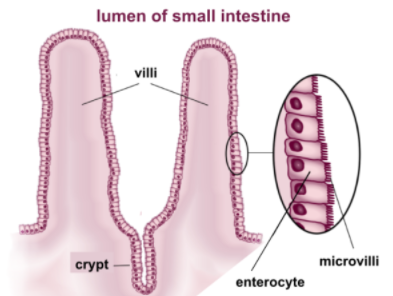
So, we can conclude that most of the digestion and absorption of the nutrients takes place in the small intestine. It works in association with the accessory glands for the complete digestion of food.
Note: The digestive juices secreted by the pancreas like trypsinogen chymotrypsin etc are secreted in the inactive stage, the digestive juices secreted by the duodenum activates the enzyme also neutralises the acidic pH of the food received from the stomach. The liver secretes bile which helps in emulsification of fat.
Complete answer:
The small intestine is the longest part of our digestive system which is around 22 feet in length. It is narrower than the large intestine. The partially digested food spends the maximum time in the small intestine.
The small intestine is divided into duodenum, jejunum and ilium. The walls of the small intestine have projections called the villi they increase the surface area for the absorption of nutrients. The duodenum receives the digestive enzymes from the pancreas and liver. These enzymes help in the breakdown of fats, proteins, carbohydrates.
The maximum absorption of the nutrients and digestion of the food takes place in the small intestine. The water and nutrients from the food is absorbed in the small intestine which is utilised by all the parts of the body. The small intestine also secretes the digestive enzymes which help in breakdown of the food.
So, we can conclude that most of the digestion and absorption of the nutrients takes place in the small intestine. It works in association with the accessory glands for the complete digestion of food.
Note: The digestive juices secreted by the pancreas like trypsinogen chymotrypsin etc are secreted in the inactive stage, the digestive juices secreted by the duodenum activates the enzyme also neutralises the acidic pH of the food received from the stomach. The liver secretes bile which helps in emulsification of fat.
Recently Updated Pages
Master Class 11 English: Engaging Questions & Answers for Success

Master Class 11 Social Science: Engaging Questions & Answers for Success
Master Class 11 Maths: Engaging Questions & Answers for Success
Master Class 11 Biology: Engaging Questions & Answers for Success
Master Class 11 Physics: Engaging Questions & Answers for Success
Master Class 11 Chemistry: Engaging Questions & Answers for Success
Trending doubts
One Metric ton is equal to kg A 10000 B 1000 C 100 class 11 physics CBSE
Difference Between Prokaryotic Cells and Eukaryotic Cells
Find the value of the expression given below sin 30circ class 11 maths CBSE
Difference between physical and chemical change class 11 chemistry CBSE
Two of the body parts which do not appear in MRI are class 11 biology CBSE
Draw a diagram of a plant cell and label at least eight class 11 biology CBSE