




Lever mechanism of pollination is done in
(a) Salvia
(b) Jasmine
(c) Bougainvillea
(d) Butea
Answer
 Verified
653.1k+ views
Hint: This is a plant species that has transient psychoactive properties when chewing, smoking, or as a tea eats its leaves. The leaves contain compounds similar to opioids, which cause hallucinations.
Complete step by step answer:
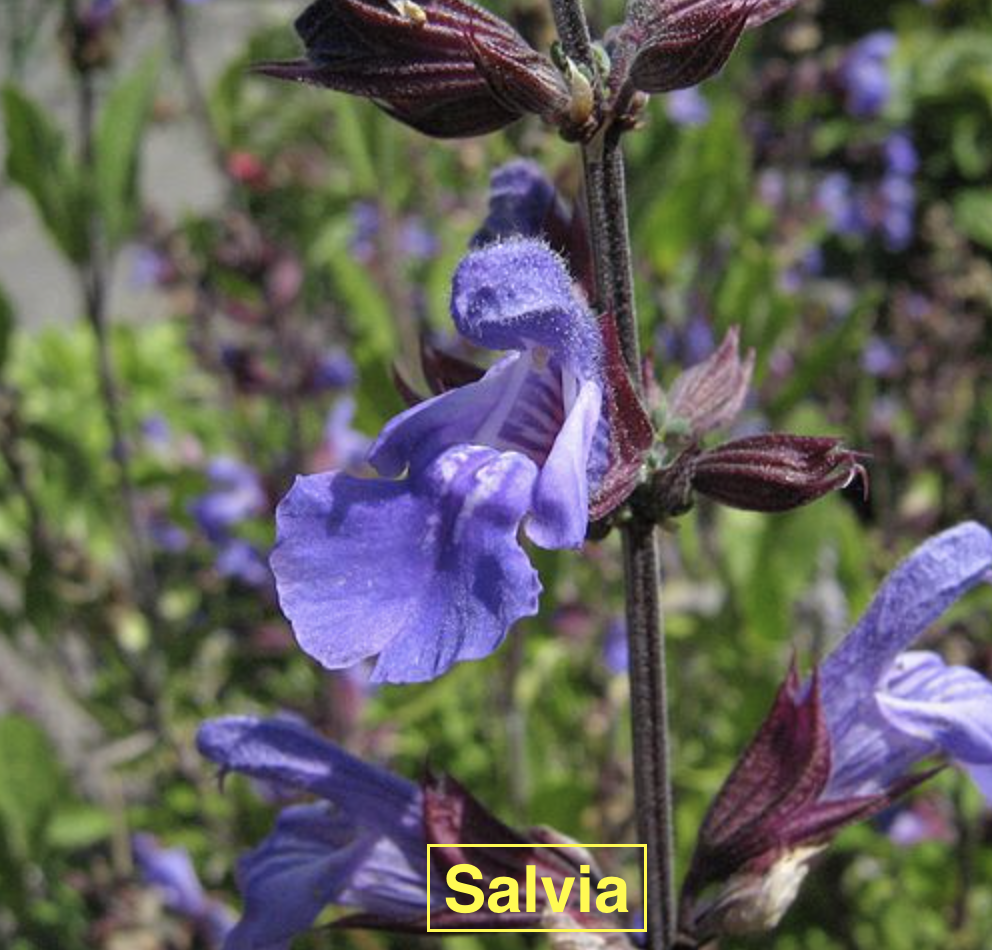
A special type of lever is the pollination mechanism in Salvia. The flowers in this genus are arranged in the inflorescence of the thyrsus and are attractive and well suited by the insect agency for cross-pollination. The corolla has a spreading upper lip in this lever pollination mechanism, which serves as a landing place for the insect. When the insects land on the corolla's lower lip and seek to receive nectar secreted by the hypogynous disc, the sterile lobes of the stamen are pulled inward. The upper half of the connective with the fertile lobes acts as a lever because of this. Then the anther lobe descends and sheds the pollen on the insect's back.
So, the correct answer is ‘Salvia’.
Additional information: Jasmine flowers contain all kinds of reproductive organs. Since pistils and stamens do not grow at the same time, self-pollination can not be carried out by flowers. Butterflies and bees are the primary jasmine pollinators. Flowers turn to blackberries (jasmine fruit) after good pollination. The flower of the bougainvillea produces nectar that attracts butterflies, moths, and hummingbirds that also bear pollen on their bodies, spreading it among nearby plants. The nectar has a long, thin neck that these pollinators have access to.
Butea monosperma is predominantly bird-pollinated. Crop dispersal: Mechanical dispersion: barochory (gravity crop dispersal) , self-propagation. The seeds distribute from the pods and germinate in suitable conditions on sites: the ripe dry fruits burst and the seeds disperse.
Note: Two-cleft are the flower styles. The fruits are ovoid or oblong smooth nutlets and they have a mucilaginous covering in many species. Many Salvia members have trichomes (hairs) developing on the leaves, stems, and flowers, which in some species help minimize water loss.
Complete step by step answer:
A special type of lever is the pollination mechanism in Salvia. The flowers in this genus are arranged in the inflorescence of the thyrsus and are attractive and well suited by the insect agency for cross-pollination. The corolla has a spreading upper lip in this lever pollination mechanism, which serves as a landing place for the insect. When the insects land on the corolla's lower lip and seek to receive nectar secreted by the hypogynous disc, the sterile lobes of the stamen are pulled inward. The upper half of the connective with the fertile lobes acts as a lever because of this. Then the anther lobe descends and sheds the pollen on the insect's back.
So, the correct answer is ‘Salvia’.
Additional information: Jasmine flowers contain all kinds of reproductive organs. Since pistils and stamens do not grow at the same time, self-pollination can not be carried out by flowers. Butterflies and bees are the primary jasmine pollinators. Flowers turn to blackberries (jasmine fruit) after good pollination. The flower of the bougainvillea produces nectar that attracts butterflies, moths, and hummingbirds that also bear pollen on their bodies, spreading it among nearby plants. The nectar has a long, thin neck that these pollinators have access to.
Butea monosperma is predominantly bird-pollinated. Crop dispersal: Mechanical dispersion: barochory (gravity crop dispersal) , self-propagation. The seeds distribute from the pods and germinate in suitable conditions on sites: the ripe dry fruits burst and the seeds disperse.
Note: Two-cleft are the flower styles. The fruits are ovoid or oblong smooth nutlets and they have a mucilaginous covering in many species. Many Salvia members have trichomes (hairs) developing on the leaves, stems, and flowers, which in some species help minimize water loss.
Recently Updated Pages
Master Class 12 Physics: Engaging Questions & Answers for Success

Master Class 12 Social Science: Engaging Questions & Answers for Success
Master Class 12 English: Engaging Questions & Answers for Success
Master Class 12 Maths: Engaging Questions & Answers for Success
Master Class 12 Business Studies: Engaging Questions & Answers for Success
Master Class 12 Chemistry: Engaging Questions & Answers for Success
Trending doubts
Draw a labelled sketch of the human eye class 12 physics CBSE
Which are the Top 10 Largest Countries of the World?
Draw ray diagrams each showing i myopic eye and ii class 12 physics CBSE
Which is the correct genotypic ratio of mendel dihybrid class 12 biology CBSE
Draw a well labelled diagram of the human brain class 12 biology CBSE
Give 10 examples of unisexual and bisexual flowers