




Length of different internodes in a column of sugarcane is variable due to______
A) Shoot apical meristem
B) Position of axillary buds
C) Intercalary meristem
D) Size of leaf lamina at the node below each internode
Answer
 Verified
611.1k+ views
Hint: It occurs only in monocots which are associated with the growth of the middle portion of the stem and divide mitotically in the stem. It consists of cells that are continuously dividing and responsible for the growth in plants.
Complete answer:
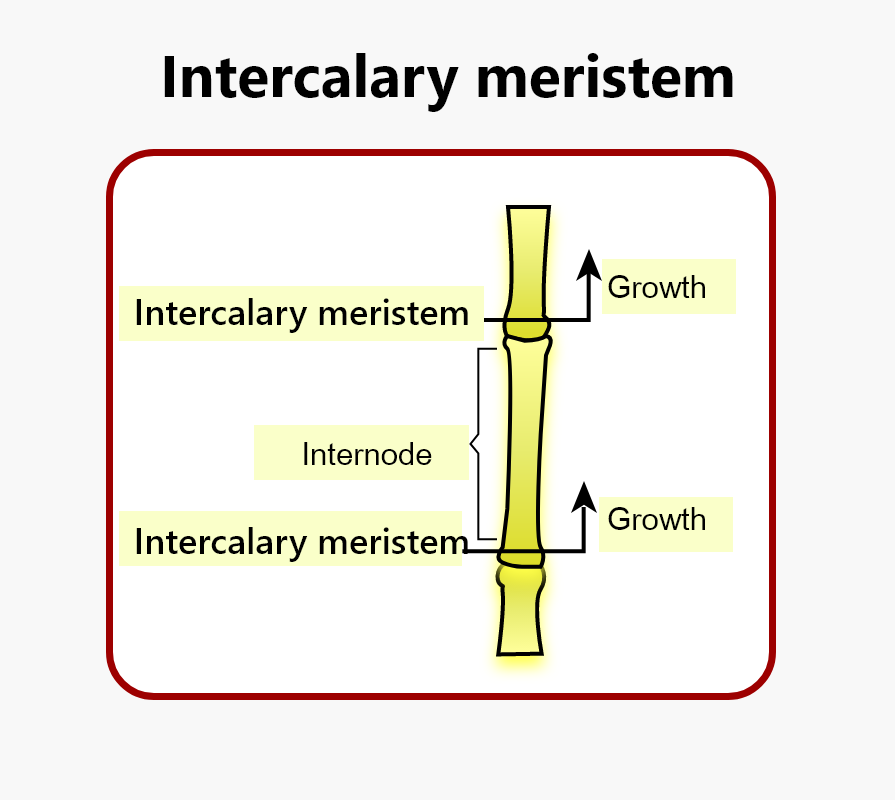
-Sugarcane belongs to the family Poaceae and it is a monocot plant possessing intercalary meristem at the nodes.
-Due to the intercalary meristem the length of different internodes in a culm of sugarcane is variable because intercalary meristem present between mature tissues is capable of cell division that allows the growth of many monocots and rapid growth of the stem.
-So, whenever the tip of the sugarcane is removed it can still grow using intercalary meristem which is present at nodes.
Additional Information: -Apical meristem is the meristem present at the tip of the root and shoot and produces primary tissue. Shoot apical meristem covers most regions of the stem axis. During the formation of leaves and elongation of the stem, some cells are left behind which constitutes the axillary bud.
-Axillary buds are capable of forming a flower or a branch and a present at the axils of leaves.
So, the correct answer is, "Intercalary meristem".
Note: -Sugarcane is cultivated in the tropical and subtropical regions of the world and contains high concentrations of sucrose.
-With the process of fermentation sugarcane is processed to produce alcoholic beverages in a large quantity.
-When the juice of the sugarcane has been removed, a fibrous portion of sugarcane that remains left is known as Bagasse. It is used in paper Mills to make paper in many countries. It is also used as an animal feed.
Complete answer:
-Sugarcane belongs to the family Poaceae and it is a monocot plant possessing intercalary meristem at the nodes.
-Due to the intercalary meristem the length of different internodes in a culm of sugarcane is variable because intercalary meristem present between mature tissues is capable of cell division that allows the growth of many monocots and rapid growth of the stem.
-So, whenever the tip of the sugarcane is removed it can still grow using intercalary meristem which is present at nodes.
Additional Information: -Apical meristem is the meristem present at the tip of the root and shoot and produces primary tissue. Shoot apical meristem covers most regions of the stem axis. During the formation of leaves and elongation of the stem, some cells are left behind which constitutes the axillary bud.
-Axillary buds are capable of forming a flower or a branch and a present at the axils of leaves.
So, the correct answer is, "Intercalary meristem".
Note: -Sugarcane is cultivated in the tropical and subtropical regions of the world and contains high concentrations of sucrose.
-With the process of fermentation sugarcane is processed to produce alcoholic beverages in a large quantity.
-When the juice of the sugarcane has been removed, a fibrous portion of sugarcane that remains left is known as Bagasse. It is used in paper Mills to make paper in many countries. It is also used as an animal feed.
Recently Updated Pages
Master Class 12 Economics: Engaging Questions & Answers for Success

Master Class 12 English: Engaging Questions & Answers for Success
Master Class 12 Social Science: Engaging Questions & Answers for Success
Master Class 12 Maths: Engaging Questions & Answers for Success
Master Class 12 Physics: Engaging Questions & Answers for Success
Master Class 11 Social Science: Engaging Questions & Answers for Success
Trending doubts
One Metric ton is equal to kg A 10000 B 1000 C 100 class 11 physics CBSE
Difference Between Prokaryotic Cells and Eukaryotic Cells
Two of the body parts which do not appear in MRI are class 11 biology CBSE
1 ton equals to A 100 kg B 1000 kg C 10 kg D 10000 class 11 physics CBSE
Draw a diagram of nephron and explain its structur class 11 biology CBSE
10 examples of friction in our daily life