




What layer of skin contains the blood vessels and nerves?
Answer
 Verified
549.6k+ views
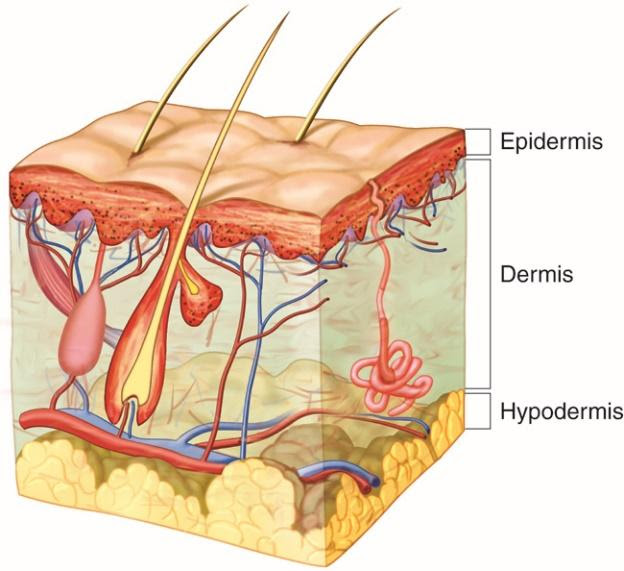
Hint: There are two layers to the skin. The epidermis, or epithelial layer, and the dermis, or connective tissue layer, are the two layers that make up the epidermis. These two layers sit on the Hypodermis, or subcutaneous tissue, which is a connective tissue layer. A dense network of blood and lymphatic vessels can be found in the connective tissue layer of the skin (dermis). Blood vessels do not exist in the epidermis.
Complete answer:
The dermis contains the majority of the nerve tissue that supplies the skin, including encapsulated and enlarged receptors. However, the epidermis also contains nerve tissue (the free nerve endings). The skin is the body's most extensive sensory receptor, and both of its layers contain nerve tissue.
Blood arteries and nerves go through the root, supplying blood and sensation to the entire tooth. The "pulp" of the tooth refers to this area. All of the teeth are connected to the jawbone. Keratinized, stratified squamous epithelium makes up the epidermis. Depending on where it occurs in the body, it is made up of four or five layers of epithelial cells. It does not contain any blood vessels.
The dermis, or middle layer of skin, contains blood vessels, nerves, and glands that help our skin operate. The subcutis, or inner layer of the skin, contains fat that protects us from harm. As a result, the dermis houses all of the skin's blood vessels as well as the majority of its nerve tissue.
Note:
The epidermis and dermis are the two layers of the skin. The hypodermis, or subcutaneous fatty tissue, lies beneath the dermis. Protection, regulation, and feeling are the three basic functions of the skin. The epidermis, or outermost layer of skin, determines our skin tone and serves as a waterproof barrier.
Complete answer:
The dermis contains the majority of the nerve tissue that supplies the skin, including encapsulated and enlarged receptors. However, the epidermis also contains nerve tissue (the free nerve endings). The skin is the body's most extensive sensory receptor, and both of its layers contain nerve tissue.
Blood arteries and nerves go through the root, supplying blood and sensation to the entire tooth. The "pulp" of the tooth refers to this area. All of the teeth are connected to the jawbone. Keratinized, stratified squamous epithelium makes up the epidermis. Depending on where it occurs in the body, it is made up of four or five layers of epithelial cells. It does not contain any blood vessels.
The dermis, or middle layer of skin, contains blood vessels, nerves, and glands that help our skin operate. The subcutis, or inner layer of the skin, contains fat that protects us from harm. As a result, the dermis houses all of the skin's blood vessels as well as the majority of its nerve tissue.
Note:
The epidermis and dermis are the two layers of the skin. The hypodermis, or subcutaneous fatty tissue, lies beneath the dermis. Protection, regulation, and feeling are the three basic functions of the skin. The epidermis, or outermost layer of skin, determines our skin tone and serves as a waterproof barrier.
Recently Updated Pages
Write structures of the following compounds i 2 Chloro3methylpentane class 11 chemistry CBSE

What is BLO What is the full form of BLO class 8 social science CBSE
Explain the Treaty of Vienna of 1815 class 10 social science CBSE
A Paragraph on Pollution in about 100-150 Words
XIX+XXX A 49 B 51 C 55 D 44 class 5 maths CBSE
If x a + bt + ct2 where x is in meters and t is in class 11 physics CBSE
Trending doubts
One Metric ton is equal to kg A 10000 B 1000 C 100 class 11 physics CBSE
Find the value of the expression given below sin 30circ class 11 maths CBSE
Draw a diagram of nephron and explain its structur class 11 biology CBSE
10 examples of friction in our daily life
Draw a diagram of a plant cell and label at least eight class 11 biology CBSE
Proton was discovered by A Thomson B Rutherford C Chadwick class 11 chemistry CBSE