




Is your appendix on the left side or the right side of the body?
Answer
 Verified
525.9k+ views
Hint: The appendix or vermiform appendix is a finger-like, blind-ended tube connected to the caecum. It develops during the embryonic stage. It is located in the junction between the small intestine and large intestine. The appendix is considered a vestigial organ, and is believed to be a reservoir of bacteria that help in digestion. These bacteria help in digestion of food particles, and some species of these bacteria also supply us with vitamin K.
Complete answer:
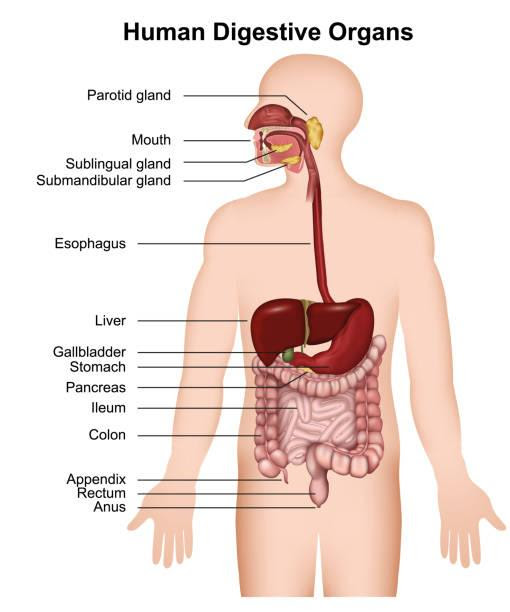
As depicted in the diagram below, the appendix is located between the lower right side of the abdomen.
Sometimes, infection may occur in the appendix due to which it becomes inflamed, and then we might experience pain. The clinical symptoms of appendicitis include acute abdominal cramps, constipation, loss of appetite, nausea and vomiting, burning sensation and irritation of the GIT. Sometimes fever may also occur due to prolonged and induced immune response. This fever generally does not subside even after taking general medications like paracetamol and other anti-pyretics.
In most of the cases of appendicitis, the appendix is surgically removed.
Note:
The appendix is a vestigial organ for the human body. It is, however, actively involved in the digestive activities of ruminant animals like cows, buffaloes, etc. The appendix contains bacteria that help in degradation of the cellulose in grasses which these animals mainly eat. Apart from this, the appendix also helps in absorption of water in these animals.
The fever that occurs during appendicitis is usually a low-grade fever, i.e., the temperature may not rise above 100 degrees but remains at a point just below it and the overall mean temperature of the body rises.
Complete answer:
As depicted in the diagram below, the appendix is located between the lower right side of the abdomen.
Sometimes, infection may occur in the appendix due to which it becomes inflamed, and then we might experience pain. The clinical symptoms of appendicitis include acute abdominal cramps, constipation, loss of appetite, nausea and vomiting, burning sensation and irritation of the GIT. Sometimes fever may also occur due to prolonged and induced immune response. This fever generally does not subside even after taking general medications like paracetamol and other anti-pyretics.
In most of the cases of appendicitis, the appendix is surgically removed.
Note:
The appendix is a vestigial organ for the human body. It is, however, actively involved in the digestive activities of ruminant animals like cows, buffaloes, etc. The appendix contains bacteria that help in degradation of the cellulose in grasses which these animals mainly eat. Apart from this, the appendix also helps in absorption of water in these animals.
The fever that occurs during appendicitis is usually a low-grade fever, i.e., the temperature may not rise above 100 degrees but remains at a point just below it and the overall mean temperature of the body rises.
Recently Updated Pages
Master Class 11 English: Engaging Questions & Answers for Success

Master Class 11 Social Science: Engaging Questions & Answers for Success
Master Class 11 Maths: Engaging Questions & Answers for Success
Master Class 11 Biology: Engaging Questions & Answers for Success
Master Class 11 Physics: Engaging Questions & Answers for Success
Master Class 11 Chemistry: Engaging Questions & Answers for Success
Trending doubts
One Metric ton is equal to kg A 10000 B 1000 C 100 class 11 physics CBSE
Difference Between Prokaryotic Cells and Eukaryotic Cells
Find the value of the expression given below sin 30circ class 11 maths CBSE
Difference between physical and chemical change class 11 chemistry CBSE
Two of the body parts which do not appear in MRI are class 11 biology CBSE
Draw a diagram of a plant cell and label at least eight class 11 biology CBSE