




………………. is the nearest ancestor of modern man (Homo sapiens)
Answer
 Verified
570.9k+ views
Hint: The closest ancestor of humans had a brain capacity of 1500 c.c. and it was discovered by Mac Gregor from the Cro-magnon rocks in France in 1868. They are also known as early men. They are known to have lived 40,000 years ago.
Complete answer:
The closest ancestor of man is also called Homo sapiens fossils, or fossil man. Cro-magnon man is the nearest ancestor of humans and has close relations and similarities with present-day human beings, they had a height of 1.8 m.
They had an orthognathous face, they were omnivorous and wore skin clothes.
1. Cro-magnon man lived during the stone age which is also called the paleolithic age.
2. They had a cranial capacity of 1650 c.c.
3. They were intelligent, hard workers, swift-footed and cave dwellers.
4. They used to paint the walls of caves and thus cave paintings were discovered.
5. They used bones and teeth from elephants and other animals as tools to kill, hunt, and protect themselves.
6.they could also run fast and could stand upright.
7. They lived in isolated groups as in families and had relations.
8.Cro-Magnons had powerful bodies which, with strong muscles, were generally heavy and strong. The Cro-Magnons had straight foreheads, like modern humans, unlike the Neanderthals, who had slanted foreheads. They've been around for 400,000 to 37,000 years.
So, the correct answer is, ‘cro-magnon’.
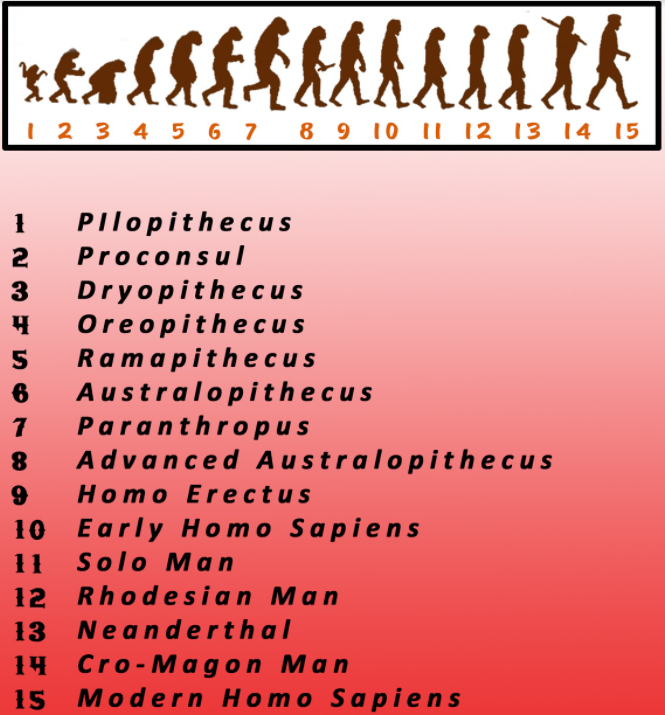
Note:
Neanderthal man: were discovered in Neander Valley in Germany. They are an extinct group or subspecies of the Homo genus of prehistoric humans that lived in Eurasia from around 400,000 to 40,000 years ago. Homo erectus was discovered from places in Africa in Java, Hungary, and China. Homo habilis was 1.2 to 1.5 m tall. It had 700c.c brain capacity.
Complete answer:
The closest ancestor of man is also called Homo sapiens fossils, or fossil man. Cro-magnon man is the nearest ancestor of humans and has close relations and similarities with present-day human beings, they had a height of 1.8 m.
They had an orthognathous face, they were omnivorous and wore skin clothes.
1. Cro-magnon man lived during the stone age which is also called the paleolithic age.
2. They had a cranial capacity of 1650 c.c.
3. They were intelligent, hard workers, swift-footed and cave dwellers.
4. They used to paint the walls of caves and thus cave paintings were discovered.
5. They used bones and teeth from elephants and other animals as tools to kill, hunt, and protect themselves.
6.they could also run fast and could stand upright.
7. They lived in isolated groups as in families and had relations.
8.Cro-Magnons had powerful bodies which, with strong muscles, were generally heavy and strong. The Cro-Magnons had straight foreheads, like modern humans, unlike the Neanderthals, who had slanted foreheads. They've been around for 400,000 to 37,000 years.
So, the correct answer is, ‘cro-magnon’.
Note:
Neanderthal man: were discovered in Neander Valley in Germany. They are an extinct group or subspecies of the Homo genus of prehistoric humans that lived in Eurasia from around 400,000 to 40,000 years ago. Homo erectus was discovered from places in Africa in Java, Hungary, and China. Homo habilis was 1.2 to 1.5 m tall. It had 700c.c brain capacity.
Recently Updated Pages
Master Class 12 Economics: Engaging Questions & Answers for Success

Master Class 12 English: Engaging Questions & Answers for Success
Master Class 12 Social Science: Engaging Questions & Answers for Success
Master Class 12 Maths: Engaging Questions & Answers for Success
Master Class 12 Physics: Engaging Questions & Answers for Success
Master Class 9 General Knowledge: Engaging Questions & Answers for Success
Trending doubts
1 ton equals to A 100 kg B 1000 kg C 10 kg D 10000 class 11 physics CBSE
DNA is not present in A Nucleus B Mitochondria C Chloroplast class 11 biology CBSE
Name the Largest and the Smallest Cell in the Human Body ?
What organs are located on the left side of your body class 11 biology CBSE
What is the weight in lbs of a 75 Kg person class 11 physics CBSE
Which of the following is the hottest month AMay BJune class 11 social science CBSE