




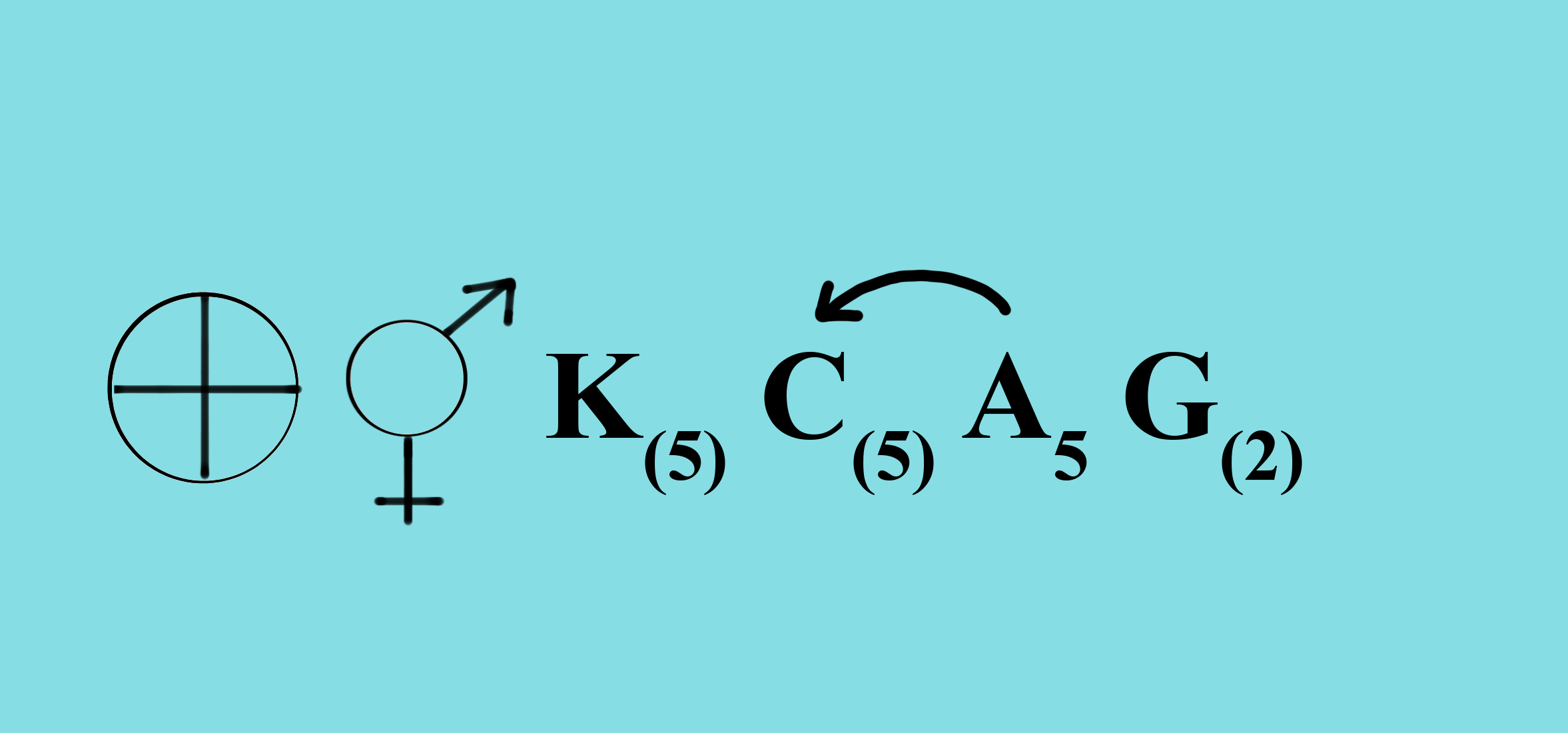
Is the floral formula of
(A) Petunia
(B) Brassica
(C) Allium
(D) Sesbania
Answer
 Verified
626.7k+ views
Hint: This is the floral formula of the flower which comes under the family Solanaceae, subfamily Petunioideae. This flower is native to South America. It is an ornamental plant whose showy trumpet- shaped flowers make it popular for summer flower beds and window boxes.
Complete step by step answer:
This is the floral formula of the flower of Petunia. Characteristics of Petunia are:
- Inflorescence: It is of Cymose type.
- Flower: Flower is bisexual, Ebracteate, actinomorphic, and pedicellate.
- Calyx: Sepals 5 in number.gamosepalous and valvate aestivation is seen.
- Corolla: Petals are 5 in number, twisted or valvate aestivation seen.
- Androecium: Epipetalous and Stamens 5.
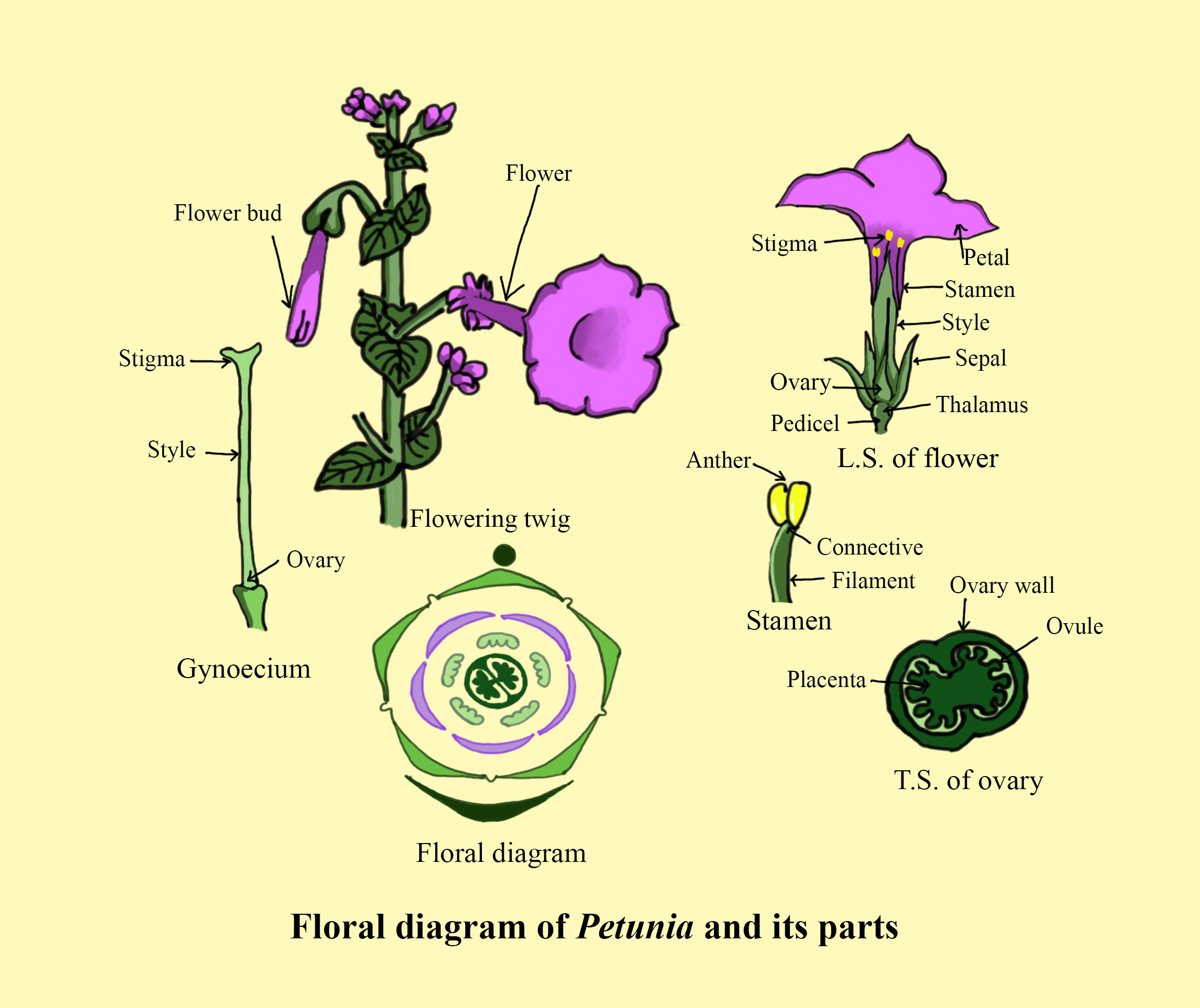
- Gynoecium: Syncarpous, Bicarpellary, axile placentation, and ovary is superior.
So, the correct answer is ‘Petunia’.
Additional Information: Species of Petunia are mostly annual herbs. The leaves of these plants are mostly sessile and are usually oval- shaped with smooth margins; some feature fine sticky hairs. The flowers are usually funnel- shaped, consisting of five fused or partially fused petals and five green sepals. Most species are pollinated by insects, though P. exserta is pollinated by hummingbirds. Petunias can tolerate harsh conditions and hot climates, but cannot tolerate frost. They require a minimum of five hours of sunlight a day and flourish in moist soil and conditions of low atmospheric humidity. they're best grown from seed. Watering once every week should be sufficient in most regions.
Note: The Solanaceae family is of great economic importance. They provide food sources like potato, tomato, and brinjal. Datura and Ashwagandha also come under this family and are used medicinally. Petunia is used as an ornamental flower.
Complete step by step answer:
This is the floral formula of the flower of Petunia. Characteristics of Petunia are:
- Inflorescence: It is of Cymose type.
- Flower: Flower is bisexual, Ebracteate, actinomorphic, and pedicellate.
- Calyx: Sepals 5 in number.gamosepalous and valvate aestivation is seen.
- Corolla: Petals are 5 in number, twisted or valvate aestivation seen.
- Androecium: Epipetalous and Stamens 5.
- Gynoecium: Syncarpous, Bicarpellary, axile placentation, and ovary is superior.
So, the correct answer is ‘Petunia’.
Additional Information: Species of Petunia are mostly annual herbs. The leaves of these plants are mostly sessile and are usually oval- shaped with smooth margins; some feature fine sticky hairs. The flowers are usually funnel- shaped, consisting of five fused or partially fused petals and five green sepals. Most species are pollinated by insects, though P. exserta is pollinated by hummingbirds. Petunias can tolerate harsh conditions and hot climates, but cannot tolerate frost. They require a minimum of five hours of sunlight a day and flourish in moist soil and conditions of low atmospheric humidity. they're best grown from seed. Watering once every week should be sufficient in most regions.
Note: The Solanaceae family is of great economic importance. They provide food sources like potato, tomato, and brinjal. Datura and Ashwagandha also come under this family and are used medicinally. Petunia is used as an ornamental flower.
Recently Updated Pages
The given figure shows two endocrine glands marked class 11 biology NEET_UG

Match columnI with columnII and select the correct class 11 biology NEET
Match column I with column II and select the correct class 11 biology NEET_UG
Which floral family has left 9 right + 1 arrangement class 11 biology NEET_UG
Which is not a variety of sheep A Lohi B Beetal C Nellore class 11 biology NEET_UG
Match column I with column II and select the correct class 11 biology NEET_UG
Trending doubts
Difference Between Prokaryotic Cells and Eukaryotic Cells
One Metric ton is equal to kg A 10000 B 1000 C 100 class 11 physics CBSE
Two of the body parts which do not appear in MRI are class 11 biology CBSE
10 examples of friction in our daily life
Draw a diagram of nephron and explain its structur class 11 biology CBSE
Draw a diagram of a plant cell and label at least eight class 11 biology CBSE