




Is sickle cell anemia polygenic inheritance?
Answer
 Verified
506.4k+ views
Hint: The passing on of traits from parents to their offspring is known as heredity, also known as inheritance or biological inheritance. The offspring cells or organisms acquire the genetic information of their parents through asexual or sexual reproduction. Genetics is the study of heredity in biology.
Complete answer:
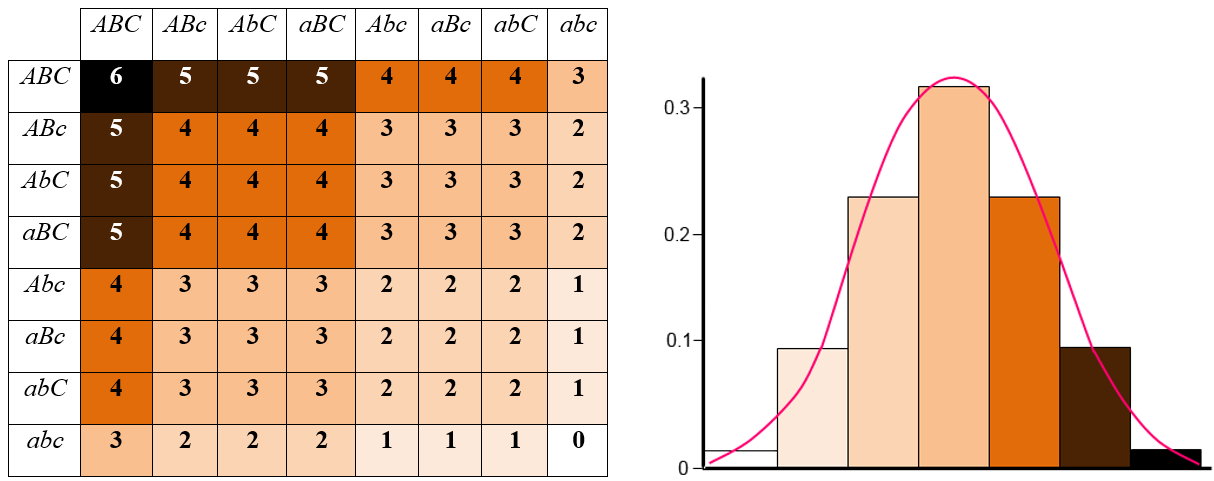
Many traits or the phenotypic characters which are present in plants or animals like color of skin, hair solar, eye color, height, production of milk and eggs, etc which are inherited by many alleles present on the same loci are known as polygenic inheritance.
Polygenic inheritance is controlled by two or more genes. It is a type of non-mendelian inheritance also known as multiple gene inheritance. It is a quantitative inheritance where multiple independents have similar effects on one trait.
The characteristics of polygenic inheritance are:
Effect of a single gene is very small,
Each allele has additive or cumulative effect,
Multiple genes produces equal effect,
There is no epistasis,
It has continuous variation in phenotype of trait etc.
Some of the examples of polygenic inheritance in humans:
Skin pigmentation,
Height,
Eye color.
Some of the examples of polygenic inheritance in plants are:
Kernel colour of wheat,
Length of corolla in tobacco.
Sickle cell anemia is a polygenic inheritance. It is a single characteristic which is governed by 2 or more genes. In the case of sickle cell anemia disease, in which two abnormal copies of beta globin gene from each parent. This gene is responsible for haemoglobin.
Note:
A mutation in the gene that tells your body to make the iron-rich compound that makes blood red and allows red blood cells to carry oxygen from your lungs throughout your body causes sickle cell anemia (hemoglobin). The abnormal hemoglobin in sickle cell anemia causes red blood cells to become rigid, sticky, and misshapen.
Complete answer:
Many traits or the phenotypic characters which are present in plants or animals like color of skin, hair solar, eye color, height, production of milk and eggs, etc which are inherited by many alleles present on the same loci are known as polygenic inheritance.
Polygenic inheritance is controlled by two or more genes. It is a type of non-mendelian inheritance also known as multiple gene inheritance. It is a quantitative inheritance where multiple independents have similar effects on one trait.
The characteristics of polygenic inheritance are:
Effect of a single gene is very small,
Each allele has additive or cumulative effect,
Multiple genes produces equal effect,
There is no epistasis,
It has continuous variation in phenotype of trait etc.
Some of the examples of polygenic inheritance in humans:
Skin pigmentation,
Height,
Eye color.
Some of the examples of polygenic inheritance in plants are:
Kernel colour of wheat,
Length of corolla in tobacco.
Sickle cell anemia is a polygenic inheritance. It is a single characteristic which is governed by 2 or more genes. In the case of sickle cell anemia disease, in which two abnormal copies of beta globin gene from each parent. This gene is responsible for haemoglobin.
Note:
A mutation in the gene that tells your body to make the iron-rich compound that makes blood red and allows red blood cells to carry oxygen from your lungs throughout your body causes sickle cell anemia (hemoglobin). The abnormal hemoglobin in sickle cell anemia causes red blood cells to become rigid, sticky, and misshapen.
Recently Updated Pages
Master Class 12 Social Science: Engaging Questions & Answers for Success

Master Class 12 Physics: Engaging Questions & Answers for Success
Master Class 12 Maths: Engaging Questions & Answers for Success
Master Class 12 Economics: Engaging Questions & Answers for Success
Master Class 12 Chemistry: Engaging Questions & Answers for Success
Master Class 12 Business Studies: Engaging Questions & Answers for Success
Trending doubts
Which are the Top 10 Largest Countries of the World?
Draw a labelled sketch of the human eye class 12 physics CBSE
Explain the structure of megasporangium class 12 biology CBSE
What are the major means of transport Explain each class 12 social science CBSE
How many chromosomes are found in human ovum a 46 b class 12 biology CBSE
The diagram of the section of a maize grain is given class 12 biology CBSE