




Is protein synthesis an endergonic or exergonic?
Answer
 Verified
516.3k+ views
Hint: An endergonic reaction is a reaction in which energy is absorbed or there is more energy at the end of reaction than at the beginning because endergonic reaction involves a gain of energy, that energy has to be supplied from an outside source in order for the reaction to occur. Exergonic reaction is the reaction where the release of free energy, for example photosynthesis.
Complete answer:-
To answer this question you must know about metabolism
All chemical reactions in an organism make up its metabolism and metabolism further divided into catabolism and anabolism.
1. Anabolism is the process of making products using small molecules for example: photosynthesis, protein synthesis and
2. Catabolism is the process of breaking large molecules to small molecules for example hydrolysis, cellular respiration
As we know, energy is the capacity to perform work. Chemical and potential energy are stored in the molecules. A catabolic reaction is the process of transforming potential energy into kinetic energy that means it is an exergonic reaction because it releases energy to perform the reaction. Anabolism is the process of transforming kinetic energy into potential energy that means it is an endergonic process because it uses energy to perform the reaction.
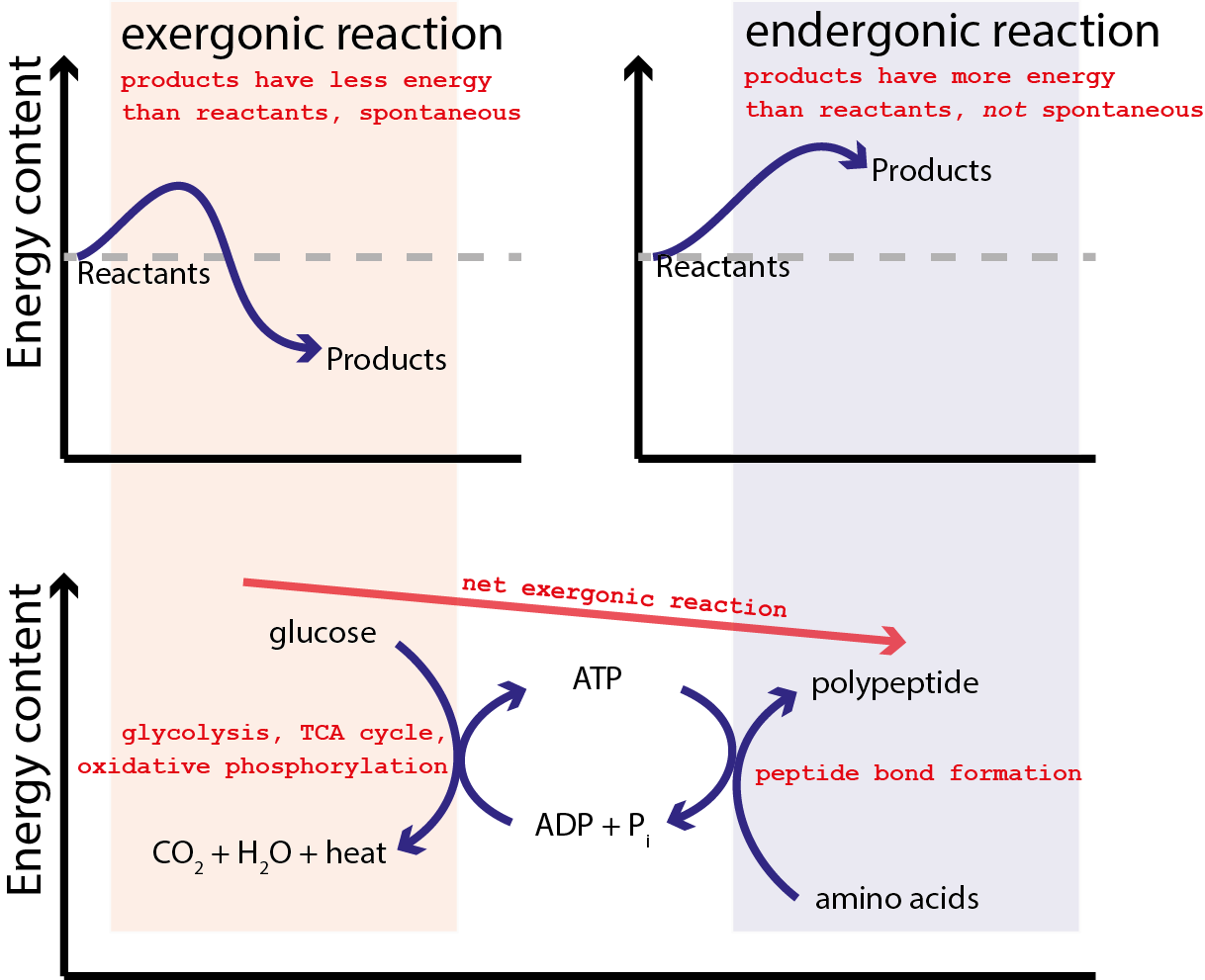
Protein synthesis is an anabolic process in which many amino acids are joined together to form protein and this process requires energy so it absorbs energy during the reaction and energy is only absorbed during the endergonic reaction therefore protein synthesis is an endergonic reaction.
Note:-
Protein helps in deciding our body structure and involves cell division for growth, reproduction and healing. Approximately 18 -20 % of the body weight is due to proteins and it provides 10 -35 % of calories needed everyday. Quinoa, a grain-like crop contains all nine essential protein amino acids making it a good source of complete protein.
Complete answer:-
To answer this question you must know about metabolism
All chemical reactions in an organism make up its metabolism and metabolism further divided into catabolism and anabolism.
1. Anabolism is the process of making products using small molecules for example: photosynthesis, protein synthesis and
2. Catabolism is the process of breaking large molecules to small molecules for example hydrolysis, cellular respiration
As we know, energy is the capacity to perform work. Chemical and potential energy are stored in the molecules. A catabolic reaction is the process of transforming potential energy into kinetic energy that means it is an exergonic reaction because it releases energy to perform the reaction. Anabolism is the process of transforming kinetic energy into potential energy that means it is an endergonic process because it uses energy to perform the reaction.
Protein synthesis is an anabolic process in which many amino acids are joined together to form protein and this process requires energy so it absorbs energy during the reaction and energy is only absorbed during the endergonic reaction therefore protein synthesis is an endergonic reaction.
Note:-
Protein helps in deciding our body structure and involves cell division for growth, reproduction and healing. Approximately 18 -20 % of the body weight is due to proteins and it provides 10 -35 % of calories needed everyday. Quinoa, a grain-like crop contains all nine essential protein amino acids making it a good source of complete protein.
Recently Updated Pages
Master Class 12 Social Science: Engaging Questions & Answers for Success

Master Class 12 Physics: Engaging Questions & Answers for Success
Master Class 12 Maths: Engaging Questions & Answers for Success
Master Class 12 Economics: Engaging Questions & Answers for Success
Master Class 12 Chemistry: Engaging Questions & Answers for Success
Master Class 12 Business Studies: Engaging Questions & Answers for Success
Trending doubts
What are the major means of transport Explain each class 12 social science CBSE
How many chromosomes are found in human ovum a 46 b class 12 biology CBSE
The diagram of the section of a maize grain is given class 12 biology CBSE
Differentiate between homogeneous and heterogeneous class 12 chemistry CBSE
No of 5 membered ring in left Caleft EDTA right right2 class 12 chemistry CBSE
Sulphuric acid is known as the king of acids State class 12 chemistry CBSE