




Iodopsin is related to
(a) Brain
(b) Spinal cord
(c) Cones
(d) Kidney
Answer
 Verified
607.5k+ views
Hint: It is a light-sensitive cell (photoreceptor) with a conical projection in the retina of the vertebrate eye, associated with color vision and perception of fine detail. It is generally focused inside the central retina (macula), which contains the fovea (depression in the retina), where no rods are available.
Complete step by step answer:
Cone cells are mainly used in the vision in daylight. It is a violet pigment that happens during cones of the retina and is changed by light into retinal and an opsin protein. It is used for colored vision.
Additional information: As is the case for rods, when a cone is activated by the light it is in a hyperpolarized state (as opposed to a depolarized state).
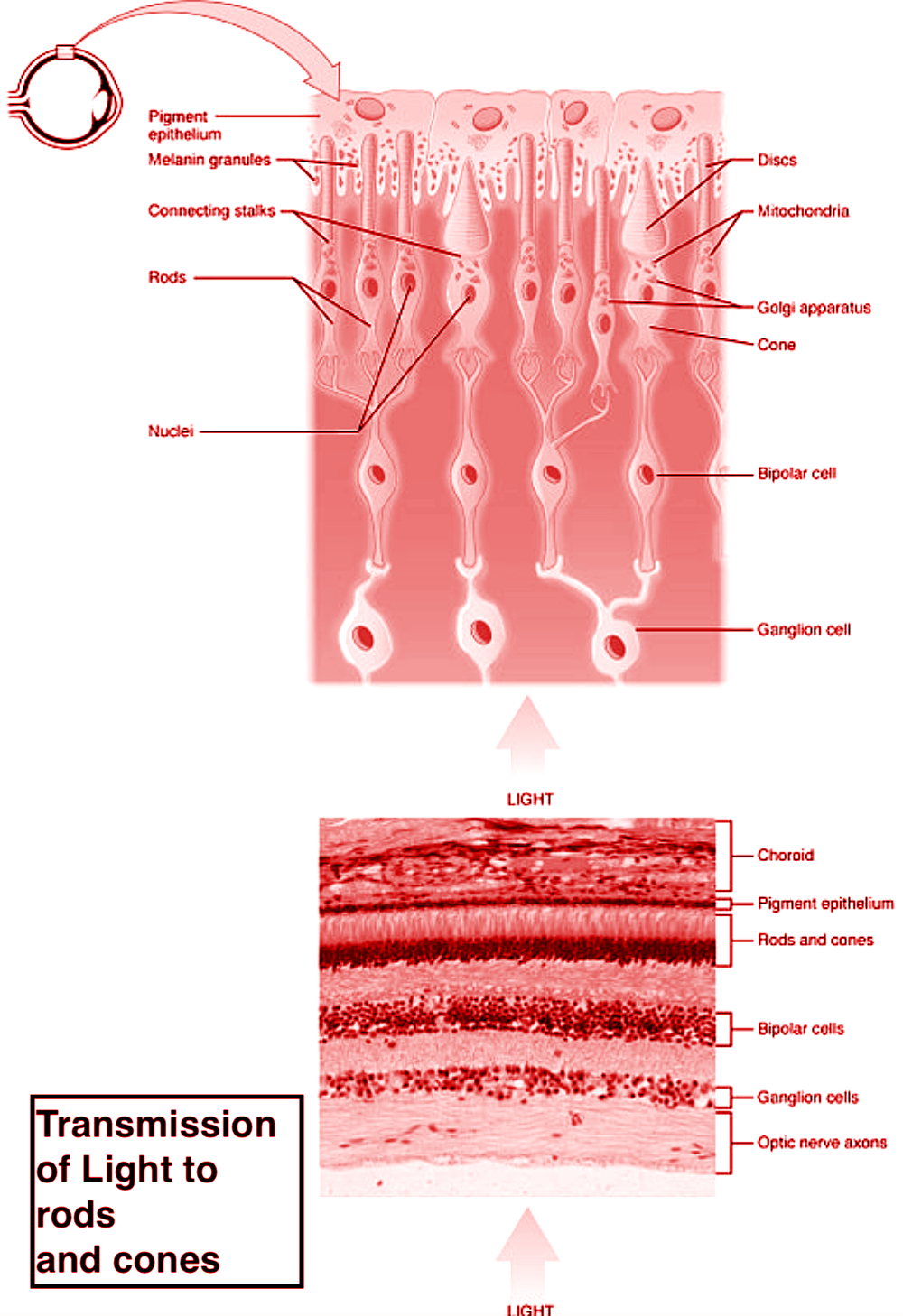
While very still, cone cells communicate a consistent inhibitory contribution to the bipolar cells. The transduction cycle, as it happens in the poles of the retina, happens along these lines in the cone cells. The transduction cycle of cone cells, notwithstanding, is interceded by means of three cell types that contrast dependent on the frequency of light consumed by the photopigments (the opsins). Each kind of cone cell reacts specifically to short, medium, and long frequencies. Albeit less is thought about the opsins than the bar color, rhodopsin, their structure and capacity have all the earmarks of being very like that of rhodopsin. At the point when energized, cones discharge the excitatory synapse glutamate.
While very still, cone cells communicate a consistent inhibitory input to the bipolar cells. During the transduction process, as it happens in the rods of the retina, happens in a similar fashion in the cone cells. The transduction process of cone cells, notwithstanding, interceded by means of three cell types that contrast dependent on the wavelength of light absorbed by the photopigments (the opsins). Each kind of cone cell reacts specifically to short, medium, and long wavelengths. However, less is thought about the opsins than the rod pigment, rhodopsin, their structure and function appear to be like that of rhodopsin. At the point, when excited, cones release the excitatory neurotransmitter glutamate.
So, the correct answer is ‘Cones’.
Note: The trichromatic (Young-Helmholtz) theory and the opponent-process theory are the two models that explain the color vision of cones. According to the trichromatic theory, the speculates that we perceive color depend on the proportion of activity across all three types of cone cells. The opponent-process theory may happen at the level of bipolar cells and beyond, where the cellular qualities uphold the encoding of paired opposites, for example, red versus green, blue versus yellow, and white versus black. For example, many visual cells are excited by green light at the retina and inhibited by the red light.
Complete step by step answer:
Cone cells are mainly used in the vision in daylight. It is a violet pigment that happens during cones of the retina and is changed by light into retinal and an opsin protein. It is used for colored vision.
Additional information: As is the case for rods, when a cone is activated by the light it is in a hyperpolarized state (as opposed to a depolarized state).
While very still, cone cells communicate a consistent inhibitory contribution to the bipolar cells. The transduction cycle, as it happens in the poles of the retina, happens along these lines in the cone cells. The transduction cycle of cone cells, notwithstanding, is interceded by means of three cell types that contrast dependent on the frequency of light consumed by the photopigments (the opsins). Each kind of cone cell reacts specifically to short, medium, and long frequencies. Albeit less is thought about the opsins than the bar color, rhodopsin, their structure and capacity have all the earmarks of being very like that of rhodopsin. At the point when energized, cones discharge the excitatory synapse glutamate.
While very still, cone cells communicate a consistent inhibitory input to the bipolar cells. During the transduction process, as it happens in the rods of the retina, happens in a similar fashion in the cone cells. The transduction process of cone cells, notwithstanding, interceded by means of three cell types that contrast dependent on the wavelength of light absorbed by the photopigments (the opsins). Each kind of cone cell reacts specifically to short, medium, and long wavelengths. However, less is thought about the opsins than the rod pigment, rhodopsin, their structure and function appear to be like that of rhodopsin. At the point, when excited, cones release the excitatory neurotransmitter glutamate.
So, the correct answer is ‘Cones’.
Note: The trichromatic (Young-Helmholtz) theory and the opponent-process theory are the two models that explain the color vision of cones. According to the trichromatic theory, the speculates that we perceive color depend on the proportion of activity across all three types of cone cells. The opponent-process theory may happen at the level of bipolar cells and beyond, where the cellular qualities uphold the encoding of paired opposites, for example, red versus green, blue versus yellow, and white versus black. For example, many visual cells are excited by green light at the retina and inhibited by the red light.
Recently Updated Pages
Master Class 11 Social Science: Engaging Questions & Answers for Success

Master Class 11 Chemistry: Engaging Questions & Answers for Success
Master Class 9 General Knowledge: Engaging Questions & Answers for Success
Master Class 9 Maths: Engaging Questions & Answers for Success
Master Class 9 Science: Engaging Questions & Answers for Success
Master Class 9 English: Engaging Questions & Answers for Success
Trending doubts
One Metric ton is equal to kg A 10000 B 1000 C 100 class 11 physics CBSE
Difference Between Prokaryotic Cells and Eukaryotic Cells
Two of the body parts which do not appear in MRI are class 11 biology CBSE
1 ton equals to A 100 kg B 1000 kg C 10 kg D 10000 class 11 physics CBSE
Explain zero factorial class 11 maths CBSE
10 examples of friction in our daily life