




Incineration of Municipal waste involves
(a) Oxidation
(b) Deduction
(c) Redoxation
(d) Disintegration
Answer
 Verified
577.5k+ views
Hint: Change in color of apple when left sliced for a long time is also an example of the required reaction. This is a chemical reaction in which one substance gains oxygen or loses electrons and hydrogen.
Complete answer:
The incineration of municipal waste involves oxidation. The solid waste collected by the municipalities is referred to as municipal waste. This collected waste is later treated.
Non-hazardous disposable materials are also called garbage (municipal waste) or trash, they come from households, institutions, industries, agriculture, etc. This inorganic municipal solid waste is sent for processing or landfill.
Additional Information:
The organic municipal waste is sent for treatment followed by incineration.
-Incineration is the combustion of organic materials contained in solid waste and it involves oxidation.
-It is a waste treatment process that converts the waste into ash, flue gas, and heat.
-Combustion is another name for burning something. It involves a reaction between a fuel and oxygen present in the atmosphere.
-The process that involves reducing something is called deduction.
-The process in which the reducing agent loses electrons and gets oxidized and the oxidizing agent gains electrons and gets reduced is called redoxation.
-The process of disintegration involves breaking down into pieces.
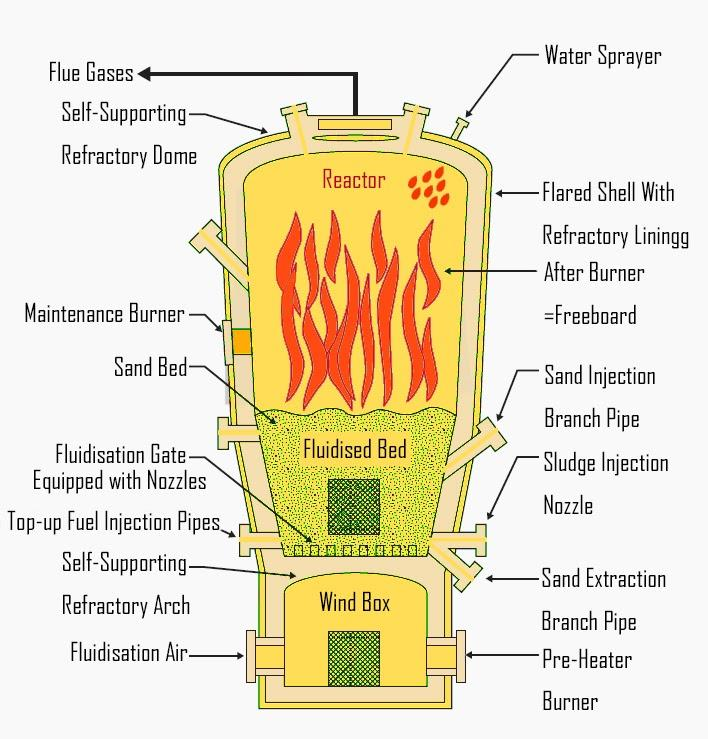
So, the correct answer is,’ Oxidation’.
Note:
-Combustion involves oxidation, which is the loss of electrons or ions by a molecule.
-All the high-temperature waste treatment systems including incineration are called thermal treatment.
-Municipal waste does not contain waste from municipal sewage networks and treatment, and construction and demolition activities.
Complete answer:
The incineration of municipal waste involves oxidation. The solid waste collected by the municipalities is referred to as municipal waste. This collected waste is later treated.
Non-hazardous disposable materials are also called garbage (municipal waste) or trash, they come from households, institutions, industries, agriculture, etc. This inorganic municipal solid waste is sent for processing or landfill.
Additional Information:
The organic municipal waste is sent for treatment followed by incineration.
-Incineration is the combustion of organic materials contained in solid waste and it involves oxidation.
-It is a waste treatment process that converts the waste into ash, flue gas, and heat.
-Combustion is another name for burning something. It involves a reaction between a fuel and oxygen present in the atmosphere.
-The process that involves reducing something is called deduction.
-The process in which the reducing agent loses electrons and gets oxidized and the oxidizing agent gains electrons and gets reduced is called redoxation.
-The process of disintegration involves breaking down into pieces.
So, the correct answer is,’ Oxidation’.
Note:
-Combustion involves oxidation, which is the loss of electrons or ions by a molecule.
-All the high-temperature waste treatment systems including incineration are called thermal treatment.
-Municipal waste does not contain waste from municipal sewage networks and treatment, and construction and demolition activities.
Recently Updated Pages
Write any three differences between metals and nonmetals class 10 social science CBSE

Amit standing on a horizontal plane finds a bird flying class 10 maths CBSE
Two circles of radii 5 cm and 3 cm intersect at two class 10 maths CBSE
Solve the following i John and Jivanti together have class 10 maths CBSE
What is the relation between orthocenter circumcentre class 10 maths CBSE
Two plane mirrors are inclined at 70circ A ray incident class 10 physics CBSE
Trending doubts
Explain the Treaty of Vienna of 1815 class 10 social science CBSE
Which country is known as "The land of Fire and Ice"?
1 GB equals how many MB?
10 examples of evaporation in daily life with explanations
What is the full form of POSCO class 10 social science CBSE
Which is the hottest planet in the Solar system A Earth class 10 social science CBSE