




In which chamber of heart is oxygenated and deoxygenated blood found?
Answer
 Verified
619.8k+ views
Hint: Heart is a muscular organ that supplies oxygen and nutrients to the cells of the body through blood vessels. It works as an oxygen pump of the body in association with the arteries and veins to make the cardiovascular system. It pumps about 5.5 liters of blood throughout the day.
Complete answer:
- The heart is divided into four chambers in mammals like humans, and birds.
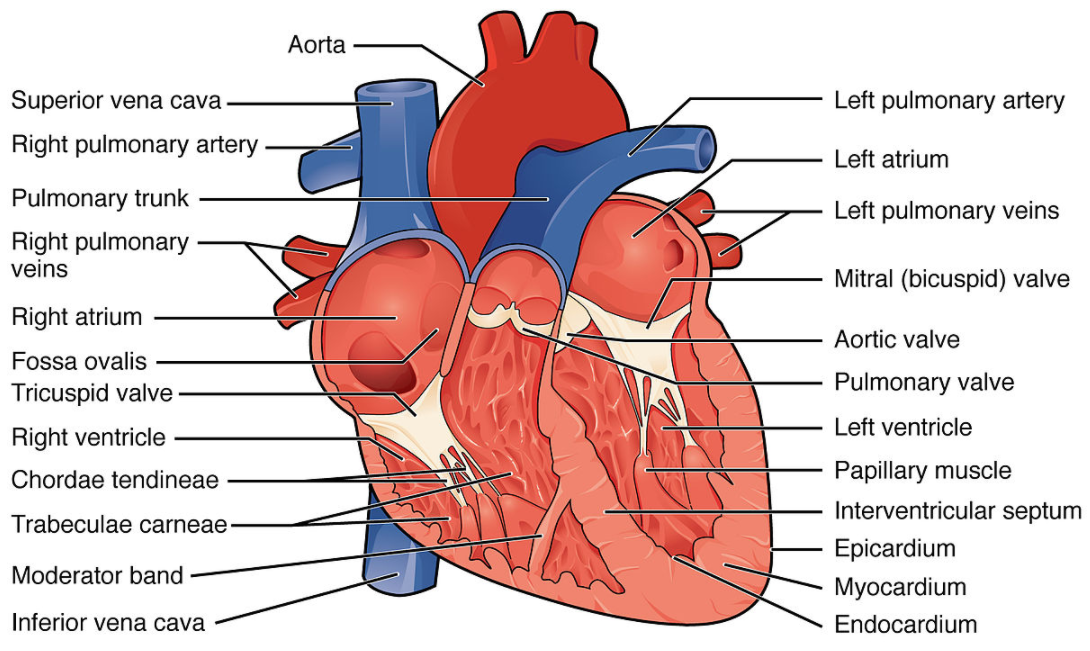
- The two longitudinal halves are called the left heart and the right heart.
- Each side is further compartmentalized into an upper chamber called atria – the left atria and the right atria
- The lower compartments are called ventricles - the left ventricle and the right ventricle.
- The atria receive blood from the other parts of the body, while the ventricles pump blood to all the tissues.
- Thus atria are called receiving chambers whereas the ventricles are often referred to as pumping chambers.
- The deoxygenated blood from the head, chest, hands, legs, abdomen, etc. is transported by the superior and inferior vena cava to the right atrium.
- Then the right atrium pushes the blood via the tricuspid valve to the right ventricle from where it is carried in the lungs by the pulmonary artery.
- Oxygen is collected from the lungs by the venous blood. CO$_2$ diffused out in the lungs simultaneously.
- As soon as the blood becomes oxygenated, it is transferred to the right atrium. The right atrium pours this blood to the right ventricle.
- As soon as the right ventricle gets the oxygenated blood, it supplies it to the body via the aorta.
- So, now we know that the left atrium and the left ventricle carries oxygenated blood.
- Whereas, the right atrium and the right ventricle carries deoxygenated blood.
Hence, the correct answer is option (B).
Note: The veins and arteries form a dense network in the body and to reach every body part. The veins carry deoxygenated blood collected from various organs of the body. However, the pulmonary vein and the umbilical vein are exceptions to this which carry oxygenated blood. The arteries carry oxygenated blood and supply it to the body organs. (Exception- pulmonary artery). The heart beats at a rate of 75-80 times per minute.
Complete answer:
- The heart is divided into four chambers in mammals like humans, and birds.
- The two longitudinal halves are called the left heart and the right heart.
- Each side is further compartmentalized into an upper chamber called atria – the left atria and the right atria
- The lower compartments are called ventricles - the left ventricle and the right ventricle.
- The atria receive blood from the other parts of the body, while the ventricles pump blood to all the tissues.
- Thus atria are called receiving chambers whereas the ventricles are often referred to as pumping chambers.
- The deoxygenated blood from the head, chest, hands, legs, abdomen, etc. is transported by the superior and inferior vena cava to the right atrium.
- Then the right atrium pushes the blood via the tricuspid valve to the right ventricle from where it is carried in the lungs by the pulmonary artery.
- Oxygen is collected from the lungs by the venous blood. CO$_2$ diffused out in the lungs simultaneously.
- As soon as the blood becomes oxygenated, it is transferred to the right atrium. The right atrium pours this blood to the right ventricle.
- As soon as the right ventricle gets the oxygenated blood, it supplies it to the body via the aorta.
- So, now we know that the left atrium and the left ventricle carries oxygenated blood.
- Whereas, the right atrium and the right ventricle carries deoxygenated blood.
Hence, the correct answer is option (B).
Note: The veins and arteries form a dense network in the body and to reach every body part. The veins carry deoxygenated blood collected from various organs of the body. However, the pulmonary vein and the umbilical vein are exceptions to this which carry oxygenated blood. The arteries carry oxygenated blood and supply it to the body organs. (Exception- pulmonary artery). The heart beats at a rate of 75-80 times per minute.
Recently Updated Pages
Master Class 11 English: Engaging Questions & Answers for Success

Master Class 11 Social Science: Engaging Questions & Answers for Success
Master Class 11 Maths: Engaging Questions & Answers for Success
Master Class 11 Biology: Engaging Questions & Answers for Success
Master Class 11 Physics: Engaging Questions & Answers for Success
Master Class 11 Chemistry: Engaging Questions & Answers for Success
Trending doubts
One Metric ton is equal to kg A 10000 B 1000 C 100 class 11 physics CBSE
Difference Between Prokaryotic Cells and Eukaryotic Cells
Two of the body parts which do not appear in MRI are class 11 biology CBSE
Find the value of the expression given below sin 30circ class 11 maths CBSE
Draw a diagram of a plant cell and label at least eight class 11 biology CBSE
10 examples of friction in our daily life