




In the members of family Malvaceae, anthers are described as
A. Diadelphous and dithecous
B. Diadelphous and monothecous
C. Monadelphous and dithecous
D. Monadelphous and monothecous
Answer
 Verified
571.8k+ views
Hint: Malvaceae family consists of flowering plants. The flowers usually have four whorls. The outer whorls are calyx and corolla, which are sepals and petals respectively, known as the accessory whorls, while androecium and gynoecium are stamen and pistil respectively.
Complete answer:
Adelphous refers to the stamen that occurs in bundles. Monadelphous is when the stamen occurs in single bundles. Similarly diadelphous when it occurs as two separate bundles. Thecous refers to the number of chambers that are present within the anther. Monothecous refers to the presence of anthers having a single chamber. Similarly dithecous refers to the presence of two chambers. In the members of the Malvaceae family, the androecium is composed of multiple numbers of monadelphous stamen which consists of a single-celled anther. Thus the androecium of the flowers is monadelphous and monothecous.
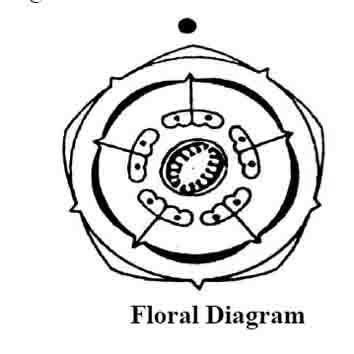
-Diadelphous and dithecous stamens include the stamen present as two bundles and each having two chambers. It is present in Pisum sativum. Thus it is not the appropriate option.
-Diadelphous and monothecous condition is not appropriate since the anther her is monadelphous and not diadelphous. Hence it is not the right option.
-Monadelphous and dithecous is not the appropriate answer since the stamen are monothecous in Malvaceae.
Therefore, the most appropriate option is D. That is in the members of Malvaceae, the anthers are monadelphous and monothecous.
Note: The gynoecium of the members belonging to the Malvaceae family has five or more carpels, with a superior or hypogynous ovary. With the ovules arranged in axial placentation.
Complete answer:
Adelphous refers to the stamen that occurs in bundles. Monadelphous is when the stamen occurs in single bundles. Similarly diadelphous when it occurs as two separate bundles. Thecous refers to the number of chambers that are present within the anther. Monothecous refers to the presence of anthers having a single chamber. Similarly dithecous refers to the presence of two chambers. In the members of the Malvaceae family, the androecium is composed of multiple numbers of monadelphous stamen which consists of a single-celled anther. Thus the androecium of the flowers is monadelphous and monothecous.
-Diadelphous and dithecous stamens include the stamen present as two bundles and each having two chambers. It is present in Pisum sativum. Thus it is not the appropriate option.
-Diadelphous and monothecous condition is not appropriate since the anther her is monadelphous and not diadelphous. Hence it is not the right option.
-Monadelphous and dithecous is not the appropriate answer since the stamen are monothecous in Malvaceae.
Therefore, the most appropriate option is D. That is in the members of Malvaceae, the anthers are monadelphous and monothecous.
Note: The gynoecium of the members belonging to the Malvaceae family has five or more carpels, with a superior or hypogynous ovary. With the ovules arranged in axial placentation.
Recently Updated Pages
Basicity of sulphurous acid and sulphuric acid are

Master Class 11 Business Studies: Engaging Questions & Answers for Success
Master Class 11 Computer Science: Engaging Questions & Answers for Success
Master Class 11 Economics: Engaging Questions & Answers for Success
Master Class 11 Social Science: Engaging Questions & Answers for Success
Master Class 11 English: Engaging Questions & Answers for Success
Trending doubts
One Metric ton is equal to kg A 10000 B 1000 C 100 class 11 physics CBSE
The largest wind power cluster is located in the state class 11 social science CBSE
Explain zero factorial class 11 maths CBSE
State and prove Bernoullis theorem class 11 physics CBSE
Which among the following are examples of coming together class 11 social science CBSE
Can anyone list 10 advantages and disadvantages of friction