




In the human body, the number of bones is ........
Answer
 Verified
629.7k+ views
Hint: The internal framework of different types of bones builds a skeletal system. At birth, human beings possess about 270 bones but it gradually decreases in number.
Complete answer: We all know how the skeletal system is made up of different types of bones. The bones provide a rigid structure, stability, and protection but what are bones?
Bones are basically highly vascularized, calcified matrix.
Collagen and calcium phosphate are the main constituents of bone.
It has deposits of calcium salts and rich blood supply.
At birth, human babies possess about 270-300 bones.
As development proceeds, some bones get fused together to form larger bones.
Adult human beings have nearly 206 bones.
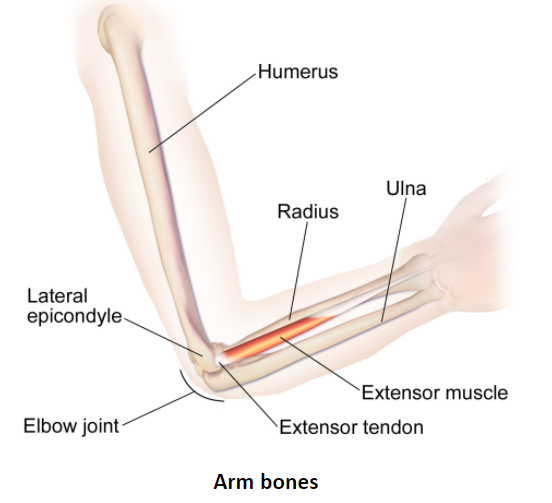
So, the correct answer is: In the human body, the number of bones is 206.
Note: Bone cells are called osteocytes.
These are of two types: osteoblasts and osteoclasts.
The 206 bones have some long bones, some short, some sesamoid bones, flat and irregular bones. Though bone is mineralized tissue, it contains other types of tissues such as bone marrow, endosteum, periosteum, and blood vessels.
Complete answer: We all know how the skeletal system is made up of different types of bones. The bones provide a rigid structure, stability, and protection but what are bones?
Bones are basically highly vascularized, calcified matrix.
Collagen and calcium phosphate are the main constituents of bone.
It has deposits of calcium salts and rich blood supply.
At birth, human babies possess about 270-300 bones.
As development proceeds, some bones get fused together to form larger bones.
Adult human beings have nearly 206 bones.
So, the correct answer is: In the human body, the number of bones is 206.
Note: Bone cells are called osteocytes.
These are of two types: osteoblasts and osteoclasts.
The 206 bones have some long bones, some short, some sesamoid bones, flat and irregular bones. Though bone is mineralized tissue, it contains other types of tissues such as bone marrow, endosteum, periosteum, and blood vessels.
Recently Updated Pages
Master Class 11 English: Engaging Questions & Answers for Success

Master Class 11 Social Science: Engaging Questions & Answers for Success
Master Class 11 Maths: Engaging Questions & Answers for Success
Master Class 11 Biology: Engaging Questions & Answers for Success
Master Class 11 Physics: Engaging Questions & Answers for Success
Master Class 11 Chemistry: Engaging Questions & Answers for Success
Trending doubts
One Metric ton is equal to kg A 10000 B 1000 C 100 class 11 physics CBSE
Difference Between Prokaryotic Cells and Eukaryotic Cells
Find the value of the expression given below sin 30circ class 11 maths CBSE
Difference between physical and chemical change class 11 chemistry CBSE
Two of the body parts which do not appear in MRI are class 11 biology CBSE
Draw a diagram of a plant cell and label at least eight class 11 biology CBSE