




In the fruit of pomegranate, the edible part is
(a)Mesocarp
(b)Pericarp
(c)Seed coat
(d)Endocarp
Answer
 Verified
626.1k+ views
Hint: In the fruit of the pomegranate the juicy protective covering of seeds is the edible part, also used for extracting juice. This covering protects the embryo of the plant against any adverse environmental conditions.
Complete answer:
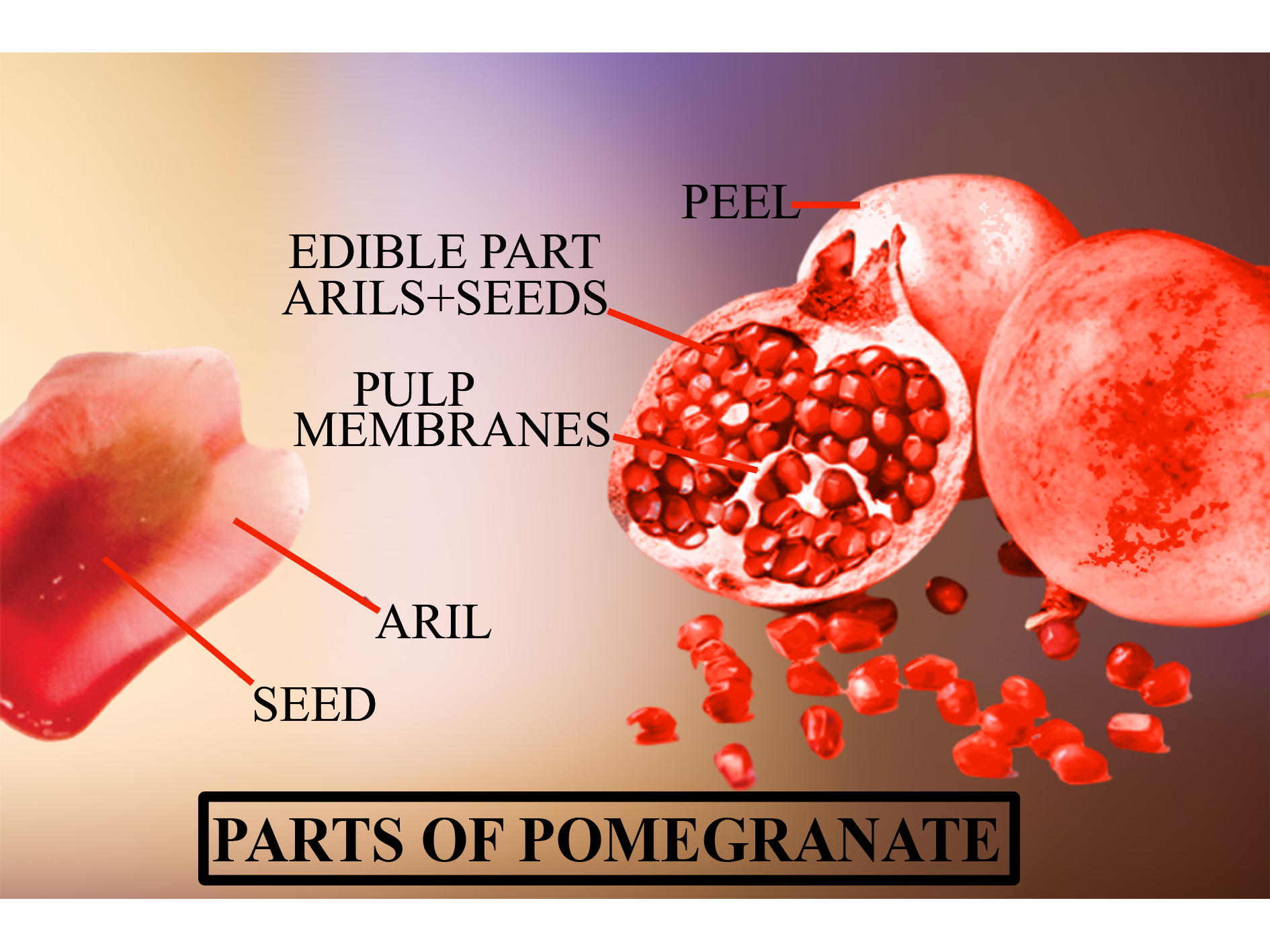
In the fruit of pomegranate, the seed coat is the edible part. This seed coat is modified and has fleshy testa which is juicy and can be eaten. In pomegranate fruit, the outer hard layer is made up of exocarp and also mesocarp partially, as it is also associated with the formation of septa in the fruit.
Additional Information: -The endocarp is the inner part of the fruit which covers the seeds as a papery structure and the seeds have modified fleshy testa which can be eaten.
-Testa is the outer layer of the seed coat.
-Seeds store the nutrition required for the germination process and also provide growth to the plant by remaining dormant for many days.
-Generally, fruits have three different parts together called the pericarp. The different parts are exocarp, mesocarp, and endocarp.
-Exocarp is also known as epicarp and it forms the outermost covering of the fruit or pericarp.
-mesocarp is generally an edible part of fruits that contains pulp rich in vitamins, fatty acids, and amino acids.
-Endocarp is the innermost layer of the pericarp.
So, the correct answer is, ‘Seed coat’.
Note: -The number of seeds in a pomegranate can vary from 200 to about 1,400. So, the correct answer is 'Seed coat'.
-When the environmental condition is suitable the seed germinates after the period of dormancy.
-Septa is the partition between the two chambers in the fruit. It is edible in fruits and also in vegetables but sometimes it is not edible as in pomegranate.
Complete answer:
In the fruit of pomegranate, the seed coat is the edible part. This seed coat is modified and has fleshy testa which is juicy and can be eaten. In pomegranate fruit, the outer hard layer is made up of exocarp and also mesocarp partially, as it is also associated with the formation of septa in the fruit.
Additional Information: -The endocarp is the inner part of the fruit which covers the seeds as a papery structure and the seeds have modified fleshy testa which can be eaten.
-Testa is the outer layer of the seed coat.
-Seeds store the nutrition required for the germination process and also provide growth to the plant by remaining dormant for many days.
-Generally, fruits have three different parts together called the pericarp. The different parts are exocarp, mesocarp, and endocarp.
-Exocarp is also known as epicarp and it forms the outermost covering of the fruit or pericarp.
-mesocarp is generally an edible part of fruits that contains pulp rich in vitamins, fatty acids, and amino acids.
-Endocarp is the innermost layer of the pericarp.
So, the correct answer is, ‘Seed coat’.
Note: -The number of seeds in a pomegranate can vary from 200 to about 1,400. So, the correct answer is 'Seed coat'.
-When the environmental condition is suitable the seed germinates after the period of dormancy.
-Septa is the partition between the two chambers in the fruit. It is edible in fruits and also in vegetables but sometimes it is not edible as in pomegranate.
Recently Updated Pages
Master Class 11 English: Engaging Questions & Answers for Success

Master Class 11 Social Science: Engaging Questions & Answers for Success
Master Class 11 Maths: Engaging Questions & Answers for Success
Master Class 11 Biology: Engaging Questions & Answers for Success
Master Class 11 Physics: Engaging Questions & Answers for Success
Master Class 11 Chemistry: Engaging Questions & Answers for Success
Trending doubts
One Metric ton is equal to kg A 10000 B 1000 C 100 class 11 physics CBSE
Difference Between Prokaryotic Cells and Eukaryotic Cells
Find the value of the expression given below sin 30circ class 11 maths CBSE
Difference between physical and chemical change class 11 chemistry CBSE
Two of the body parts which do not appear in MRI are class 11 biology CBSE
Draw a diagram of a plant cell and label at least eight class 11 biology CBSE