




In Bignonia the terminal leaflets are modified into _____________.
A) Hooks
B) Spines
C) Tendrils
D) phyllodes
Answer
 Verified
596.7k+ views
Hint: Bignonia is weak stem plants that cannot grow upward without any support for this; they use specially developed or modified parts.
Complete answer:
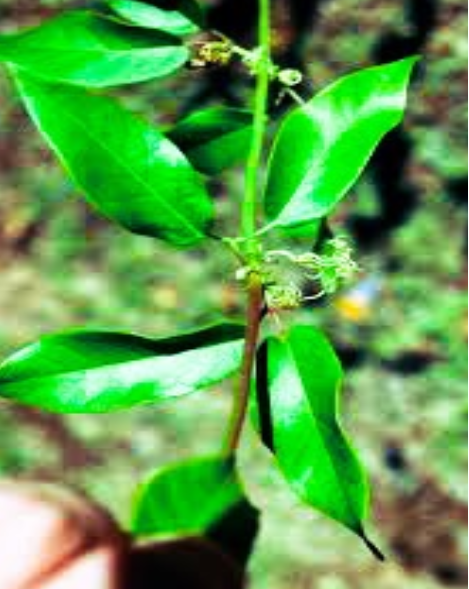
Bignonia is a climber in which the three-terminal leaflets of leaf get modified into claw-like hooks. These hooks help them in climbing the tree or other tall objects.
To perform some special functions other than the normal ones such as photosynthesis and transpiration, leaves of many plants get modified.
Additional information:
Leaf spines: in some plants leaves get modified into needle-like structures known as spines. The spines act as defensive structures.and also helps in the reduction of water loss due to transpiration. For eg., in Opuntia, cacti
Leaf tendrils: In some plants, leaves get modified into thread-like structures called tendrils. For eg., the whole leaf is modified into tendrils in Lathyrus aphaca. In Pisum sativum, the upper leaflets get modified into tendrils.
Phyllode: In some plants, the petiole becomes flattened and takes the shape of a leaf and also turns green in color. This is known as phyllode. For eg., Australian Acacia.
So, the correct answer is, in bignonia, the terminal leaflets are modified into ‘hooks’.
Note:
1) Storage leaves: They are thick and succulent leaves that store water in their tissues. e.g., plants of the Crassulaceae family.
2) Scale leaves: These are thin membranous structures without stalks that protect the axillary bud. E.g., Casuarina and Asparagus.
3) Leaf roots: In this type of leaf present at the node gets modified into an adventitious root which helps them to float over the water surface. e.g., Salvinia
Complete answer:
Bignonia is a climber in which the three-terminal leaflets of leaf get modified into claw-like hooks. These hooks help them in climbing the tree or other tall objects.
To perform some special functions other than the normal ones such as photosynthesis and transpiration, leaves of many plants get modified.
Additional information:
Leaf spines: in some plants leaves get modified into needle-like structures known as spines. The spines act as defensive structures.and also helps in the reduction of water loss due to transpiration. For eg., in Opuntia, cacti
Leaf tendrils: In some plants, leaves get modified into thread-like structures called tendrils. For eg., the whole leaf is modified into tendrils in Lathyrus aphaca. In Pisum sativum, the upper leaflets get modified into tendrils.
Phyllode: In some plants, the petiole becomes flattened and takes the shape of a leaf and also turns green in color. This is known as phyllode. For eg., Australian Acacia.
So, the correct answer is, in bignonia, the terminal leaflets are modified into ‘hooks’.
Note:
1) Storage leaves: They are thick and succulent leaves that store water in their tissues. e.g., plants of the Crassulaceae family.
2) Scale leaves: These are thin membranous structures without stalks that protect the axillary bud. E.g., Casuarina and Asparagus.
3) Leaf roots: In this type of leaf present at the node gets modified into an adventitious root which helps them to float over the water surface. e.g., Salvinia
Recently Updated Pages
Master Class 11 Computer Science: Engaging Questions & Answers for Success

Master Class 11 Business Studies: Engaging Questions & Answers for Success
Master Class 11 Economics: Engaging Questions & Answers for Success
Master Class 11 English: Engaging Questions & Answers for Success
Master Class 11 Maths: Engaging Questions & Answers for Success
Master Class 11 Biology: Engaging Questions & Answers for Success
Trending doubts
One Metric ton is equal to kg A 10000 B 1000 C 100 class 11 physics CBSE
There are 720 permutations of the digits 1 2 3 4 5 class 11 maths CBSE
Discuss the various forms of bacteria class 11 biology CBSE
Draw a diagram of a plant cell and label at least eight class 11 biology CBSE
State the laws of reflection of light
Explain zero factorial class 11 maths CBSE