




In any lithosphere, the pioneer community is
(a)Blue-green algae
(b)Foliose lichens
(c)Mosses
(d)Crustose lichen
Answer
 Verified
650.7k+ views
Hint: As we walk in our surroundings especially in areas with more trees or terrains, we often see an orange-yellow colored lichen. It is seen occupying a maximum part of the land. This can be referred to as a pioneer community.
Complete answer:
The species that invade a bare area are called pioneer species. The orange-yellowish lichens which are seen occupying most of the land are called Crustose lichens. These strongly adhere to their substrate and make it impossible to separate them without actually destroying the entire structure.
The crust of the earth and uppermost mantle is called the lithosphere. It constitutes the hard and rigid outer layer of the Earth.
Additional Information: On rocks, the crustose lichens secrete acids that dissolve rock, help in weathering and soil formation. Around 200 different types of compounds have been isolated from these lichens till now. Endolithic, endophloidic, and leprose are the different types of crustose lichens. Endolithic lichens are found attached strongly with the outer layer of rocks with their bodies above the surface. Endophloidic lichens are found either inside or on the surface of plant tissue. Whereas, leprose lichens consist of crusts.
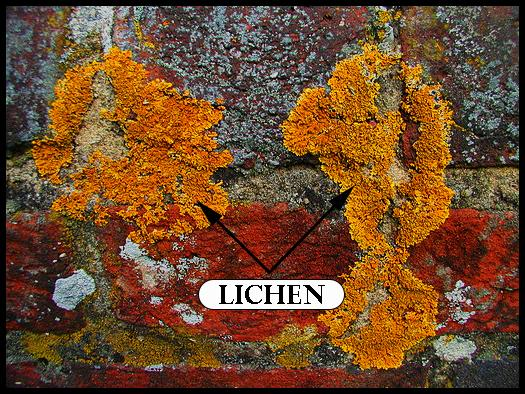
So, the correct answer is ‘Crustose lichen’.
Note: These lichens come in a number of different and vibrant colors such as yellow, orange, red, and green. They are similar to other lichens due to similar internal morphology. Their body is composed of filaments which also determine their density.
Complete answer:
The species that invade a bare area are called pioneer species. The orange-yellowish lichens which are seen occupying most of the land are called Crustose lichens. These strongly adhere to their substrate and make it impossible to separate them without actually destroying the entire structure.
The crust of the earth and uppermost mantle is called the lithosphere. It constitutes the hard and rigid outer layer of the Earth.
Additional Information: On rocks, the crustose lichens secrete acids that dissolve rock, help in weathering and soil formation. Around 200 different types of compounds have been isolated from these lichens till now. Endolithic, endophloidic, and leprose are the different types of crustose lichens. Endolithic lichens are found attached strongly with the outer layer of rocks with their bodies above the surface. Endophloidic lichens are found either inside or on the surface of plant tissue. Whereas, leprose lichens consist of crusts.
So, the correct answer is ‘Crustose lichen’.
Note: These lichens come in a number of different and vibrant colors such as yellow, orange, red, and green. They are similar to other lichens due to similar internal morphology. Their body is composed of filaments which also determine their density.
Recently Updated Pages
Master Class 12 Economics: Engaging Questions & Answers for Success

Master Class 12 Social Science: Engaging Questions & Answers for Success
Master Class 12 English: Engaging Questions & Answers for Success
Master Class 12 Maths: Engaging Questions & Answers for Success
Master Class 12 Physics: Engaging Questions & Answers for Success
Master Class 12 Biology: Engaging Questions & Answers for Success
Trending doubts
Draw a labelled sketch of the human eye class 12 physics CBSE
Which are the Top 10 Largest Countries of the World?
Draw ray diagrams each showing i myopic eye and ii class 12 physics CBSE
Which is the correct genotypic ratio of mendel dihybrid class 12 biology CBSE
Differentiate between homogeneous and heterogeneous class 12 chemistry CBSE
Which animal never drinks water in its entire life class 12 biology CBSE