




If the photosynthesizing plant, releases oxygen-containing more than the normal amount of ${ 18 }_{ O }$, it is concluded that the plant has been supplied with
(a) ${ C }_{ 6 }{ H }_{ 12 }{ O }_{ 6 }$ with containing ${ 18 }_{ O }$
(b) ${ H }_{ 2 }{ O }$ containing ${ 18 }_{ O }$
(c)${ CO }_{ 2 }$ containing ${ 18 }_{ O }$
(d) Oxygen in the form of ozone
Answer
 Verified
573.3k+ views
Hint: In chemical terms, photosynthesis is a light-energized oxidation-reduction process. In which oxidation refers to the removal of electrons from a molecule; reduction refers to the gain of electrons by a molecule. In-plant photosynthesis, the energy of light is utilized to drive the oxidation of water.
Complete answer:
Since the process of photosynthesis makes use of ${ CO }_{ 2 }$ and water to give out carbohydrates ( sugar) and ${ O }_{ 2 }$, studies have been conducted to find that the oxygen evolved in the process is from ${ CO }_{ 2 }$ or ${ H }_{ 2 }{ O }$. To work this out, the scientist used radioactive ${ 18 }_{ O }$ isotope of oxygen. Carbon dioxide containing ${ 18 }_{ O }$ oxygen is left to react with normal ${ H }_{ 2 }{ O }$. The outcome was that the oxygen given out didn't contain the radioactive isotope affirming that the oxygen developed originates from water. In any case, if the plant gives out more than the ordinary measure of oxygen, the plant at that point has been provided with ${ H }_{ 2 }{ O }$ containing radioactive isotopes of oxygen.
Additional Information: The impact of oxygen concentration in the range of 0–21% on photosynthesis in intact leaves of various higher plants has been examined.
Photosynthetic ${ CO }_{ 2 }$ fixation of higher plants is extraordinarily repressed by oxygen in concentrations down to less than 2%. The inhibition increments with oxygen concentration and is about 30% in an atmosphere of 21% ${ O }_{ 2 }$ and 0.03% ${ CO }_{ 2 }$. Undoubtedly, hence, oxygen in normal air exerts a strong inhibitory effect on photosynthetic ${ CO }_{ 2 }$ fixation of land plants under natural conditions.
So the correct answer is ‘${ H }_{ 2 }{ O }$ containing ${ 18 }_{ O }$’.
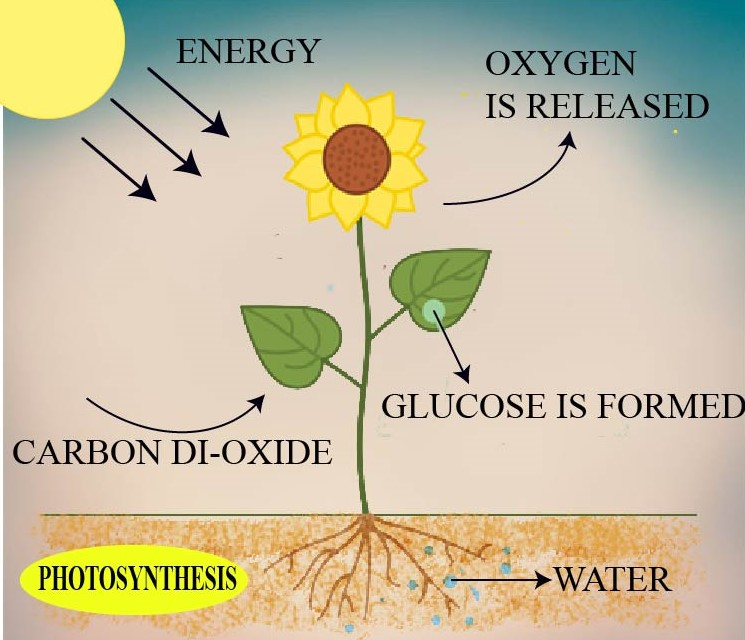
Note: The diverse species of higher plants, shifting enormously in photosynthetic response to light intensity and ${ CO }_{ 2 }$ concentration, and with light-saturated roles of ${ CO }_{ 2 }$ fixation differing by a factor of more than 10 times, show a remarkable similarity in their response to oxygen concentration.
Complete answer:
Since the process of photosynthesis makes use of ${ CO }_{ 2 }$ and water to give out carbohydrates ( sugar) and ${ O }_{ 2 }$, studies have been conducted to find that the oxygen evolved in the process is from ${ CO }_{ 2 }$ or ${ H }_{ 2 }{ O }$. To work this out, the scientist used radioactive ${ 18 }_{ O }$ isotope of oxygen. Carbon dioxide containing ${ 18 }_{ O }$ oxygen is left to react with normal ${ H }_{ 2 }{ O }$. The outcome was that the oxygen given out didn't contain the radioactive isotope affirming that the oxygen developed originates from water. In any case, if the plant gives out more than the ordinary measure of oxygen, the plant at that point has been provided with ${ H }_{ 2 }{ O }$ containing radioactive isotopes of oxygen.
Additional Information: The impact of oxygen concentration in the range of 0–21% on photosynthesis in intact leaves of various higher plants has been examined.
Photosynthetic ${ CO }_{ 2 }$ fixation of higher plants is extraordinarily repressed by oxygen in concentrations down to less than 2%. The inhibition increments with oxygen concentration and is about 30% in an atmosphere of 21% ${ O }_{ 2 }$ and 0.03% ${ CO }_{ 2 }$. Undoubtedly, hence, oxygen in normal air exerts a strong inhibitory effect on photosynthetic ${ CO }_{ 2 }$ fixation of land plants under natural conditions.
So the correct answer is ‘${ H }_{ 2 }{ O }$ containing ${ 18 }_{ O }$’.
Note: The diverse species of higher plants, shifting enormously in photosynthetic response to light intensity and ${ CO }_{ 2 }$ concentration, and with light-saturated roles of ${ CO }_{ 2 }$ fixation differing by a factor of more than 10 times, show a remarkable similarity in their response to oxygen concentration.
Recently Updated Pages
Master Class 11 Computer Science: Engaging Questions & Answers for Success

Master Class 11 Business Studies: Engaging Questions & Answers for Success
Master Class 11 Economics: Engaging Questions & Answers for Success
Master Class 11 English: Engaging Questions & Answers for Success
Master Class 11 Maths: Engaging Questions & Answers for Success
Master Class 11 Biology: Engaging Questions & Answers for Success
Trending doubts
One Metric ton is equal to kg A 10000 B 1000 C 100 class 11 physics CBSE
There are 720 permutations of the digits 1 2 3 4 5 class 11 maths CBSE
Discuss the various forms of bacteria class 11 biology CBSE
Draw a diagram of a plant cell and label at least eight class 11 biology CBSE
State the laws of reflection of light
Explain zero factorial class 11 maths CBSE