



If a particle moves in a circle, describing equal angles in equal intervals of time, the velocity vector:
(A) Remains constant.
(B) Changes in magnitude.
(C) Changes in direction.
(D) Changes both in magnitude and direction.
Answer
 Verified
492.9k+ views
Hint: A velocity vector represents the rate of change of the position of an object. The velocity vector has both magnitude and direction. The magnitude of a velocity vector gives the speed of the object whereas the vector direction gives its direction.
Complete answer:
The motion of an object around a circle is known as the circular motion. In this question, the particle is moving in a circle and thus, we can say that the particle is performing circular motion. In case of circular motion, the distance of the object from the centre is always the same. The best example of circular motion is an artificial satellite orbiting around the earth.
There are two types of circular motion- uniform circular motion. In uniform circular motion, the object maintains a constant speed whereas in non uniform circular motion, the object changes the speed at regular intervals of time.
The figure given below describes the motion of the particle around a circle:
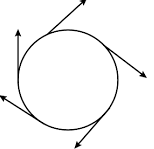
From the figure shown above, we can clearly see that the velocity vector changes its direction at every single point during its circular motion. Also, as the particle covers equal angles in equal intervals of time, the magnitude is constant. So, the magnitude of the velocity vector remains constant but the direction of the velocity vector changes.
Therefore, option C is correct.
Note: When an object moves on a circular path it is called circular motion. The speed of the body during the motion can either change or remain the same throughout the whole motion. However, the velocity and direction of the motion will always change because its direction of the object changes at every point of the circle.
Complete answer:
The motion of an object around a circle is known as the circular motion. In this question, the particle is moving in a circle and thus, we can say that the particle is performing circular motion. In case of circular motion, the distance of the object from the centre is always the same. The best example of circular motion is an artificial satellite orbiting around the earth.
There are two types of circular motion- uniform circular motion. In uniform circular motion, the object maintains a constant speed whereas in non uniform circular motion, the object changes the speed at regular intervals of time.
The figure given below describes the motion of the particle around a circle:
From the figure shown above, we can clearly see that the velocity vector changes its direction at every single point during its circular motion. Also, as the particle covers equal angles in equal intervals of time, the magnitude is constant. So, the magnitude of the velocity vector remains constant but the direction of the velocity vector changes.
Therefore, option C is correct.
Note: When an object moves on a circular path it is called circular motion. The speed of the body during the motion can either change or remain the same throughout the whole motion. However, the velocity and direction of the motion will always change because its direction of the object changes at every point of the circle.
Recently Updated Pages
Master Class 11 Computer Science: Engaging Questions & Answers for Success

Master Class 11 Business Studies: Engaging Questions & Answers for Success
Master Class 11 Economics: Engaging Questions & Answers for Success
Master Class 11 English: Engaging Questions & Answers for Success
Master Class 11 Maths: Engaging Questions & Answers for Success
Master Class 11 Biology: Engaging Questions & Answers for Success
Trending doubts
One Metric ton is equal to kg A 10000 B 1000 C 100 class 11 physics CBSE
There are 720 permutations of the digits 1 2 3 4 5 class 11 maths CBSE
Discuss the various forms of bacteria class 11 biology CBSE
Draw a diagram of a plant cell and label at least eight class 11 biology CBSE
State the laws of reflection of light
Explain zero factorial class 11 maths CBSE