




Identify the cells whose secretions protect the lining of gastro-intestinal tract from various enzymes.
A. Chief cells
B. Goblet cells
C. Oxyntic cells
D. Duodenal cells
Answer
 Verified
577.5k+ views
Hint: The GI tract gets various secretions of enzymes such as hydrochloric acid and pepsin of varying pH. These enzymes which are chemicals can cause damage to the wall of the tract.
Complete step by step answer: Goblet cells whose secretions are mucus and bicarbonates protects the lining of the GI tract walls from the strong secretions. It also helps in the lubrication of the path. The major protective action of the mucus secreted from goblet cells is against the strongest hydrochloric acid produced, which can otherwise lead to erosion of the gut lining.
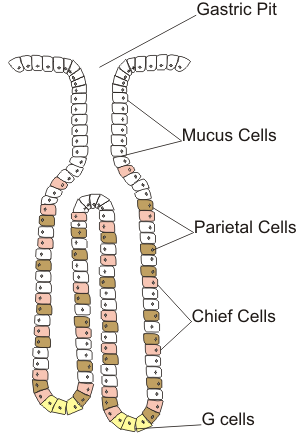
Considering the other given options:
Chief cells- Also known as peptic cells are located in the stomach and they secrete pepsinogen, which
coming in contact with the hydrochloric acid produced in the stomach gets converted to the active
enzyme pepsin, which is a protein-digesting enzyme. It also secretes gastric lipase enzymes which can
digest the triglycerides into fatty acids and simpler mono and diglycerides.
Oxyntic cells- Also known as parietal cells are the epithelial cells present in the stomach, which secretes
hydrochloric acid and intrinsic factor. The acid secreted helps in destroying the harmful microbes in the
stomach and intrinsic factors aids in the absorption of Vitamin B.
Duodenal cells- The cells present in the region are known as enterocytes, consisting of goblet cells and
certain endocrine cells. These are located on the intestine wall hence the name duodenal cells.
Note: The human digestive system consists of the pathway for food passage called the alimentary canal and the associated glands whose secretions aid the digestion process along with the accessory organs such as the tongue and teeth. The tract starts with the opening called mouth and ends with the opening called anus, which excretes out the waste products.
Complete step by step answer: Goblet cells whose secretions are mucus and bicarbonates protects the lining of the GI tract walls from the strong secretions. It also helps in the lubrication of the path. The major protective action of the mucus secreted from goblet cells is against the strongest hydrochloric acid produced, which can otherwise lead to erosion of the gut lining.
Considering the other given options:
Chief cells- Also known as peptic cells are located in the stomach and they secrete pepsinogen, which
coming in contact with the hydrochloric acid produced in the stomach gets converted to the active
enzyme pepsin, which is a protein-digesting enzyme. It also secretes gastric lipase enzymes which can
digest the triglycerides into fatty acids and simpler mono and diglycerides.
Oxyntic cells- Also known as parietal cells are the epithelial cells present in the stomach, which secretes
hydrochloric acid and intrinsic factor. The acid secreted helps in destroying the harmful microbes in the
stomach and intrinsic factors aids in the absorption of Vitamin B.
Duodenal cells- The cells present in the region are known as enterocytes, consisting of goblet cells and
certain endocrine cells. These are located on the intestine wall hence the name duodenal cells.
Note: The human digestive system consists of the pathway for food passage called the alimentary canal and the associated glands whose secretions aid the digestion process along with the accessory organs such as the tongue and teeth. The tract starts with the opening called mouth and ends with the opening called anus, which excretes out the waste products.
Recently Updated Pages
Master Class 11 Computer Science: Engaging Questions & Answers for Success

Master Class 11 Business Studies: Engaging Questions & Answers for Success
Master Class 11 Economics: Engaging Questions & Answers for Success
Master Class 11 English: Engaging Questions & Answers for Success
Master Class 11 Maths: Engaging Questions & Answers for Success
Master Class 11 Biology: Engaging Questions & Answers for Success
Trending doubts
One Metric ton is equal to kg A 10000 B 1000 C 100 class 11 physics CBSE
There are 720 permutations of the digits 1 2 3 4 5 class 11 maths CBSE
Discuss the various forms of bacteria class 11 biology CBSE
Draw a diagram of a plant cell and label at least eight class 11 biology CBSE
State the laws of reflection of light
Explain zero factorial class 11 maths CBSE