




Ice at zero centigrade has greater cooling effect than water at ${0^ \circ }\,C$.
(A) True
(B) False
Answer
 Verified
578.7k+ views
Hint:The water exists in three physical forms as solid ice, liquid water and the gaseous vapor. The water is considered as the universal solvent and it freezes to ice by the process of the condensation at ${0^ \circ }\,C$ and evaporates when its boils to ${100^ \circ }\,C$.
Complete step by step solution:
On the whole, the heat energy moves from the point of the higher temperature body to the lower temperature body to set these both in the equilibrium. The heat energy is transferred between the objects in the contact in order to maintain the state of equilibrium. The latent heat is defined as the energy required in order to convert the state of any substance into the other state.
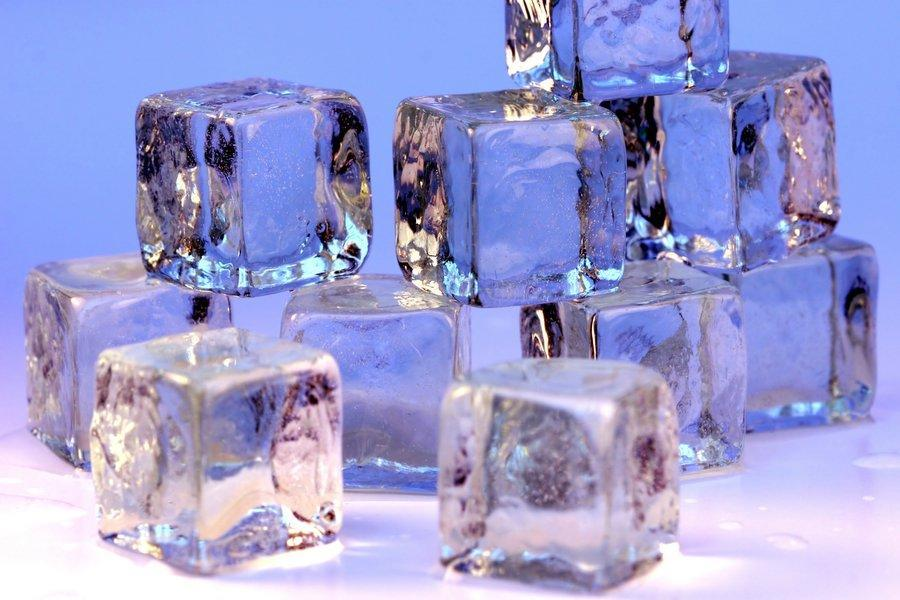
The water exists in both ice and also liquid at ${0^ \circ }\,C$. But the ice requires greater latent heat to get converted into water. But the water absorbs less heat when compared to the ice. This greater absorption of the heat from the neighbor objects, helps to produce more cooling effect in it than it was done by the water at that same temperature. Hence the condition is true.
Thus the option (A) is correct.
Note:You may have a little doubt that the water exists as solid ice at ${0^ \circ }\,C$ but it exists as the liquid. There are some cases in which the water remains the same even at the ${0^ \circ }\,C$. This is possible when the pressure is applied, this makes the freezing point of the water to decrease.
Complete step by step solution:
On the whole, the heat energy moves from the point of the higher temperature body to the lower temperature body to set these both in the equilibrium. The heat energy is transferred between the objects in the contact in order to maintain the state of equilibrium. The latent heat is defined as the energy required in order to convert the state of any substance into the other state.
The water exists in both ice and also liquid at ${0^ \circ }\,C$. But the ice requires greater latent heat to get converted into water. But the water absorbs less heat when compared to the ice. This greater absorption of the heat from the neighbor objects, helps to produce more cooling effect in it than it was done by the water at that same temperature. Hence the condition is true.
Thus the option (A) is correct.
Note:You may have a little doubt that the water exists as solid ice at ${0^ \circ }\,C$ but it exists as the liquid. There are some cases in which the water remains the same even at the ${0^ \circ }\,C$. This is possible when the pressure is applied, this makes the freezing point of the water to decrease.
Recently Updated Pages
Master Class 11 Computer Science: Engaging Questions & Answers for Success

Master Class 11 Business Studies: Engaging Questions & Answers for Success
Master Class 11 Economics: Engaging Questions & Answers for Success
Master Class 11 English: Engaging Questions & Answers for Success
Master Class 11 Maths: Engaging Questions & Answers for Success
Master Class 11 Biology: Engaging Questions & Answers for Success
Trending doubts
One Metric ton is equal to kg A 10000 B 1000 C 100 class 11 physics CBSE
There are 720 permutations of the digits 1 2 3 4 5 class 11 maths CBSE
Discuss the various forms of bacteria class 11 biology CBSE
Draw a diagram of a plant cell and label at least eight class 11 biology CBSE
State the laws of reflection of light
Explain zero factorial class 11 maths CBSE