




Hypophysectomy results in
(a) Heart attack
(b) Regression of reproductive functions
(c) Death
(d) Poor digestion
Answer
 Verified
616.8k+ views
Hint: The surgical technique performed to remove the master gland is hypophysectomy. This gland secretes hormones such as follicle-stimulating hormone (FSH) and luteinizing hormones (LH). Eventually, the lack of these hormones disrupts sex hormones such as estrogen and testosterone.
Complete step by step answer:
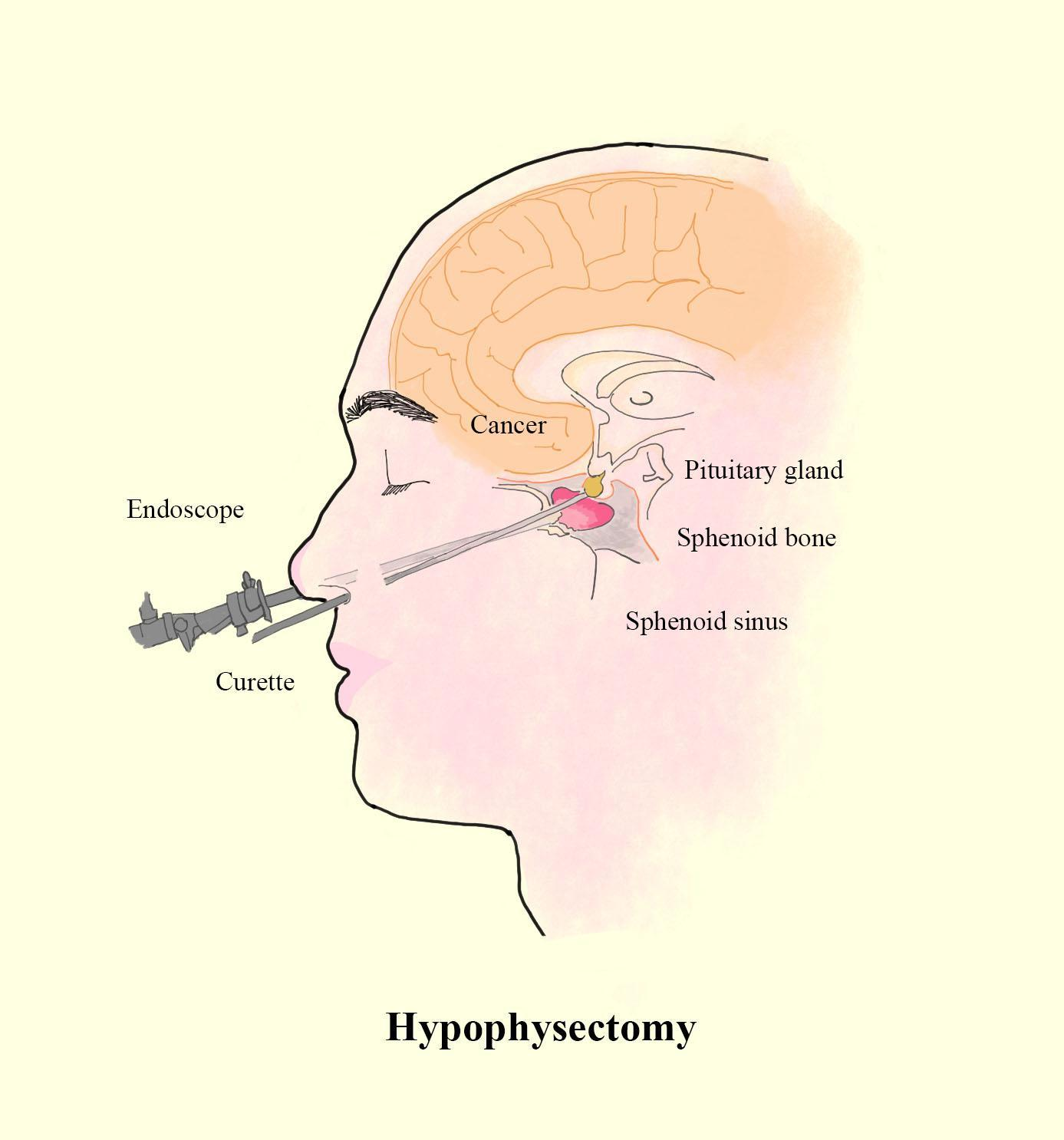
Hypophysectomy is the removal of the pituitary gland (hypophysis) by surgery. Pituitary gland removal can result in the regression of reproductive functions because of the Luteinizing Hormone and Follicle Stimulating Hormone secreted by the anterior lobe of the pituitary.
LH induces ovarian follicle development in females. Ovarian follicles secrete the female sex hormone estrogen. This hormone is known as Interstitial Cell Stimulating Hormone (ICSH) in males because it affects interstitial cells or Leydig cells and activates the release of the male sex hormone testosterone.
The anterior section of the pituitary gland secretes the FSH. It promotes the production in females of ovarian follicles and in males of seminiferous tubules. In males, this hormone also facilitates spermatogenesis, i.e. the process of sperm formation from the germ cells.
So, the correct answer is, ‘Regression of reproductive functions’.
Additional information: Glucocorticoids are also drugs that are given as hormone replacement therapy following full hypophysectomy (pituitary gland removal). Hyperlipidemia and secondary Addison's can occur. In regulating the metabolism of cholesterol that has been impaired by pituitary deletion, the thyroid hormone is useful.
Note:
- Hypophysectomy is most widely performed for the treatment of tumors, especially tumors of craniopharyngioma. Often, regardless of pituitary adenoma or Simmond disease, it is used to treat Cushing's syndrome.
- In neurosciences (in studies with laboratory animals), it is often used to explain the functioning of the hypophysis.
- There are different ways to do hypophysectomy. Transsphenoidal hypophysectomy, open craniotomy, and stereotactic radiosurgery are used in these techniques.
Complete step by step answer:
Hypophysectomy is the removal of the pituitary gland (hypophysis) by surgery. Pituitary gland removal can result in the regression of reproductive functions because of the Luteinizing Hormone and Follicle Stimulating Hormone secreted by the anterior lobe of the pituitary.
LH induces ovarian follicle development in females. Ovarian follicles secrete the female sex hormone estrogen. This hormone is known as Interstitial Cell Stimulating Hormone (ICSH) in males because it affects interstitial cells or Leydig cells and activates the release of the male sex hormone testosterone.
The anterior section of the pituitary gland secretes the FSH. It promotes the production in females of ovarian follicles and in males of seminiferous tubules. In males, this hormone also facilitates spermatogenesis, i.e. the process of sperm formation from the germ cells.
So, the correct answer is, ‘Regression of reproductive functions’.
Additional information: Glucocorticoids are also drugs that are given as hormone replacement therapy following full hypophysectomy (pituitary gland removal). Hyperlipidemia and secondary Addison's can occur. In regulating the metabolism of cholesterol that has been impaired by pituitary deletion, the thyroid hormone is useful.
Note:
- Hypophysectomy is most widely performed for the treatment of tumors, especially tumors of craniopharyngioma. Often, regardless of pituitary adenoma or Simmond disease, it is used to treat Cushing's syndrome.
- In neurosciences (in studies with laboratory animals), it is often used to explain the functioning of the hypophysis.
- There are different ways to do hypophysectomy. Transsphenoidal hypophysectomy, open craniotomy, and stereotactic radiosurgery are used in these techniques.
Recently Updated Pages
Master Class 11 English: Engaging Questions & Answers for Success

Master Class 11 Social Science: Engaging Questions & Answers for Success
Master Class 11 Maths: Engaging Questions & Answers for Success
Master Class 11 Biology: Engaging Questions & Answers for Success
Master Class 11 Physics: Engaging Questions & Answers for Success
Master Class 11 Chemistry: Engaging Questions & Answers for Success
Trending doubts
One Metric ton is equal to kg A 10000 B 1000 C 100 class 11 physics CBSE
Difference Between Prokaryotic Cells and Eukaryotic Cells
1 ton equals to A 100 kg B 1000 kg C 10 kg D 10000 class 11 physics CBSE
Find the value of the expression given below sin 30circ class 11 maths CBSE
Two of the body parts which do not appear in MRI are class 11 biology CBSE
What are hard magnetic materials class 11 physics CBSE