




Hydrogen atoms usually contain a single neutron. Deuterium and tritium are isotopes of hydrogen containing two and three neutrons, respectively. How many electrons orbit the tritium nucleus if the atom is electrically neutral?
A. 0
B. 1
C. 2
D. 3
Answer
 Verified
607.8k+ views
Hint: Hydrogen has three naturally occurring isotopes, protium, deuterium and tritium. Isotopes of an element are the atoms of the same element with the same number of protons but different number of neutrons. Generally, isotopes of the same element have similar physical properties.
Complete step by step answer:
Actually a hydrogen atom contains only a proton, an electron and no neutron. In the case of isotopes of hydrogen atoms, they have a varied number of neutrons present in them.
Given below is the atomic structure of three isotopes of hydrogen.
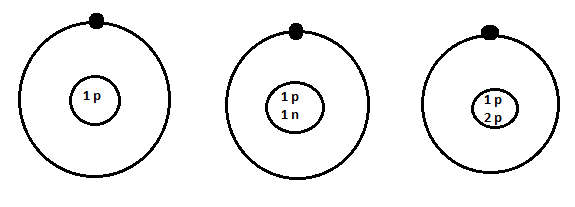
Protium contains a proton, an electron and one neutron, whereas deuterium has 1 proton and a neutron. In tritium, only a proton and 2 neutrons are present.
The atomic mass number of an atom is equal to that the sum of the number of protons and neutrons of that atom. The atomic mass number will be different for each isotope of hydrogen.
Irrespective of the number of neutrons present in the nucleus of an atom, the number of protons remains the same for each atom of that element.
When an atom is said to be electrically neutral, the net electric charge of that atom will be zero. This is because the atom will have an equal number of positive and negative electric charges due to the presence of the same number of protons and electrons in that atom.
Here, it is given that the tritium isotope is electrically neutral. The number of protons present in each isotope of hydrogen atom is 1.
Therefore, the number of electrons orbiting the tritium nucleus will be 1 when the atom is electrically neutral.
Hence, option B is the correct answer.
Additional information:
Tritium is a radioactive isotope of hydrogen, which emits beta ($\beta $) radiations on decay. Tritium reacts with oxygen forming tritiated water. The most common use of tritium is in the glow in the dark signs. It is also used in the luminous dials of watches.
Note: Students should remember that different isotopes of the same element have different atomic mass number, but same atomic number. This is because all isotopes of the same element will have equal numbers of protons and electrons. Hence, their atomic numbers remain the same. The number of neutrons for each isotope of the same element is different, which results in a different atomic mass number or atomic weight for each isotope of the same element.
Complete step by step answer:
Actually a hydrogen atom contains only a proton, an electron and no neutron. In the case of isotopes of hydrogen atoms, they have a varied number of neutrons present in them.
Given below is the atomic structure of three isotopes of hydrogen.
Protium contains a proton, an electron and one neutron, whereas deuterium has 1 proton and a neutron. In tritium, only a proton and 2 neutrons are present.
The atomic mass number of an atom is equal to that the sum of the number of protons and neutrons of that atom. The atomic mass number will be different for each isotope of hydrogen.
Irrespective of the number of neutrons present in the nucleus of an atom, the number of protons remains the same for each atom of that element.
When an atom is said to be electrically neutral, the net electric charge of that atom will be zero. This is because the atom will have an equal number of positive and negative electric charges due to the presence of the same number of protons and electrons in that atom.
Here, it is given that the tritium isotope is electrically neutral. The number of protons present in each isotope of hydrogen atom is 1.
Therefore, the number of electrons orbiting the tritium nucleus will be 1 when the atom is electrically neutral.
Hence, option B is the correct answer.
Additional information:
Tritium is a radioactive isotope of hydrogen, which emits beta ($\beta $) radiations on decay. Tritium reacts with oxygen forming tritiated water. The most common use of tritium is in the glow in the dark signs. It is also used in the luminous dials of watches.
Note: Students should remember that different isotopes of the same element have different atomic mass number, but same atomic number. This is because all isotopes of the same element will have equal numbers of protons and electrons. Hence, their atomic numbers remain the same. The number of neutrons for each isotope of the same element is different, which results in a different atomic mass number or atomic weight for each isotope of the same element.
Recently Updated Pages
Master Class 11 Social Science: Engaging Questions & Answers for Success

Master Class 11 English: Engaging Questions & Answers for Success
Master Class 11 Accountancy: Engaging Questions & Answers for Success
Master Class 11 Physics: Engaging Questions & Answers for Success
Master Class 11 Computer Science: Engaging Questions & Answers for Success
Master Class 11 Business Studies: Engaging Questions & Answers for Success
Trending doubts
Find the value of the expression given below sin 30circ class 11 maths CBSE
The teeth used for biting and cutting food are called class 11 biology CBSE
Bond order ofO2 O2+ O2 and O22 is in order A O2 langle class 11 chemistry CBSE
Frogs heart when taken out of the body continues to class 11 biology CBSE
10 examples of diffusion in everyday life
Can anyone list 10 advantages and disadvantages of friction