




Growth of plant towards stimulus is called as
(a). Positive tropism
(b). Negative tropism
(c). Upward tropism
(d). Downward tropism
Answer
 Verified
608.1k+ views
Hint: It is movement or growth towards a stimulus. It is the innate ability of an organism to turn or move in response to a stimulus. As against a learned ability, innate reactions are genetically programmed. The organisms which show the tropism will automatically turn toward a stimulus.
Complete answer:
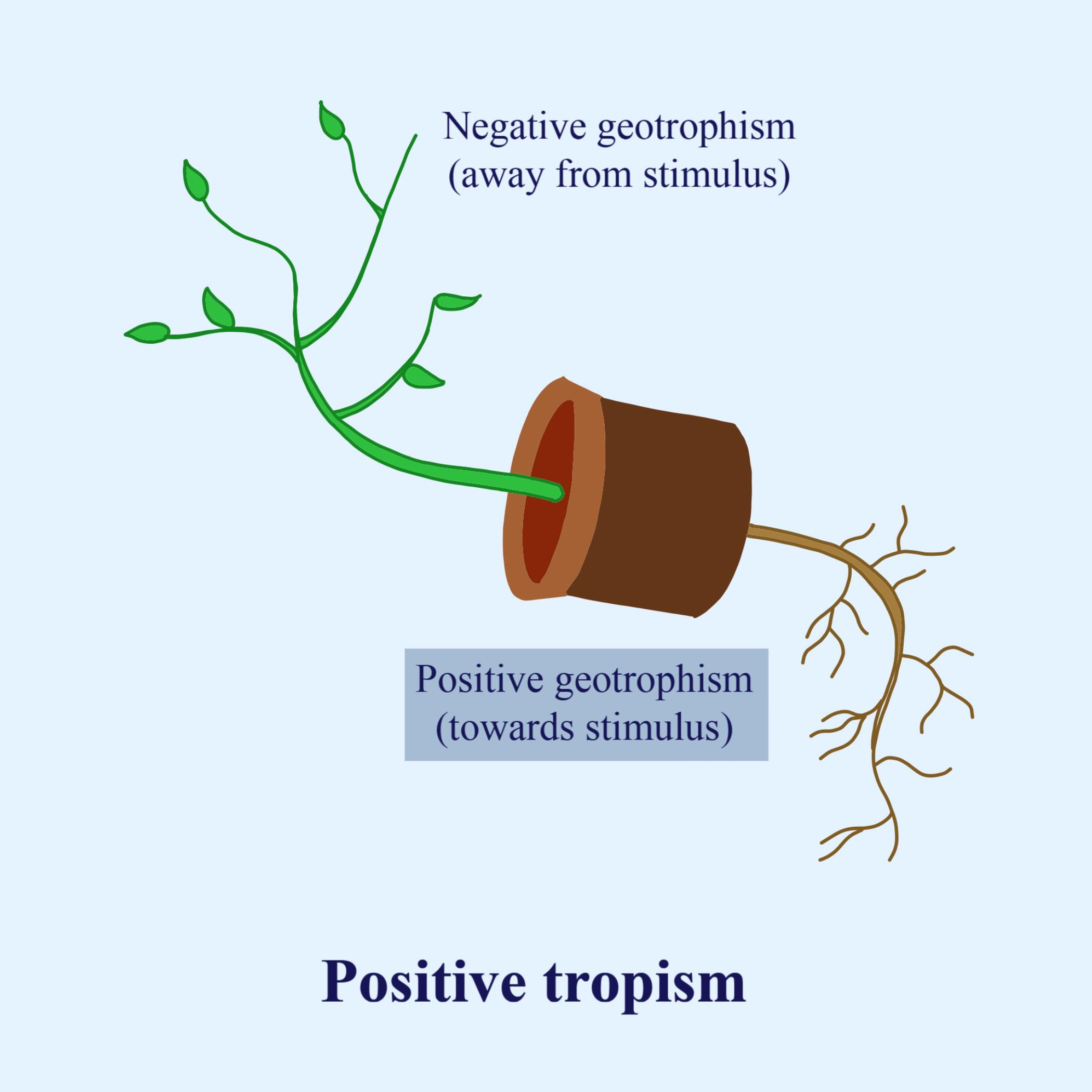
Plants exhibit two sorts of induced movements of curvature. These are namely tropic and nastic movements. The directional growth movements during which the direction of growth is decided by the direction of stimulus are referred to as tropic movements. Examples: thigmotropism, phototropism, chemotropism, gravitropism, etc. The growth movement of plants towards the stimulus is understood as positive tropism while the movement of plant/plant parts faraway from the stimulus is understood as negative tropism.
Additional Information:
Types of Tropism
Phototropism
Many photosynthetic animals produce their food from sunlight. Therefore, sunlight has evolved as a stimulus for several organisms. Many of these organisms move towards the light. This positive phototropism causes organisms to maneuver toward the sunshine. Many algae, plankton, and little invertebrates exhibit positive phototaxis. This brings them to an equivalent area within the ocean, which contains far and away from the foremost light.
Heliotropism
A similar phenomenon occurs in land plants. Terrestrial plants are restricted in their movements, thanks to their roots. Instead, plants orient their leaves toward the sun, to gather the foremost sunlight. This tropism is similar to phototropism, but the position of the organism cannot change
Chemotropism
A widely spread tropism within the Animalia is chemotropism, or the tendency to show or move towards or faraway from a selected chemical substance. Some single-celled organisms use different chemotropism for different purposes.
So the correct answer is ‘Positive tropism’.
Note: Even organisms that are not photosynthetic have developed this tropism, which moves them to the same water column as their prey items. Other organisms may exhibit a negative reaction to light, and check out to maneuver faraway from it. Think of a beetle once you uncover it from its topographic point. This tropism has an equivalent stimulus but the other direction of the tropism in plants.
Complete answer:
Plants exhibit two sorts of induced movements of curvature. These are namely tropic and nastic movements. The directional growth movements during which the direction of growth is decided by the direction of stimulus are referred to as tropic movements. Examples: thigmotropism, phototropism, chemotropism, gravitropism, etc. The growth movement of plants towards the stimulus is understood as positive tropism while the movement of plant/plant parts faraway from the stimulus is understood as negative tropism.
Additional Information:
Types of Tropism
Phototropism
Many photosynthetic animals produce their food from sunlight. Therefore, sunlight has evolved as a stimulus for several organisms. Many of these organisms move towards the light. This positive phototropism causes organisms to maneuver toward the sunshine. Many algae, plankton, and little invertebrates exhibit positive phototaxis. This brings them to an equivalent area within the ocean, which contains far and away from the foremost light.
Heliotropism
A similar phenomenon occurs in land plants. Terrestrial plants are restricted in their movements, thanks to their roots. Instead, plants orient their leaves toward the sun, to gather the foremost sunlight. This tropism is similar to phototropism, but the position of the organism cannot change
Chemotropism
A widely spread tropism within the Animalia is chemotropism, or the tendency to show or move towards or faraway from a selected chemical substance. Some single-celled organisms use different chemotropism for different purposes.
So the correct answer is ‘Positive tropism’.
Note: Even organisms that are not photosynthetic have developed this tropism, which moves them to the same water column as their prey items. Other organisms may exhibit a negative reaction to light, and check out to maneuver faraway from it. Think of a beetle once you uncover it from its topographic point. This tropism has an equivalent stimulus but the other direction of the tropism in plants.
Recently Updated Pages
Master Class 11 English: Engaging Questions & Answers for Success

Master Class 11 Social Science: Engaging Questions & Answers for Success
Master Class 11 Maths: Engaging Questions & Answers for Success
Master Class 11 Biology: Engaging Questions & Answers for Success
Master Class 11 Physics: Engaging Questions & Answers for Success
Master Class 11 Chemistry: Engaging Questions & Answers for Success
Trending doubts
One Metric ton is equal to kg A 10000 B 1000 C 100 class 11 physics CBSE
Difference Between Prokaryotic Cells and Eukaryotic Cells
Find the value of the expression given below sin 30circ class 11 maths CBSE
Difference between physical and chemical change class 11 chemistry CBSE
Two of the body parts which do not appear in MRI are class 11 biology CBSE
Draw a diagram of a plant cell and label at least eight class 11 biology CBSE