




Golgi complex is not found in
(A)Nerve cells
(B)RBC's
(C)Germ cells
(D)All of the above
Answer
 Verified
617.4k+ views
Hint: Golgi complex is not found in the cell which helps in delivering the oxygen to the different cells and tissues of the body and contains protein haemoglobin which helps in the proper functioning of these cells.
Complete answer:
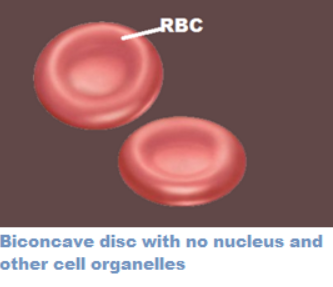
Complete step by step solution: Mature red blood cells (RBCs) don't possess a nucleus and even also the other cell organelles like mitochondria, Golgi body, and endoplasmic reticulum so as to accommodate a greater amount of hemoglobin within the cells. However, immature red blood cells contain a nucleus.
Additional Information: Golgi apparatus, which is also known as Golgi complex, is a membrane-bound organelle that is present in eukaryotic cells and is made up of flattened, stacked pouches called cisternae. The function of the Golgi body is the transporting, modifying, and packaging proteins and lipids molecules into vesicles for delivery to targeted destinations. It's located within the cytoplasm next to the endoplasmic reticulum and near the nucleus. The number of Golgi cells varies from cells to cells and organisms to organisms. For example, some cells contain just one or several Golgi bodies, plant cells can contain hundreds. In general, the Golgi body is formed from approximately four to eight cisternae, although in some single-celled organisms it's going to contain as many as 60 cisternae.
So, the correct answer is ‘RBC's’.
Note: The Golgi body size varies according to their secretions. They tend to be larger and present more in number in cells that synthesize and secrete large amounts of substances, like, the antibody-secreting plasma B cells of the system have prominent Golgi complexes.
Complete answer:
Complete step by step solution: Mature red blood cells (RBCs) don't possess a nucleus and even also the other cell organelles like mitochondria, Golgi body, and endoplasmic reticulum so as to accommodate a greater amount of hemoglobin within the cells. However, immature red blood cells contain a nucleus.
Additional Information: Golgi apparatus, which is also known as Golgi complex, is a membrane-bound organelle that is present in eukaryotic cells and is made up of flattened, stacked pouches called cisternae. The function of the Golgi body is the transporting, modifying, and packaging proteins and lipids molecules into vesicles for delivery to targeted destinations. It's located within the cytoplasm next to the endoplasmic reticulum and near the nucleus. The number of Golgi cells varies from cells to cells and organisms to organisms. For example, some cells contain just one or several Golgi bodies, plant cells can contain hundreds. In general, the Golgi body is formed from approximately four to eight cisternae, although in some single-celled organisms it's going to contain as many as 60 cisternae.
So, the correct answer is ‘RBC's’.
Note: The Golgi body size varies according to their secretions. They tend to be larger and present more in number in cells that synthesize and secrete large amounts of substances, like, the antibody-secreting plasma B cells of the system have prominent Golgi complexes.
Recently Updated Pages
Master Class 11 English: Engaging Questions & Answers for Success

Master Class 11 Social Science: Engaging Questions & Answers for Success
Master Class 11 Maths: Engaging Questions & Answers for Success
Master Class 11 Biology: Engaging Questions & Answers for Success
Master Class 11 Physics: Engaging Questions & Answers for Success
Master Class 11 Chemistry: Engaging Questions & Answers for Success
Trending doubts
One Metric ton is equal to kg A 10000 B 1000 C 100 class 11 physics CBSE
Difference Between Prokaryotic Cells and Eukaryotic Cells
Two of the body parts which do not appear in MRI are class 11 biology CBSE
Find the value of the expression given below sin 30circ class 11 maths CBSE
Draw a diagram of a plant cell and label at least eight class 11 biology CBSE
10 examples of friction in our daily life