




Give two examples of trees.
Answer
 Verified
663.9k+ views
Hint:Trees absorb odors and pollutant gases such as ammonia, ozone, sulfur dioxide and nitrogen dioxide and filter particulates out of the air by trapping them on their leaves and bark. Trees reduce runoff by breaking rainfall thus allowing the water to flow down the trunk and into the earth below the tree.
Complete answer:
Before giving examples of trees, we must discuss the definition of a tree.
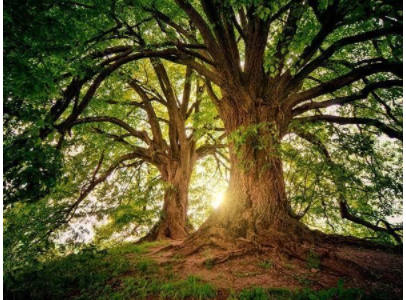
A tall plant with a trunk and branches made of wood is known as a tree. Examples for trees are Teak (Tectona grandis) and Mango tree (Mangifera indica).
Trees can live many years. Parts of trees are divided into four, they are, root, trunk, branches and leaves. Usually the roots of the tree are under the soil (ground). But it is not always true. Mangroves have aerial roots. A single tree has many roots. The roots carry nutrients and water from the ground via trunk and branches to the leaves of the trees.
The main body of a tree is its trunk. Trunk is covered with bark, which can protect from damages. Branches grow from the trunk and they spread out so that the leaves can get more sunlight.
The leaves of a tree are green most of the time, but they can come in many colours, sizes and shapes. The leaves take in sunlight and use water and food from the roots to make the tree grow and to reproduce.
Trees and shrubs take water in and carbon dioxide and oxygen give out with sunlight to form sugar. This process is known as photosynthesis, which is opposite to the respiration in animals. Like animals, plants to do some respiration. Plants also need oxygen and carbon dioxide to live.
Additional information:
In one year, an acre of mature trees can provide enough oxygen for 18 people.
Trees absorb excess carbon dioxide from the atmosphere, removing and storing the carbon while releasing oxygen back into the air.
On hillsides or steam slopes, trees slow runoff and hold soil in place.
Trees plantings provide an opportunity for community involvement and empowerment that can improve the quality of life in our neighborhoods.
Trees can mask concrete walls or parking lots and unsightly views. They muffle sound from nearby streets and they can absorb dust and wind and reduce glare.
Note:The reduction in runoff by trees prevents stormwater from carrying pollutants to the ocean. Trees reduce ultraviolet exposure by about 50 percent; therefore, it provides protection to all the people. Like fruits for humans, trees provide food for birds and wildlife.
Complete answer:
Before giving examples of trees, we must discuss the definition of a tree.
A tall plant with a trunk and branches made of wood is known as a tree. Examples for trees are Teak (Tectona grandis) and Mango tree (Mangifera indica).
Trees can live many years. Parts of trees are divided into four, they are, root, trunk, branches and leaves. Usually the roots of the tree are under the soil (ground). But it is not always true. Mangroves have aerial roots. A single tree has many roots. The roots carry nutrients and water from the ground via trunk and branches to the leaves of the trees.
The main body of a tree is its trunk. Trunk is covered with bark, which can protect from damages. Branches grow from the trunk and they spread out so that the leaves can get more sunlight.
The leaves of a tree are green most of the time, but they can come in many colours, sizes and shapes. The leaves take in sunlight and use water and food from the roots to make the tree grow and to reproduce.
Trees and shrubs take water in and carbon dioxide and oxygen give out with sunlight to form sugar. This process is known as photosynthesis, which is opposite to the respiration in animals. Like animals, plants to do some respiration. Plants also need oxygen and carbon dioxide to live.
Additional information:
In one year, an acre of mature trees can provide enough oxygen for 18 people.
Trees absorb excess carbon dioxide from the atmosphere, removing and storing the carbon while releasing oxygen back into the air.
On hillsides or steam slopes, trees slow runoff and hold soil in place.
Trees plantings provide an opportunity for community involvement and empowerment that can improve the quality of life in our neighborhoods.
Trees can mask concrete walls or parking lots and unsightly views. They muffle sound from nearby streets and they can absorb dust and wind and reduce glare.
Note:The reduction in runoff by trees prevents stormwater from carrying pollutants to the ocean. Trees reduce ultraviolet exposure by about 50 percent; therefore, it provides protection to all the people. Like fruits for humans, trees provide food for birds and wildlife.

Recently Updated Pages
Master Class 10 Computer Science: Engaging Questions & Answers for Success

Master Class 12 Physics: Engaging Questions & Answers for Success
Master Class 12 Social Science: Engaging Questions & Answers for Success
Master Class 12 English: Engaging Questions & Answers for Success
Master Class 12 Maths: Engaging Questions & Answers for Success
Master Class 12 Business Studies: Engaging Questions & Answers for Success
Trending doubts
Give 10 examples for herbs , shrubs , climbers , creepers
The planet nearest to earth is A Mercury B Venus C class 6 social science CBSE
What is BLO What is the full form of BLO class 8 social science CBSE
Explain the Treaty of Vienna of 1815 class 10 social science CBSE
Draw a labelled sketch of the human eye class 12 physics CBSE
Which are the Top 10 Largest Countries of the World?