




Give a brief account of the mechanism of synaptic transmission.
Answer
 Verified
588.3k+ views
Hint: Chemical transmission causes depolarization of the membrane and initiates an action potential. A faster method of nerve conduction than the chemical method of transmission is electrical transmission.
Complete answer:
A synapse is a junction between two neurons. It is present between the axon terminal of one neuron and the dendrite of the next neuron separated by a cleft.
There are two ways of synaptic transmission.
(1) Chemical transmission
(2) Electrical transmission
The mechanism of synaptic transmission at the electrical synapse:
-In this case, the presynaptic and postsynaptic membranes are in proximity.
-The impulse in the form of an electric current directly flows from the presynaptic neuron to the postsynaptic neuron.
-Transmission is faster than the chemical synapse.
The mechanism of synaptic transmission at the chemical synapse:
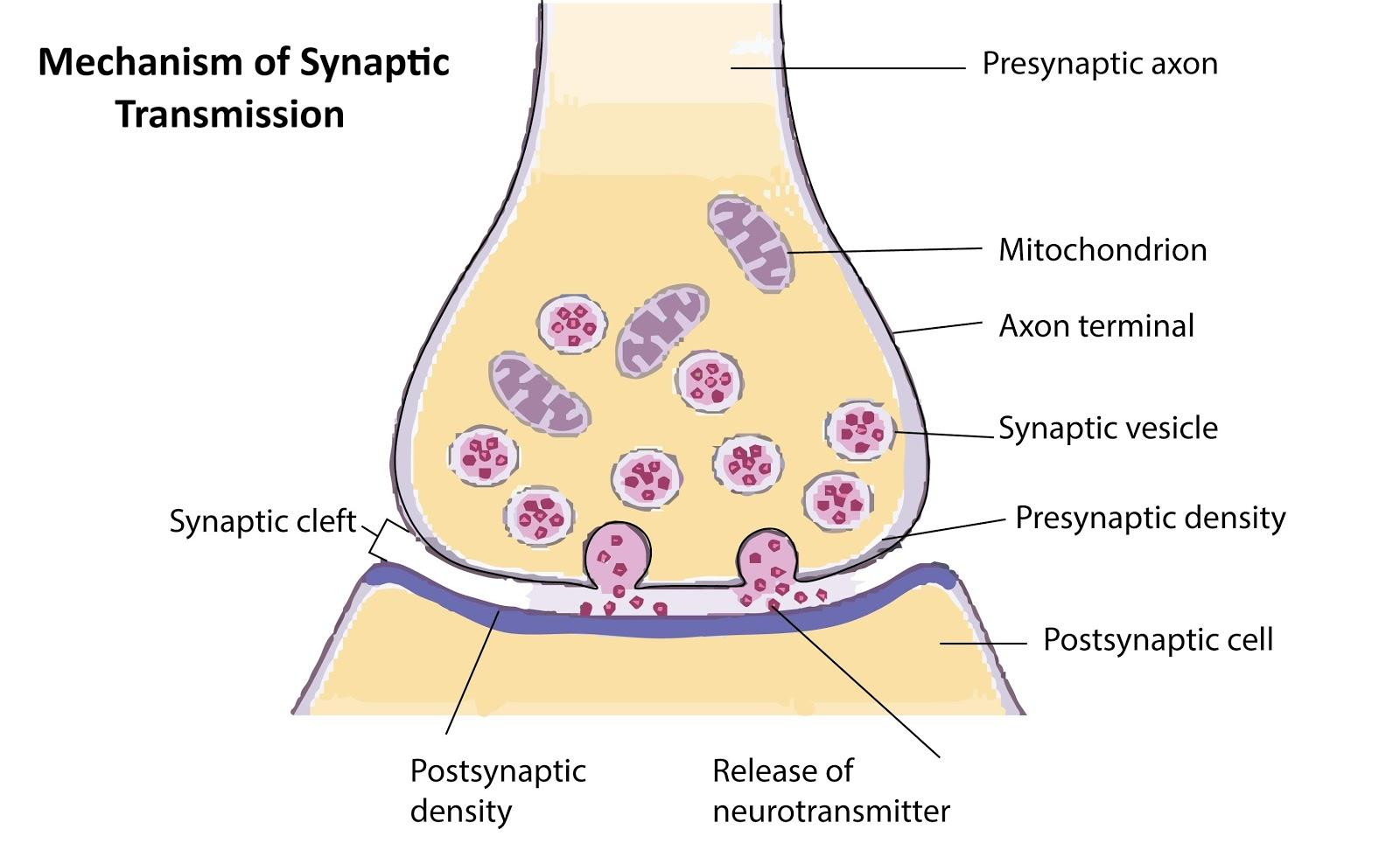
-the presynaptic and postsynaptic neurons are separated by the synaptic cleft.
-When an impulse arrives at the axon terminal, the calcium ions present in the synaptic cleft enter the synaptic knobs present at the axon terminals of the presynaptic neuron.
-The synaptic vesicles present in the synaptic knobs present in the presynaptic neuron move towards the plasma membrane and fuse with it.
-The vesicles release the neurotransmitter acetylcholine in the synaptic cleft. (Empty synaptic vesicles return to the cytoplasm of the presynaptic neuron where they are refilled.)
Note:
-The molecules of acetylcholine bind to the protein receptors present on the plasma membrane of the postsynaptic neurons.
-This binding opens the channels, and sodium ions enter the postsynaptic neuron, while potassium ions leave the postsynaptic membrane.
-This generates an action potential in the membrane of the postsynaptic neuron, and hence, the impulse is transmitted to the postsynaptic neuron.
Complete answer:
A synapse is a junction between two neurons. It is present between the axon terminal of one neuron and the dendrite of the next neuron separated by a cleft.
There are two ways of synaptic transmission.
(1) Chemical transmission
(2) Electrical transmission
The mechanism of synaptic transmission at the electrical synapse:
-In this case, the presynaptic and postsynaptic membranes are in proximity.
-The impulse in the form of an electric current directly flows from the presynaptic neuron to the postsynaptic neuron.
-Transmission is faster than the chemical synapse.
The mechanism of synaptic transmission at the chemical synapse:
-the presynaptic and postsynaptic neurons are separated by the synaptic cleft.
-When an impulse arrives at the axon terminal, the calcium ions present in the synaptic cleft enter the synaptic knobs present at the axon terminals of the presynaptic neuron.
-The synaptic vesicles present in the synaptic knobs present in the presynaptic neuron move towards the plasma membrane and fuse with it.
-The vesicles release the neurotransmitter acetylcholine in the synaptic cleft. (Empty synaptic vesicles return to the cytoplasm of the presynaptic neuron where they are refilled.)
Note:
-The molecules of acetylcholine bind to the protein receptors present on the plasma membrane of the postsynaptic neurons.
-This binding opens the channels, and sodium ions enter the postsynaptic neuron, while potassium ions leave the postsynaptic membrane.
-This generates an action potential in the membrane of the postsynaptic neuron, and hence, the impulse is transmitted to the postsynaptic neuron.
Recently Updated Pages
Master Class 10 Computer Science: Engaging Questions & Answers for Success

Master Class 10 Social Science: Engaging Questions & Answers for Success
Master Class 10 Science: Engaging Questions & Answers for Success
Class 10 Question and Answer - Your Ultimate Solutions Guide
Master Class 10 Maths: Engaging Questions & Answers for Success
Master Class 10 English: Engaging Questions & Answers for Success
Trending doubts
Difference Between Prokaryotic Cells and Eukaryotic Cells
Two of the body parts which do not appear in MRI are class 11 biology CBSE
10 examples of friction in our daily life
Draw a diagram of nephron and explain its structur class 11 biology CBSE
One Metric ton is equal to kg A 10000 B 1000 C 100 class 11 physics CBSE
Draw a diagram of a plant cell and label at least eight class 11 biology CBSE