




What is the function of radula?
(a) Sensation
(b) Catching food
(c)Digestion
(d) Rasping food
Answer
 Verified
627.6k+ views
Hint: Anatomical structure present in the mollusk's mouth which minutely toothed and compared to the human tongue.
Complete answer:
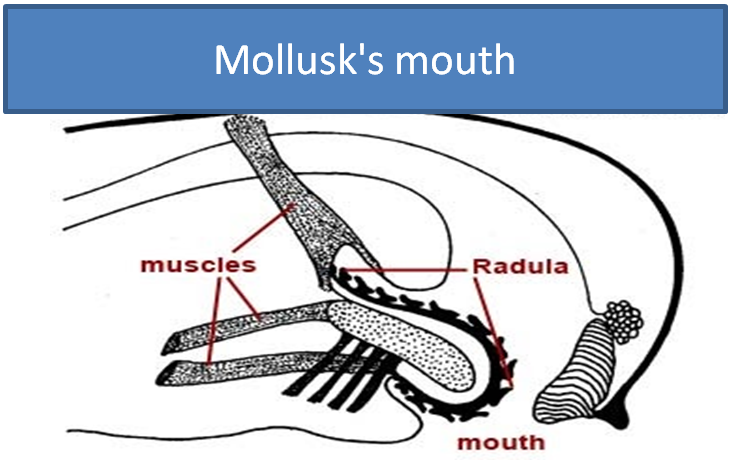
Mollusks use a minutely toothed structure called radula for feeding. The radula is called a rasping organ, present in most of the gastropod mollusks. The radula is the toothed chitinous ribbon present in the mouth of most mollusks. It can be compared with the tongue of human beings but, differ in function and structure of our tongue, it is used for cutting and chewing food before it enters the esophagus.
Additional Information: - Phylum Mollusca is the largest phylum in marine environments. It is estimated that 23% of all known and recognized marine species are mollusks.
- Snails do not possess any mouthparts, nor does it possess a set of teeth like a mammal. Instead, snails have got a specialized food processing organ, common to all mollusks: A rasping tongue or radula.
- Radula, horny, ribbon-like structure found in the mouth of all mollusks except the bivalves
- The radula is the part of the odontophore at the anterior end of the digestive tract.
- The muscles extrude the radula from the mouth, and then slide it over the supporting odontophore, helping in carrying pieces of food and debris into the esophagus.
- Radula grows continuously during the gastropod’s life, with new rows of denticles being formed posteriorly to replace the worn denticles cast off at the anterior end.
So, the correct answer is, ‘Rasping food.’
Note: - The radula is found in all mollusks except bivalves and also present in squid use it for cutting up their prey.
- Radular morphology plays an important tool for species identification.
-Mollusca is the second largest phylum of invertebrates after Arthropoda.
-Around 85,000 species of mollusks are identified till now.
Complete answer:
Mollusks use a minutely toothed structure called radula for feeding. The radula is called a rasping organ, present in most of the gastropod mollusks. The radula is the toothed chitinous ribbon present in the mouth of most mollusks. It can be compared with the tongue of human beings but, differ in function and structure of our tongue, it is used for cutting and chewing food before it enters the esophagus.
Additional Information: - Phylum Mollusca is the largest phylum in marine environments. It is estimated that 23% of all known and recognized marine species are mollusks.
- Snails do not possess any mouthparts, nor does it possess a set of teeth like a mammal. Instead, snails have got a specialized food processing organ, common to all mollusks: A rasping tongue or radula.
- Radula, horny, ribbon-like structure found in the mouth of all mollusks except the bivalves
- The radula is the part of the odontophore at the anterior end of the digestive tract.
- The muscles extrude the radula from the mouth, and then slide it over the supporting odontophore, helping in carrying pieces of food and debris into the esophagus.
- Radula grows continuously during the gastropod’s life, with new rows of denticles being formed posteriorly to replace the worn denticles cast off at the anterior end.
So, the correct answer is, ‘Rasping food.’
Note: - The radula is found in all mollusks except bivalves and also present in squid use it for cutting up their prey.
- Radular morphology plays an important tool for species identification.
-Mollusca is the second largest phylum of invertebrates after Arthropoda.
-Around 85,000 species of mollusks are identified till now.
Recently Updated Pages
Master Class 11 English: Engaging Questions & Answers for Success

Master Class 11 Social Science: Engaging Questions & Answers for Success
Master Class 11 Maths: Engaging Questions & Answers for Success
Master Class 11 Biology: Engaging Questions & Answers for Success
Master Class 11 Physics: Engaging Questions & Answers for Success
Master Class 11 Chemistry: Engaging Questions & Answers for Success
Trending doubts
One Metric ton is equal to kg A 10000 B 1000 C 100 class 11 physics CBSE
Difference Between Prokaryotic Cells and Eukaryotic Cells
Difference between physical and chemical change class 11 chemistry CBSE
Find the value of the expression given below sin 30circ class 11 maths CBSE
Two of the body parts which do not appear in MRI are class 11 biology CBSE
Draw a diagram of a plant cell and label at least eight class 11 biology CBSE