




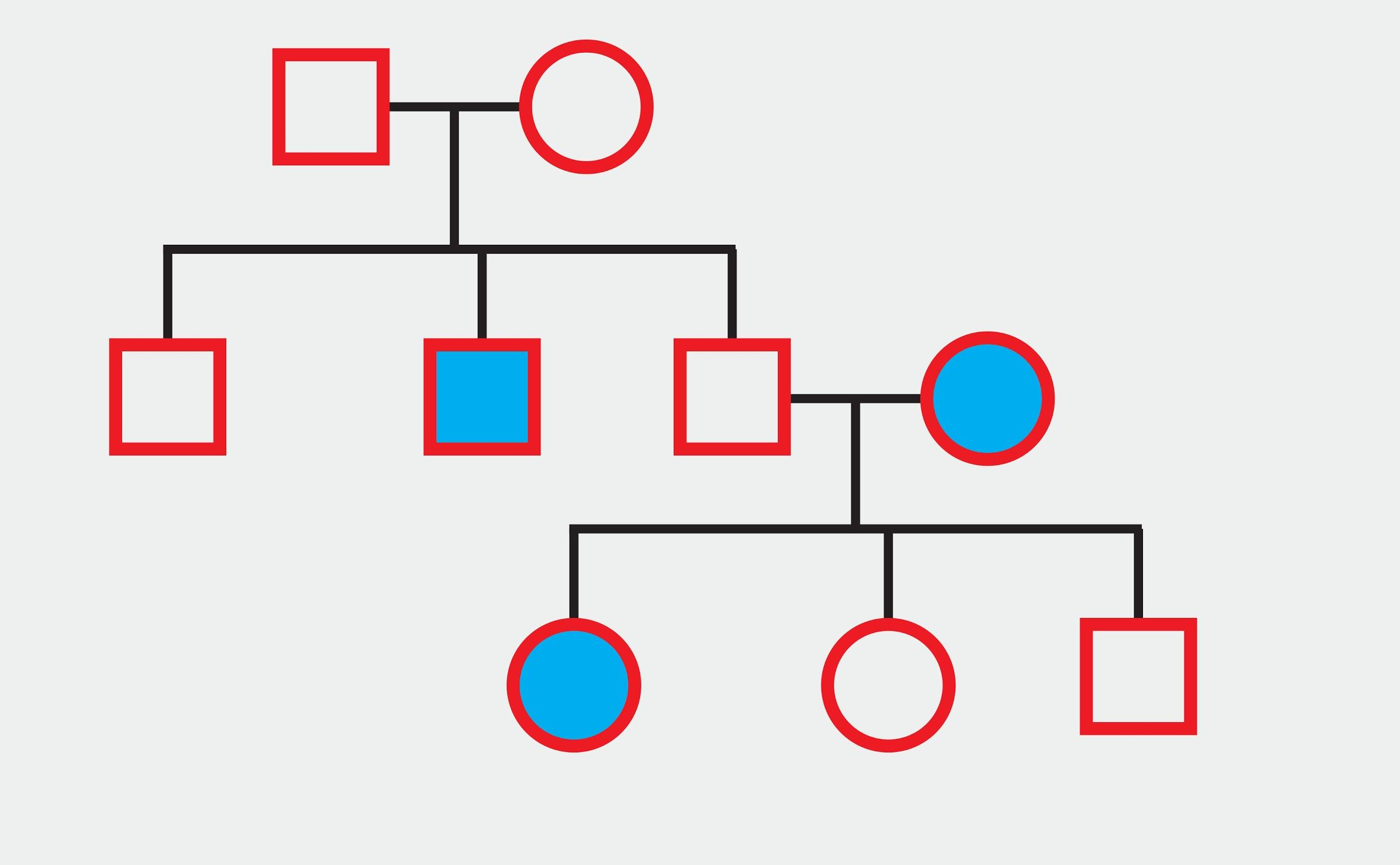
From the pedigree chart of a family, one can make an analysis that it is on.
(a)Autosomal dominant trait
(b)Autosomal recessive trait
(c)Allosomal dominant trait
(d)Allosomal recessive trait
Answer
 Verified
618k+ views
Hint: There are some genetic disorders that are inherited through generations and they are known as Mendelian disorders as they follow the laws of Mendel. Such disorders can be dominant and recessive depending on whether the disorder is expressed in homozygous or heterozygous condition.
Complete answer:
By observing the pedigree chart of the family given in the image, we can conclude that the disorder is an autosomal recessive trait like sickle cell anemia. The disorder is autosomal because both males and females are shown to be affected by it. If it were an autosomal disorder then only one sex would be affected. The disorder is a recessive disorder because it is not seen in one entire generation i.e. a generation was skipped. This happens when the recessive gene is present in heterozygous condition and thus cannot express itself. In the case of a dominant disorder, every generation will show the disorder.
Additional Information: Let us look at some Mendelian disorders.
Color Blindness: It is a sex-linked recessive disorder that results in a defect of red or green cone cell of the cell which results in the failure to discriminate between the red and green color.
Hemophilia: It is a sex-linked recessive disorder that affects a protein that is part of the cascade of proteins that are involved in the clotting of blood. This results in excessive blood loss even from a small cut.
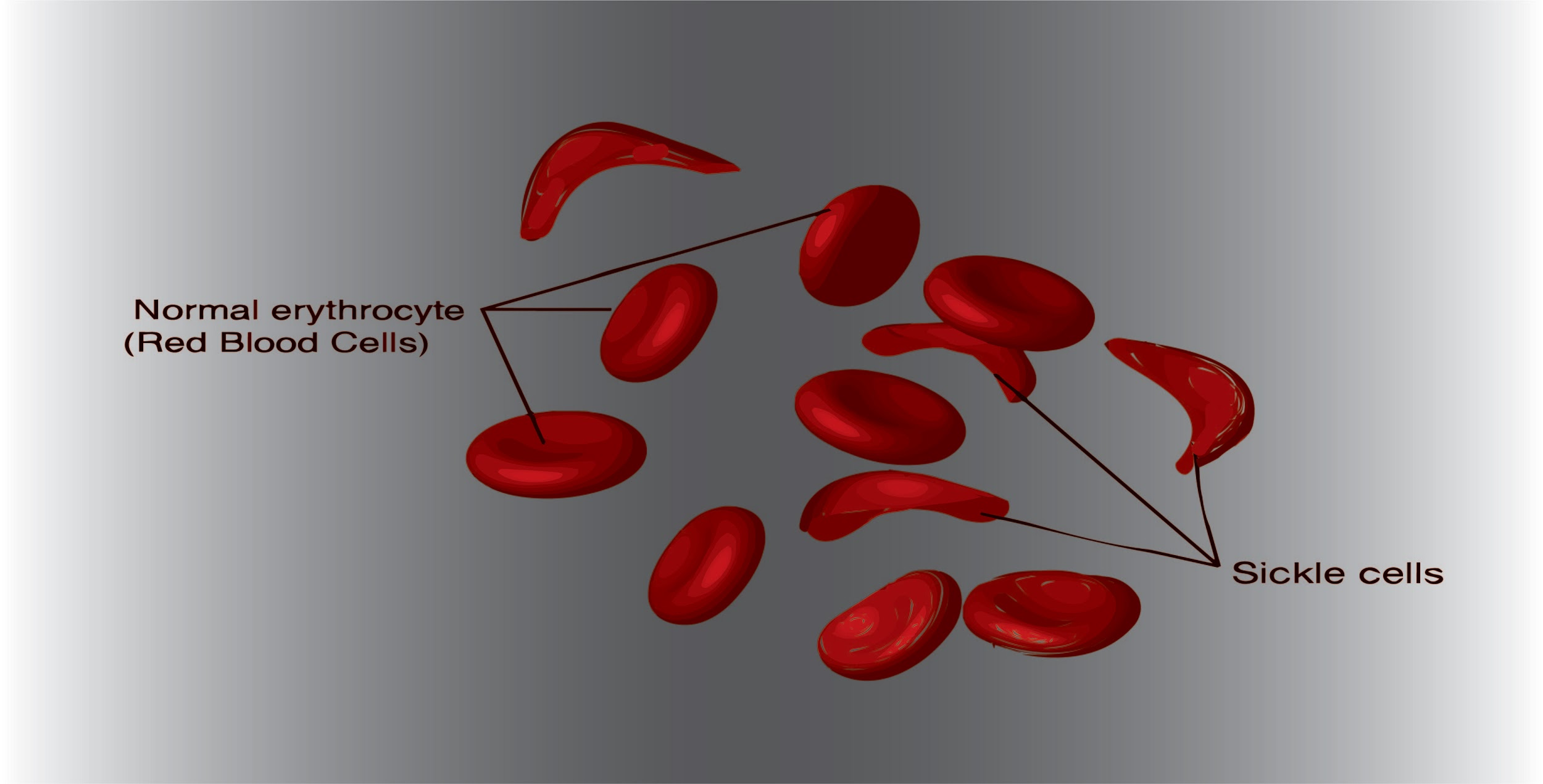
Sickle-cell anemia: It is an autosomal recessive disorder that produces mutant hemoglobin which is sickle-like in shape.
Phenylketonuria: It is an autosomal recessive disorder that results in the improper metabolism of the amino acid phenylalanine which leads to severe complications like mental retardation.
So, the correct option is ‘Autosomal recessive trait’.
Note: Sickle cell anemia takes place due to a single base mutation which results in the substitution of glutamic acid by valine at the 6th position of the beta-globin chain of hemoglobin.
Hemophilia is known as ‘The Royal disease’ because the family pedigree of Queen Victoria (who was a carrier of this disease) shows a number of hemophilic descendants.
Both hemophilia and color blindness are X-linked recessive disorders and thus a female will only show the disorder when the gene is present in homozygous condition.
Complete answer:
By observing the pedigree chart of the family given in the image, we can conclude that the disorder is an autosomal recessive trait like sickle cell anemia. The disorder is autosomal because both males and females are shown to be affected by it. If it were an autosomal disorder then only one sex would be affected. The disorder is a recessive disorder because it is not seen in one entire generation i.e. a generation was skipped. This happens when the recessive gene is present in heterozygous condition and thus cannot express itself. In the case of a dominant disorder, every generation will show the disorder.
Additional Information: Let us look at some Mendelian disorders.
Color Blindness: It is a sex-linked recessive disorder that results in a defect of red or green cone cell of the cell which results in the failure to discriminate between the red and green color.
Hemophilia: It is a sex-linked recessive disorder that affects a protein that is part of the cascade of proteins that are involved in the clotting of blood. This results in excessive blood loss even from a small cut.
Sickle-cell anemia: It is an autosomal recessive disorder that produces mutant hemoglobin which is sickle-like in shape.
Phenylketonuria: It is an autosomal recessive disorder that results in the improper metabolism of the amino acid phenylalanine which leads to severe complications like mental retardation.
So, the correct option is ‘Autosomal recessive trait’.
Note: Sickle cell anemia takes place due to a single base mutation which results in the substitution of glutamic acid by valine at the 6th position of the beta-globin chain of hemoglobin.
Hemophilia is known as ‘The Royal disease’ because the family pedigree of Queen Victoria (who was a carrier of this disease) shows a number of hemophilic descendants.
Both hemophilia and color blindness are X-linked recessive disorders and thus a female will only show the disorder when the gene is present in homozygous condition.
Recently Updated Pages
Basicity of sulphurous acid and sulphuric acid are

Master Class 12 Economics: Engaging Questions & Answers for Success
Master Class 12 Biology: Engaging Questions & Answers for Success
Master Class 11 English: Engaging Questions & Answers for Success
Master Class 11 Physics: Engaging Questions & Answers for Success
Master Class 11 Computer Science: Engaging Questions & Answers for Success
Trending doubts
Which are the Top 10 Largest Countries of the World?
Differentiate between homogeneous and heterogeneous class 12 chemistry CBSE
Give 10 examples of unisexual and bisexual flowers
Draw the diagram of the chloroplast class 12 biology CBSE
Lipids are insoluble in water because they are A Neutral class 12 biology CBSE
Decomposer also called as ATransducers BReducers CMicroconsumer class 12 biology CBSE