




From the following, identify which is the living matter of the cell.
(a) Chloroplast
(b) Endoplasmic reticulum
(c) Protoplasm
(d) Mitochondria
Answer
 Verified
577.8k+ views
Hint: It consists of a mixture of small molecules such as water and ions, amino acids, monosaccharides, and macromolecules such as nucleic acids, proteins, polysaccharides, and lipids. In eukaryotes, the protoplasm surrounding the cell nucleus is known as the cytoplasm and that inside the nucleus as the nucleoplasm.
Complete step by step answer:
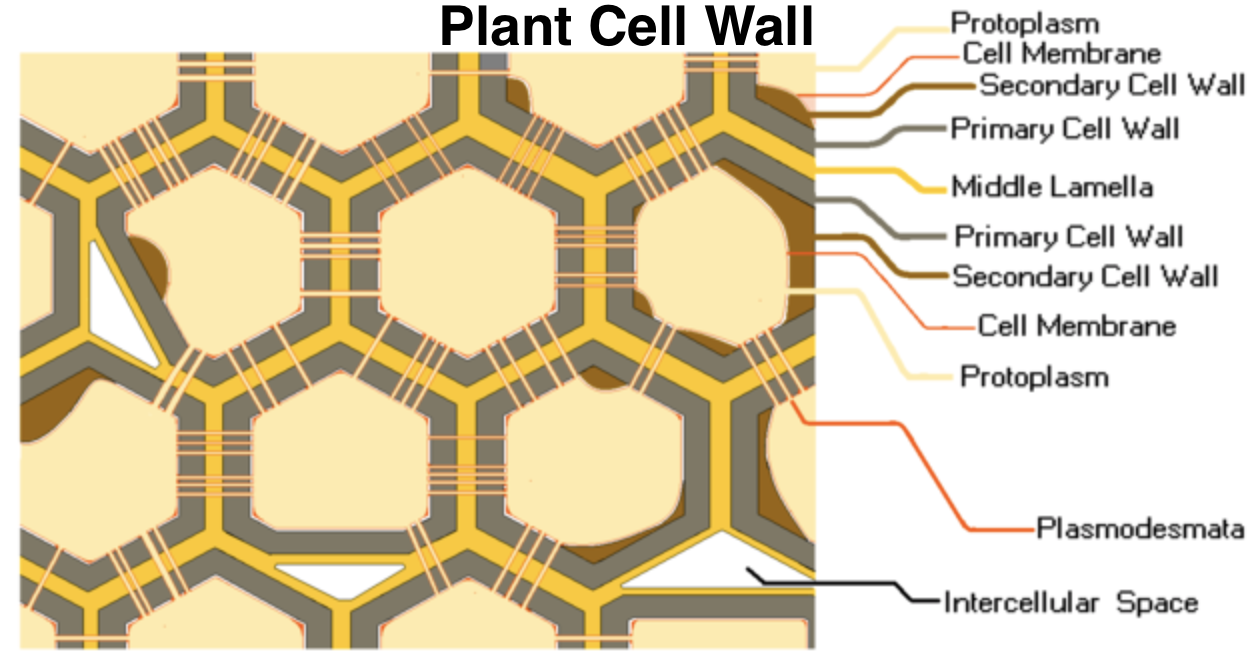
Protoplasm, a cell's cytoplasm and nucleus. In 1835, the term was first described as the basic substance of living material and, consequently, responsible for all living processes. Advocates of the protoplasm concept implied that cells were either fragments or containers of protoplasm. The weakness of the idea was its inability to account for the origin within the cell of formed structures, particularly the nucleus. The term is used today simply to mean the cytoplasm and nucleus. In modern biology, the word protoplasm is somewhat unpopular, though the term protoplasmic streaming is widely used to describe the cytoplasm's motion.
Additional information:
Endoplasmic reticulum: In biology, the endoplasmic reticulum (ER) is a continuous membrane system that forms a series of flattened sacs within the eukaryotic cell cytoplasm and serves multiple functions, particularly in the synthesis, folding, alteration, and transport of proteins.
Chloroplast: Chloroplasts are organelles found in plant cells and eukaryotic algae that conduct photosynthesis. Sunlight is consumed by chloroplasts and used in combination with water and carbon dioxide gas to make food for the plant.
Mitochondria: Membrane-bound cell organelles (mitochondrion, singular) are mitochondria which generate most of the chemical energy required to power the biochemical reactions of the cell. A small molecule called adenosine triphosphate (ATP) stores chemical energy produced by the mitochondria.
So, the correct answer is ‘protoplasm’.
Note: The cell's powerhouse is called mitochondria since these cell organelles are responsible for generating ATP molecules, the cell's energy currency. Mitochondria are a double-membrane cell organelle, rod-shaped, with a separate structure and specialized functions.
Complete step by step answer:
Protoplasm, a cell's cytoplasm and nucleus. In 1835, the term was first described as the basic substance of living material and, consequently, responsible for all living processes. Advocates of the protoplasm concept implied that cells were either fragments or containers of protoplasm. The weakness of the idea was its inability to account for the origin within the cell of formed structures, particularly the nucleus. The term is used today simply to mean the cytoplasm and nucleus. In modern biology, the word protoplasm is somewhat unpopular, though the term protoplasmic streaming is widely used to describe the cytoplasm's motion.
Additional information:
Endoplasmic reticulum: In biology, the endoplasmic reticulum (ER) is a continuous membrane system that forms a series of flattened sacs within the eukaryotic cell cytoplasm and serves multiple functions, particularly in the synthesis, folding, alteration, and transport of proteins.
Chloroplast: Chloroplasts are organelles found in plant cells and eukaryotic algae that conduct photosynthesis. Sunlight is consumed by chloroplasts and used in combination with water and carbon dioxide gas to make food for the plant.
Mitochondria: Membrane-bound cell organelles (mitochondrion, singular) are mitochondria which generate most of the chemical energy required to power the biochemical reactions of the cell. A small molecule called adenosine triphosphate (ATP) stores chemical energy produced by the mitochondria.
So, the correct answer is ‘protoplasm’.
Note: The cell's powerhouse is called mitochondria since these cell organelles are responsible for generating ATP molecules, the cell's energy currency. Mitochondria are a double-membrane cell organelle, rod-shaped, with a separate structure and specialized functions.
Recently Updated Pages
Master Class 11 English: Engaging Questions & Answers for Success

Master Class 11 Maths: Engaging Questions & Answers for Success
Master Class 11 Biology: Engaging Questions & Answers for Success
Master Class 11 Social Science: Engaging Questions & Answers for Success
Master Class 11 Physics: Engaging Questions & Answers for Success
Master Class 11 Accountancy: Engaging Questions & Answers for Success
Trending doubts
One Metric ton is equal to kg A 10000 B 1000 C 100 class 11 physics CBSE
There are 720 permutations of the digits 1 2 3 4 5 class 11 maths CBSE
Discuss the various forms of bacteria class 11 biology CBSE
Draw a diagram of a plant cell and label at least eight class 11 biology CBSE
State the laws of reflection of light
Explain zero factorial class 11 maths CBSE