




Floral diagram is
A. The figure of a flower
B. The three-dimensional appearance of a flower
C. L.S. of a flower
D. T.S. of a flower
Answer
 Verified
494.1k+ views
Hint: Two distinct methods of describing flowers were introduced in the 19th century: textual floral formulae and pictorial floral diagrams. A. W. Eichler is credited with the creation of floral diagrams, and his extensive work Blüthendiagramme (1875, 1878) is still a valuable source of information on floral morphology.
Complete answer:
A floral diagram is a visual representation of the structure of a flower. It depicts the number and arrangement of floral organs, as well as their fusion. Symbols for different parts of the flower are used to represent them. They're usually combined with the flower's floral formula to study its morphology.
Floral formulae are both symbolic and numerical representations of various flower parts. It displays information on the type and number of organs, symmetry type, ovary level, presence of fusions, and interrelationships of the corolla, calyx, androecium, and gynoecium floral parts.
Floral formulae, on the other hand, lack information about organ position. The way floral formulae are projected differs between American and European traditions, but both deliver the same information. Floral formulas can be given to a whole family or a single species.
Flowers are fixed structures with a set number of organs that contain pistillate and staminate parts. Petals, sepals, stamens, and carpels are the four series of organs.
Floral formulae are a system for representing a flower's structure using specific numbers, letters, and symbols, making it a simple way to present a flower's most important characteristics.
The number of parts, floral symmetry, connotation and adnation, ovary position, and insertion are all depicted. These formulae can help you remember the different angiosperm families' characteristics. It primarily consists of five symbols that denote:
1. Number of sepals
2. Number of petals
3. Floral symmetry
4. Number of carpels
5. Number of stamens
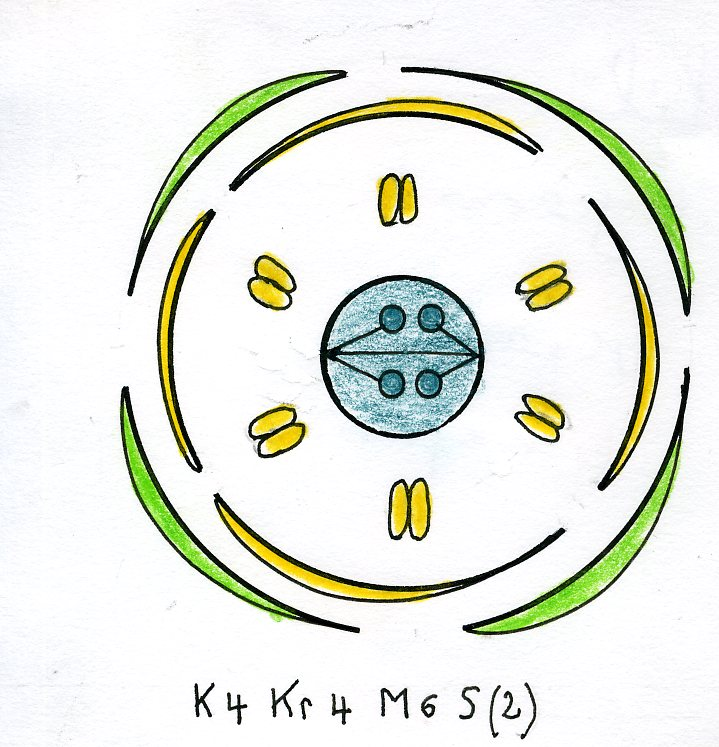
Thus, A floral diagram is a representation of a flower in graphic form. It depicts the various floral organs and their various arrangements. The transversal section of a young flower bud is depicted in these diagrams. Concentric circles represent the floral part of the design. The petals, stamens, and carpels are shown lying within each other, with the sepals on the outside.
Thus, the answer is option C: L.S. of a flower.
Note:
A floral diagram is a cross-section of a young flower in schematic form. It can also be defined as "flower projection perpendicular to its axis". It usually depicts the number of floral parts, their sizes, relative positions, and fusion. Different organs are represented by distinct symbols, which may be consistent across organ types or reflect specific morphology. It depicts the number and arrangement of floral organs, as well as their fusion. Symbols for different parts of the flower are used to represent them. Floral diagrams can be used to identify flowers or to better understand the evolution of angiosperms.
Complete answer:
A floral diagram is a visual representation of the structure of a flower. It depicts the number and arrangement of floral organs, as well as their fusion. Symbols for different parts of the flower are used to represent them. They're usually combined with the flower's floral formula to study its morphology.
Floral formulae are both symbolic and numerical representations of various flower parts. It displays information on the type and number of organs, symmetry type, ovary level, presence of fusions, and interrelationships of the corolla, calyx, androecium, and gynoecium floral parts.
Floral formulae, on the other hand, lack information about organ position. The way floral formulae are projected differs between American and European traditions, but both deliver the same information. Floral formulas can be given to a whole family or a single species.
Flowers are fixed structures with a set number of organs that contain pistillate and staminate parts. Petals, sepals, stamens, and carpels are the four series of organs.
Floral formulae are a system for representing a flower's structure using specific numbers, letters, and symbols, making it a simple way to present a flower's most important characteristics.
The number of parts, floral symmetry, connotation and adnation, ovary position, and insertion are all depicted. These formulae can help you remember the different angiosperm families' characteristics. It primarily consists of five symbols that denote:
1. Number of sepals
2. Number of petals
3. Floral symmetry
4. Number of carpels
5. Number of stamens
Thus, A floral diagram is a representation of a flower in graphic form. It depicts the various floral organs and their various arrangements. The transversal section of a young flower bud is depicted in these diagrams. Concentric circles represent the floral part of the design. The petals, stamens, and carpels are shown lying within each other, with the sepals on the outside.
Thus, the answer is option C: L.S. of a flower.
Note:
A floral diagram is a cross-section of a young flower in schematic form. It can also be defined as "flower projection perpendicular to its axis". It usually depicts the number of floral parts, their sizes, relative positions, and fusion. Different organs are represented by distinct symbols, which may be consistent across organ types or reflect specific morphology. It depicts the number and arrangement of floral organs, as well as their fusion. Symbols for different parts of the flower are used to represent them. Floral diagrams can be used to identify flowers or to better understand the evolution of angiosperms.
Recently Updated Pages
Master Class 11 Computer Science: Engaging Questions & Answers for Success

Master Class 11 Business Studies: Engaging Questions & Answers for Success
Master Class 11 Economics: Engaging Questions & Answers for Success
Master Class 11 English: Engaging Questions & Answers for Success
Master Class 11 Maths: Engaging Questions & Answers for Success
Master Class 11 Biology: Engaging Questions & Answers for Success
Trending doubts
One Metric ton is equal to kg A 10000 B 1000 C 100 class 11 physics CBSE
There are 720 permutations of the digits 1 2 3 4 5 class 11 maths CBSE
Discuss the various forms of bacteria class 11 biology CBSE
Draw a diagram of a plant cell and label at least eight class 11 biology CBSE
State the laws of reflection of light
10 examples of friction in our daily life