




Fenestra ovalis is opening of
A. Cranium
B. Tympanum
C. Tympanic cavity
D. Brain
Answer
 Verified
609.6k+ views
Hint: Fenestra ovalis is a part of the human body located in the ear specifically in the inner ear. It is also called an oval window or fenestra vestibuli. It forms the intersection between the inner ear and the middle ear.
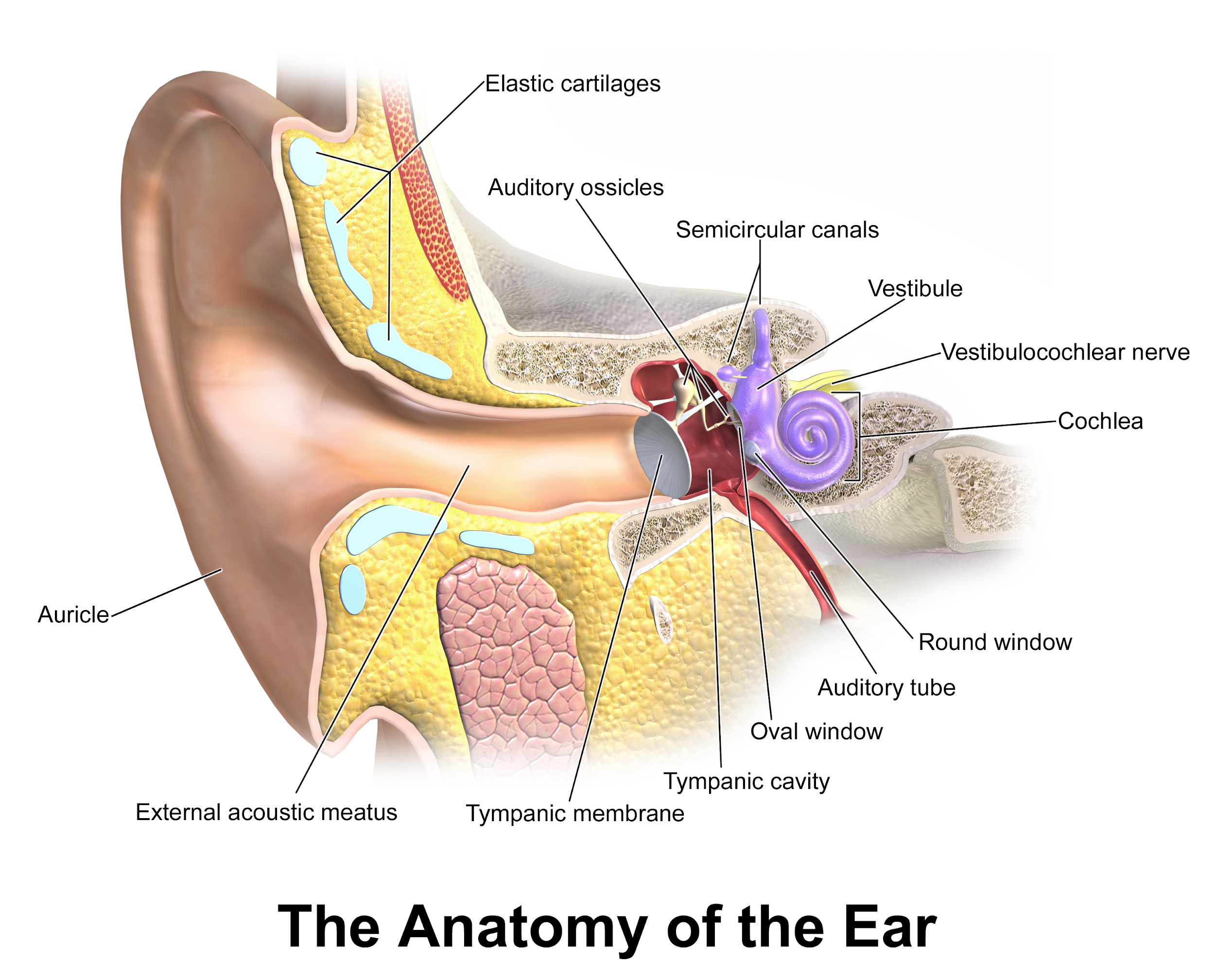
Complete answer: A membranous connective tissue called fenestra ovalis is situated in the tympanic cavity at the junction of the inner ear and the middle ear. It forms an opening from the middle ear to the cochlea of the inner ear. The oval window has a kidney-shaped opening that opens into the vestibule of the cochlea which is present in the inner ear. The oval window is connected to the base of the stapes bone on the outer side. The vibrations of the sound that are guided into the inner ear are carried by the three ear ossicles that are amplified before it is passed into the oval window for transferring it into the cochlea. The vibrations have been amplified by 10 times before it reaches the oval window.
So, option C is the correct option.
Additional information:
Another opening called a round window is present at the junction of the middle ear and inner ear. The round window is also called fenestra cochlea or fenestra rotundum and is covered by a round window membrane.
Note: Inner ear consist of cochlea, temporal bone and bony labyrinth. The organ of corti situated in the cochlea of the middle ear is responsible for the hearing of sound. The cochlea is composed of two parts bony labyrinth and the membranous labyrinth. The bony labyrinth of the inner ear is further divided into scala vestibuli and scala tympani. The upper Scala vestibuli opens into the oval window and the lower Scala tympani opens into the round window.
Complete answer: A membranous connective tissue called fenestra ovalis is situated in the tympanic cavity at the junction of the inner ear and the middle ear. It forms an opening from the middle ear to the cochlea of the inner ear. The oval window has a kidney-shaped opening that opens into the vestibule of the cochlea which is present in the inner ear. The oval window is connected to the base of the stapes bone on the outer side. The vibrations of the sound that are guided into the inner ear are carried by the three ear ossicles that are amplified before it is passed into the oval window for transferring it into the cochlea. The vibrations have been amplified by 10 times before it reaches the oval window.
So, option C is the correct option.
Additional information:
Another opening called a round window is present at the junction of the middle ear and inner ear. The round window is also called fenestra cochlea or fenestra rotundum and is covered by a round window membrane.
Note: Inner ear consist of cochlea, temporal bone and bony labyrinth. The organ of corti situated in the cochlea of the middle ear is responsible for the hearing of sound. The cochlea is composed of two parts bony labyrinth and the membranous labyrinth. The bony labyrinth of the inner ear is further divided into scala vestibuli and scala tympani. The upper Scala vestibuli opens into the oval window and the lower Scala tympani opens into the round window.
Recently Updated Pages
Master Class 11 English: Engaging Questions & Answers for Success

Master Class 11 Social Science: Engaging Questions & Answers for Success
Master Class 11 Maths: Engaging Questions & Answers for Success
Master Class 11 Biology: Engaging Questions & Answers for Success
Master Class 11 Physics: Engaging Questions & Answers for Success
Master Class 11 Chemistry: Engaging Questions & Answers for Success
Trending doubts
One Metric ton is equal to kg A 10000 B 1000 C 100 class 11 physics CBSE
Difference Between Prokaryotic Cells and Eukaryotic Cells
Find the value of the expression given below sin 30circ class 11 maths CBSE
Difference between physical and chemical change class 11 chemistry CBSE
Two of the body parts which do not appear in MRI are class 11 biology CBSE
Draw a diagram of a plant cell and label at least eight class 11 biology CBSE