




Exchange of substances between a cell and its environment is mediated through
(a)Osmosis
(b)Active transport
(c)Diffusion
(d)All of the above
Answer
 Verified
578.1k+ views
Hint: Exchange of substances between a cell and its environment takes place through the cell membranes and if it is a plant cell, then the cell wall is also present. The cell wall is freely permeable to all substances which means it does not stop anything from entering and exiting. The cell membrane is however selectively permeable which means it selects what to allow inside and exit outside according to the demands of the cell.
Complete answer:
All of the processes mentioned osmosis, active transport and diffusion are responsible for the mediation of substances between a cell and its environment. Let us understand in detail what these processes are.
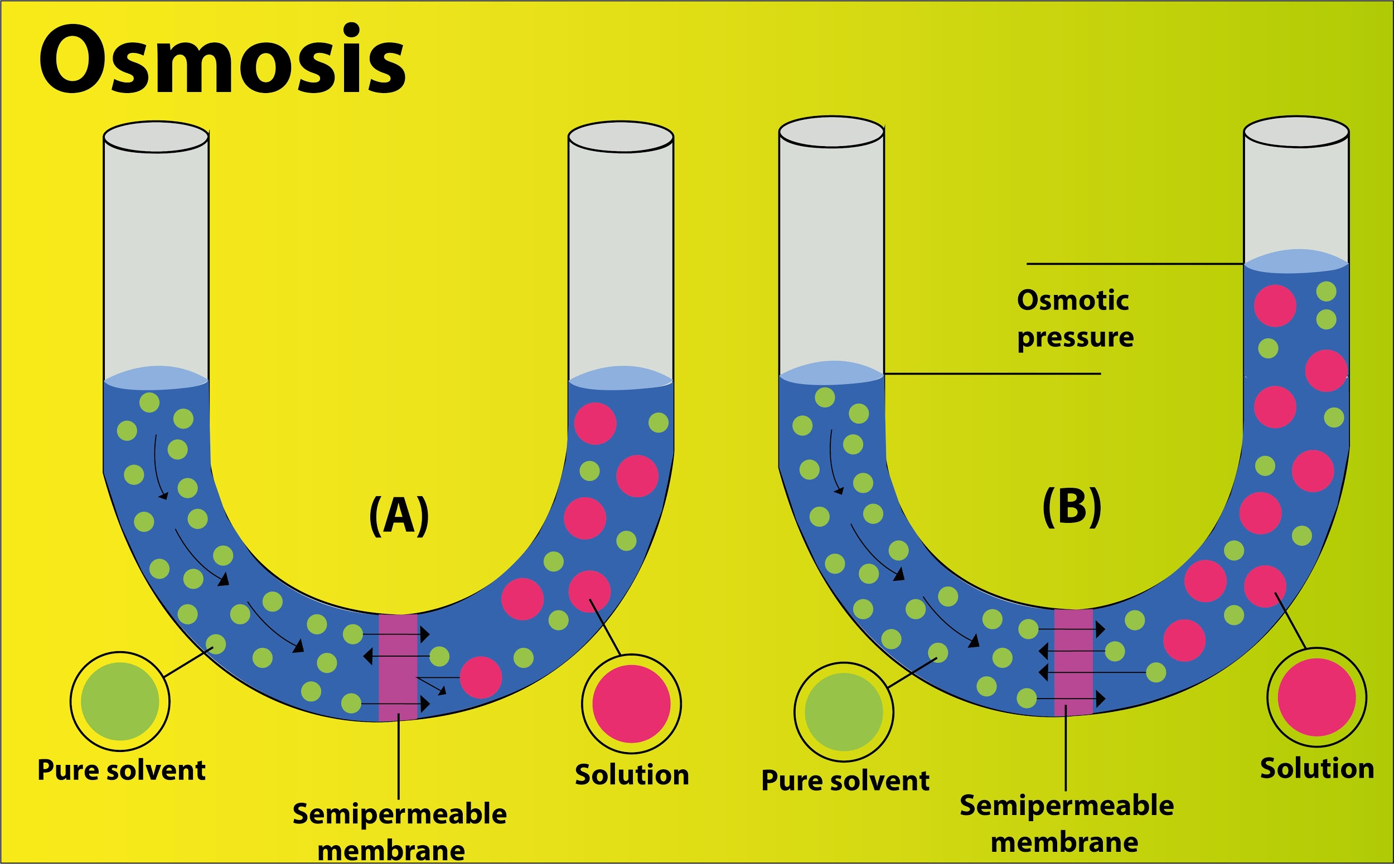
Osmosis: Osmosis is used to refer specifically to the diffusion of water across a semipermeable or a selectively permeable membrane such as the cell membrane. It occurs spontaneously in the direction of the driving force which is the movement of water from its high concentration to the region of its low concentration. When water moves inside the cell it is known as endosmosis and when it moves out it is known as exosmosis.
Active transport: Active transport is defined as the movement of substances against their concentration gradient by pumps present in the cell membrane. This uphill movement (against the gradient) is achieved by utilizing energy. The pumps used are specific membrane proteins that move substances from their lower concentration to their higher concentration.
Diffusion: It is known as the passive movement of substances across the cells as there is no expenditure of energy. This is because the molecules move in a random fashion from their high concentration to lower concentration. Diffusion which occurs using membrane proteins is known as facilitated diffusion.
So, the correct option is ‘All of the above’.
Note: -In a plant cell, along with the cell membrane, the membrane of the central vacuole known as tonoplast determines the movement of substances in and out of the cell.
-Since active transport and facilitated diffusion are dependent on proteins, they are susceptible to saturation and inhibition.
-Saturation is when all the pumps are being used and the movement of substances cannot be increased anymore.
Complete answer:
All of the processes mentioned osmosis, active transport and diffusion are responsible for the mediation of substances between a cell and its environment. Let us understand in detail what these processes are.
Osmosis: Osmosis is used to refer specifically to the diffusion of water across a semipermeable or a selectively permeable membrane such as the cell membrane. It occurs spontaneously in the direction of the driving force which is the movement of water from its high concentration to the region of its low concentration. When water moves inside the cell it is known as endosmosis and when it moves out it is known as exosmosis.
Active transport: Active transport is defined as the movement of substances against their concentration gradient by pumps present in the cell membrane. This uphill movement (against the gradient) is achieved by utilizing energy. The pumps used are specific membrane proteins that move substances from their lower concentration to their higher concentration.
Diffusion: It is known as the passive movement of substances across the cells as there is no expenditure of energy. This is because the molecules move in a random fashion from their high concentration to lower concentration. Diffusion which occurs using membrane proteins is known as facilitated diffusion.
So, the correct option is ‘All of the above’.
Note: -In a plant cell, along with the cell membrane, the membrane of the central vacuole known as tonoplast determines the movement of substances in and out of the cell.
-Since active transport and facilitated diffusion are dependent on proteins, they are susceptible to saturation and inhibition.
-Saturation is when all the pumps are being used and the movement of substances cannot be increased anymore.
Recently Updated Pages
Basicity of sulphurous acid and sulphuric acid are

Master Class 11 Business Studies: Engaging Questions & Answers for Success
Master Class 11 Computer Science: Engaging Questions & Answers for Success
Master Class 11 Economics: Engaging Questions & Answers for Success
Master Class 11 Social Science: Engaging Questions & Answers for Success
Master Class 11 English: Engaging Questions & Answers for Success
Trending doubts
One Metric ton is equal to kg A 10000 B 1000 C 100 class 11 physics CBSE
The largest wind power cluster is located in the state class 11 social science CBSE
Explain zero factorial class 11 maths CBSE
State and prove Bernoullis theorem class 11 physics CBSE
Which among the following are examples of coming together class 11 social science CBSE
Can anyone list 10 advantages and disadvantages of friction