




How many electrons are in the valence shells of
a) $Be$ In \[BeC{{l}_{2}}\]
b) $B$ In \[BC{{l}_{3}}\]
c) $H$ In \[{{H}_{2}}O\]
Answer
 Verified
575.4k+ views
Hint:We know that a valence electron is an electron that is associated with an atom, and apparently that can participate in the formation of a chemical bond so we can form it in a single covalent bond, both atoms in the bond contribute one valence electron in order to form a shared pair. The key attribute is given by presence of valence electrons can determine the element's chemical properties and whether it may bond with other elements: For a main group element, we have to keep this in consideration that a valence electron can only be in the outermost electron shell.
Complete answer:
We know that Beryllium Be has $4$ valence electrons in the compound \[BeC{{l}_{2}}\].
$Be$ has $2$ valence electrons of its own and shares $1$ electrons with each of the two chlorine atoms. Electrons in Valence shells of $Be$ in \[BeC{{l}_{2}}\] is given by:

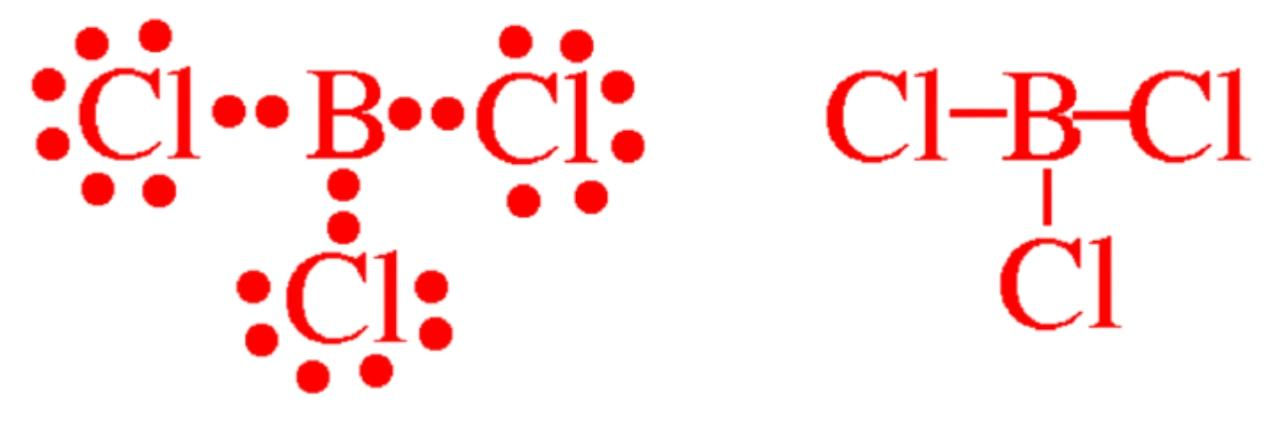
b) Similarly Boron $B$ has $6$ valence electrons in the compound Boron Trichloride $BC{{l}_{3}}$
$B$ has $3$ valence electrons of its own and shares $1$ electrons with each of the three chlorine atoms. An electron in Valence shells of $B$ in $BC{{l}_{3}}$ is given by:
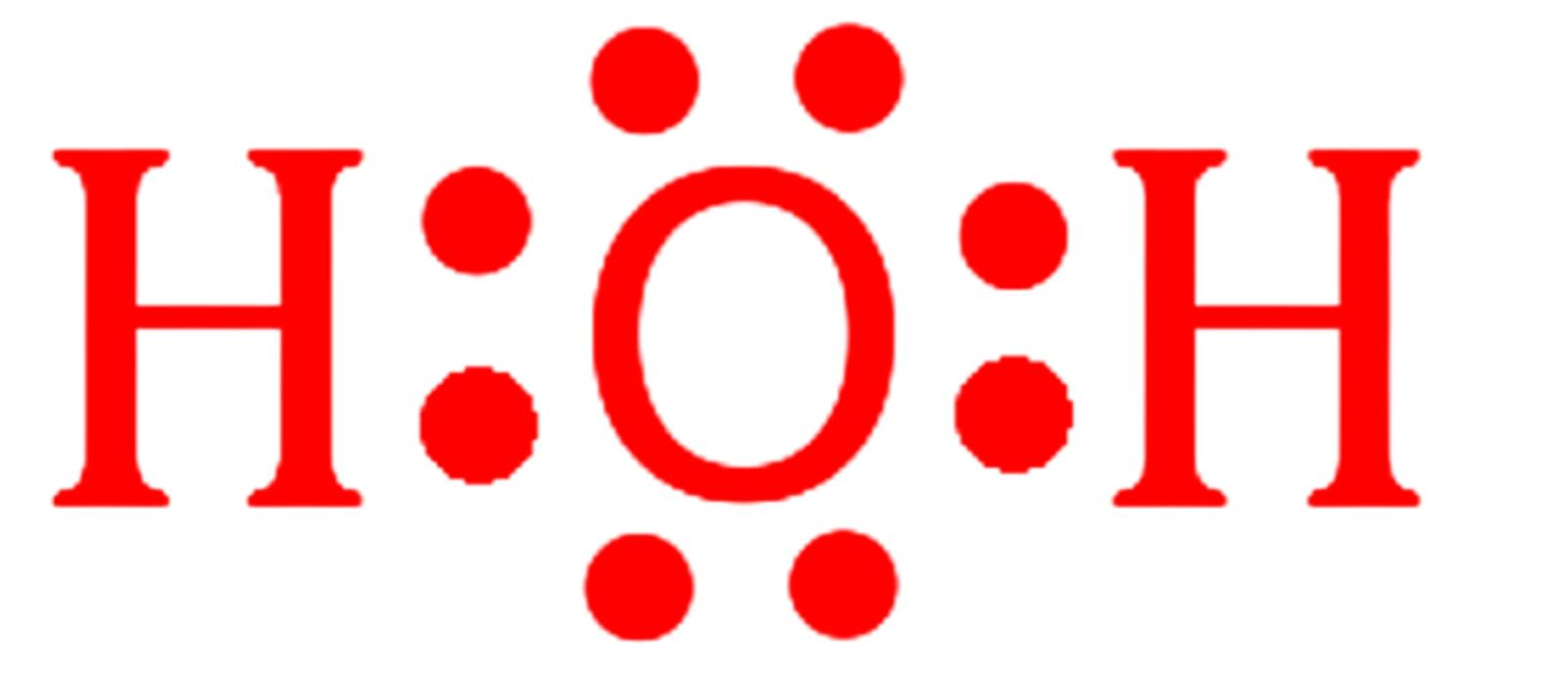
c) Likewise we have $H$ in ${{H}_{2}}O$ where each $H$ atom in ${{H}_{2}}O$
${{H}_{2}}O$ has 2 valence electrons. Each $H$ atom has $1$ valence electron of its own and shares $1$ electron with the oxygen atom. An electron in Valence shells of $H$ in ${{H}_{2}}O$ is given by:
Note:Also note that thiols are compounds that are structurally identical to alcohols except that they replace the oxygen atom in the hydroxyl group with a sulfur atom. Likewise, sulfides are structurally identical to ethers, but they replace the oxygen atom with a sulfur atom, as shown below.
Complete answer:
We know that Beryllium Be has $4$ valence electrons in the compound \[BeC{{l}_{2}}\].
$Be$ has $2$ valence electrons of its own and shares $1$ electrons with each of the two chlorine atoms. Electrons in Valence shells of $Be$ in \[BeC{{l}_{2}}\] is given by:
b) Similarly Boron $B$ has $6$ valence electrons in the compound Boron Trichloride $BC{{l}_{3}}$
$B$ has $3$ valence electrons of its own and shares $1$ electrons with each of the three chlorine atoms. An electron in Valence shells of $B$ in $BC{{l}_{3}}$ is given by:
c) Likewise we have $H$ in ${{H}_{2}}O$ where each $H$ atom in ${{H}_{2}}O$
${{H}_{2}}O$ has 2 valence electrons. Each $H$ atom has $1$ valence electron of its own and shares $1$ electron with the oxygen atom. An electron in Valence shells of $H$ in ${{H}_{2}}O$ is given by:
Note:Also note that thiols are compounds that are structurally identical to alcohols except that they replace the oxygen atom in the hydroxyl group with a sulfur atom. Likewise, sulfides are structurally identical to ethers, but they replace the oxygen atom with a sulfur atom, as shown below.
Recently Updated Pages
Master Class 11 Social Science: Engaging Questions & Answers for Success

Master Class 11 Physics: Engaging Questions & Answers for Success
Master Class 11 Maths: Engaging Questions & Answers for Success
Master Class 11 Economics: Engaging Questions & Answers for Success
Master Class 11 Computer Science: Engaging Questions & Answers for Success
Master Class 11 Chemistry: Engaging Questions & Answers for Success
Trending doubts
One Metric ton is equal to kg A 10000 B 1000 C 100 class 11 physics CBSE
There are 720 permutations of the digits 1 2 3 4 5 class 11 maths CBSE
1 Quintal is equal to a 110 kg b 10 kg c 100kg d 1000 class 11 physics CBSE
State and prove Bernoullis theorem class 11 physics CBSE
Difference Between Prokaryotic Cells and Eukaryotic Cells
Which among the following are examples of coming together class 11 social science CBSE