




Electric potential of the brain is recorded by
(a) CT scan
(b) Sphygmomanometer
(c) ECG
(d) EEG
Answer
 Verified
585k+ views
Hint: The electric potential of the brain is measured by placing a small electrode like cups or disc type on the scalp with a conductive gel. The measurement of electric potential is done by the voltage fluctuation resulting from the activation of neurons of the brain.
Complete step by step answer:
EEG or electroencephalography is a method that records the electrical activity of the brain by picking up the brain’s electrical signal and sending to the machine called an electroencephalogram. It records the signal as wavy lines to a computer screen or paper in order of microvolt. EEG is used when there is a need to diagnose and manage epilepsy. EEG is also used to determine the level of brain function in people who are in a coma state.
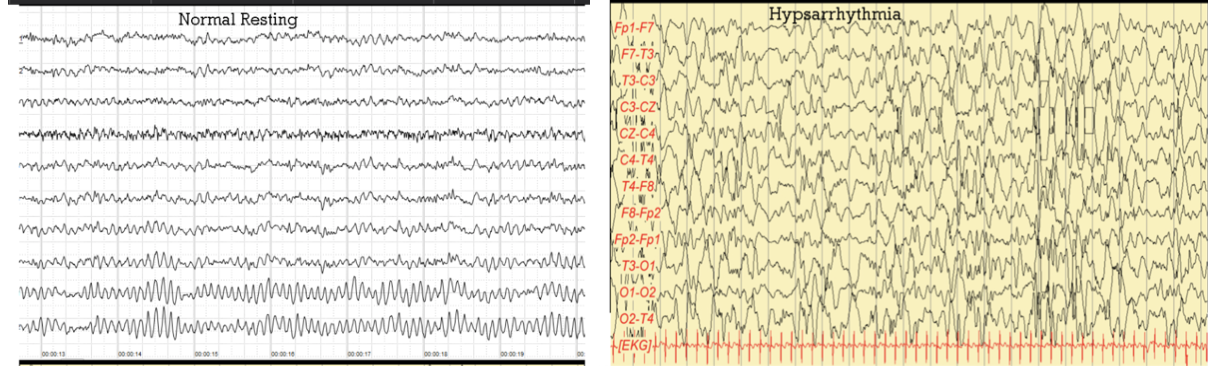
- Neurons are electrically charged by membrane transport proteins that pump ions across their membranes.
- When the wave of ions reaches the electrodes on the scalp, they can push or pull the electrons on the metal of the electrodes.
- The pull or push difference measured as voltage across time is referred to as Electro- Encephhalography.
- There are three types of EEG:
Routine EEG: Around 20 electrodes are stuck to the scalp using a special paste and EEG signals are recorded.
Sleep EEG: The EEG tracing will be recorded along with the heart rate, airflow, respiration, oxygen saturation and limb movement.
Ambulatory EEG: It involves recording the brain activity throughout the day and night by a portable EEG recorder clipped on the clothing.
- The amplitude of an EEG signal typically ranges from about 1 uV to 100 uV in a normal adult, and it is approximately 10 uV to 20mV when measured with subdural electrodes such as needle electrodes.
- To measure the electrical impulse in various parts of the brain EEG technician will attach 16 to 20 electrodes to the scalp.
- A brainwave pattern called alpha rhythm should be seen when sitting quietly with eyes closed but people with epilepsy may have abnormal brain activity detected.
- EEG determines neural activity that occurs below the upper layer of the brain poorly is one of the disadvantages of EEG.
So, the correct answer, ‘(d) EEG.’
Note:
- In 1924, Sir Hans Berger recorded the first human EEG which was initially published in an investigation of the spontaneous electrical activity of the brain of rabbits and dogs by Sir Adolf Beck in 1890.
- EEG is also used to investigate other conditions such as encephalitis, dementia, head injuries, brain tumours, haemorrhage which helps to identify the areas of the brain which are not working properly.
Complete step by step answer:
EEG or electroencephalography is a method that records the electrical activity of the brain by picking up the brain’s electrical signal and sending to the machine called an electroencephalogram. It records the signal as wavy lines to a computer screen or paper in order of microvolt. EEG is used when there is a need to diagnose and manage epilepsy. EEG is also used to determine the level of brain function in people who are in a coma state.
- Neurons are electrically charged by membrane transport proteins that pump ions across their membranes.
- When the wave of ions reaches the electrodes on the scalp, they can push or pull the electrons on the metal of the electrodes.
- The pull or push difference measured as voltage across time is referred to as Electro- Encephhalography.
- There are three types of EEG:
Routine EEG: Around 20 electrodes are stuck to the scalp using a special paste and EEG signals are recorded.
Sleep EEG: The EEG tracing will be recorded along with the heart rate, airflow, respiration, oxygen saturation and limb movement.
Ambulatory EEG: It involves recording the brain activity throughout the day and night by a portable EEG recorder clipped on the clothing.
- The amplitude of an EEG signal typically ranges from about 1 uV to 100 uV in a normal adult, and it is approximately 10 uV to 20mV when measured with subdural electrodes such as needle electrodes.
- To measure the electrical impulse in various parts of the brain EEG technician will attach 16 to 20 electrodes to the scalp.
- A brainwave pattern called alpha rhythm should be seen when sitting quietly with eyes closed but people with epilepsy may have abnormal brain activity detected.
- EEG determines neural activity that occurs below the upper layer of the brain poorly is one of the disadvantages of EEG.
So, the correct answer, ‘(d) EEG.’
Note:
- In 1924, Sir Hans Berger recorded the first human EEG which was initially published in an investigation of the spontaneous electrical activity of the brain of rabbits and dogs by Sir Adolf Beck in 1890.
- EEG is also used to investigate other conditions such as encephalitis, dementia, head injuries, brain tumours, haemorrhage which helps to identify the areas of the brain which are not working properly.
Recently Updated Pages
Master Class 11 Computer Science: Engaging Questions & Answers for Success

Master Class 11 Business Studies: Engaging Questions & Answers for Success
Master Class 11 Economics: Engaging Questions & Answers for Success
Master Class 11 English: Engaging Questions & Answers for Success
Master Class 11 Maths: Engaging Questions & Answers for Success
Master Class 11 Biology: Engaging Questions & Answers for Success
Trending doubts
One Metric ton is equal to kg A 10000 B 1000 C 100 class 11 physics CBSE
There are 720 permutations of the digits 1 2 3 4 5 class 11 maths CBSE
Discuss the various forms of bacteria class 11 biology CBSE
Draw a diagram of a plant cell and label at least eight class 11 biology CBSE
State the laws of reflection of light
Explain zero factorial class 11 maths CBSE